 Indietro
Syllabus and Course Structure: Biology for Science Majors I (BIOL 1406)
Guida di studio - Note intelligenti
 Appunti personalizzati basati sui tuoi materiali, ampliati con definizioni chiave, esempi e contesto.
Course Overview
Introduction
This syllabus outlines the structure, objectives, and requirements for Biology for Science Majors I (BIOL 1406) at Dallas College. The course covers fundamental principles of biology, including the physical and chemical properties of life, cell structure and function, genetics, evolution, and scientific reasoning. Laboratory activities reinforce these concepts through hands-on investigation and data analysis.
Course Description and Learning Outcomes
Lecture Outcomes
Characteristics of Life: Describe the features that define living organisms, such as cellular organization, metabolism, growth, reproduction, response to stimuli, and adaptation.
Scientific Inquiry: Explain the methods used by scientists, including hypothesis formation, experimentation, observation, and analysis.
Requirements of Life: Identify the essential molecules and conditions needed for life, including water, biomolecules, and energy sources.
Cell Types: Compare and contrast the structures, reproduction, and characteristics of viruses, prokaryotic cells, and eukaryotic cells.
Cell Membranes: Describe the structure of cell membranes and the movement of molecules across membranes (e.g., diffusion, osmosis, active transport).
Metabolism: Identify substrates, products, and key chemical pathways in cellular metabolism, including respiration and photosynthesis.
Genetics: Identify principles of inheritance and solve classical genetic problems (e.g., Mendelian genetics).
Nucleic Acids and Proteins: Identify the chemical structures, synthesis, and regulation of DNA, RNA, and proteins.
Evolution: Describe the unity and diversity of life and the evidence for evolution through natural selection.
Laboratory Outcomes
Scientific Reasoning: Apply scientific reasoning to investigate questions and utilize laboratory tools (e.g., microscopes) to collect and analyze data.
Critical Thinking: Use critical thinking and scientific problem solving to make informed decisions in the laboratory.
Communication: Effectively communicate the results of scientific investigations.
Lab Content: Reinforce lecture concepts through hands-on activities, including microscopy, macromolecule analysis, cell structure, membrane transport, metabolism, genetics, and evolution.
Course Schedule and Topics
Weekly Agenda
Week 1: Introduction to Biology, Chemistry of Life, Water
Week 2: Carbon and Biomolecules
Week 3: Cell Structure, Cell Membranes, Diffusion and Osmosis
Week 4: Metabolism, Protein Structure
Week 5: Cellular Respiration, Photosynthesis
Week 6: Cell Cycle, Mitosis
Week 7: Chromosomal Inheritance, Meiosis, Molecular Inheritance
Week 8: Final Exams and Lab Practicals
Note: Each week includes interactive homework, virtual labs (iLabs), and post-lab questions to reinforce learning.
Graded Work and Assessment
Types of Assignments
Syllabus Quiz: Verifies familiarity with course structure and policies.
Discussions: Four assignments to encourage engagement and critical thinking.
Homework: Chapter-based assignments in MasteringBiology platform.
iLabs: Ten virtual labs simulating hands-on experiments.
Post Lab Questions: Follow-up questions tied to lab content.
Exams: Three lecture exams, two lab practicals, and a comprehensive final exam. Exams are proctored online using Respondus LockDown Browser and a second camera for academic integrity.
Course Policies
Attendance and Participation
Regular participation in both lecture and lab assignments is essential for success.
Students are responsible for keeping up with readings, assignments, and deadlines.
Reach out early if struggling; support is available through office hours and campus resources.
Late Work and Extensions
Due dates are strictly enforced; late work incurs penalties.
Extensions may be granted for documented medical or significant emergencies.
No assignments accepted after the course ends.
Academic Integrity
Scholastic dishonesty (cheating, plagiarism, fabrication, etc.) is prohibited and subject to disciplinary action.
Unauthorized use of AI for graded work is not allowed unless specifically permitted.
Assignment-specific instructions regarding AI use take precedence.
Required Course Materials
Textbook
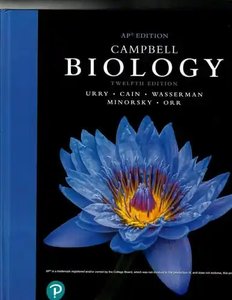
Campbell Biology, 12th Edition by Urry, Cain, Wasserman, Minorsky, and Orr (Pearson, 2021)
Digital edition available through BrightSpace course platform.
Modified Mastering Biology with Pearson eText -- Access Card required for interactive assignments.
Support and Resources
Student Support
Success Coach: Personalized support for academic and career milestones.
Free Tutoring: Available at Learning Commons and online via eCampus.
Student Care Network: Connects students to resources for health, finances, and more.
Technical Support: Assistance with eCampus and college technology.
Texas Core Objectives
General Education Competencies
Critical Thinking: Creative thinking, inquiry, analysis, evaluation, and synthesis of information.
Communication: Effective written, oral, and visual communication.
Empirical and Quantitative Skills: Manipulation and analysis of numerical data or observable facts.
Teamwork: Collaboration and consideration of different points of view.
Personal Responsibility: Ethical decision-making and understanding consequences.
Social Responsibility: Intercultural competence and civic engagement.
Summary Table: Course Components
Component | Description | Points |
|---|---|---|
Syllabus Quiz | Verifies course understanding | 20 |
Discussions | Engagement and critical thinking | 60 |
Homework | Chapter-based assignments | 300 |
iLabs | Virtual laboratory activities | 150 |
Post Lab Questions | Lab follow-up questions | 150 |
Exams & Practicals | Lecture exams, lab practicals, final | 500 |
Conclusion
This course provides a comprehensive foundation in general biology, preparing students for advanced study in biological sciences. Success requires regular participation, adherence to deadlines, academic integrity, and engagement with course resources.
