 Indietro
The Cell Cycle and Mitosis: Structure, Regulation, and Significance
Guida di studio - Note intelligenti
 Appunti personalizzati basati sui tuoi materiali, ampliati con definizioni chiave, esempi e contesto.
The Cell Cycle
Overview of the Cell Cycle
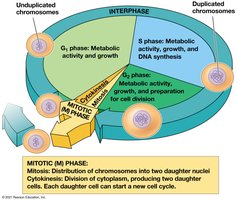
The cell cycle is the series of events that cells go through as they grow and divide. It is fundamental to the continuity of life, enabling organisms to grow, develop, and repair tissues. The cell cycle consists of two main phases: interphase (cell growth and DNA replication) and the mitotic (M) phase (mitosis and cytokinesis).
Interphase: Includes G1 (growth), S (DNA synthesis), and G2 (preparation for mitosis) phases.
Mitotic (M) phase: Includes mitosis (nuclear division) and cytokinesis (cytoplasmic division).
Roles and Importance of Cell Division
Functions of Cell Division
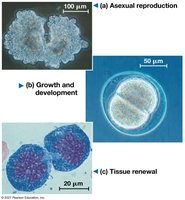
Cell division is essential for several biological processes:
Asexual reproduction in single-celled organisms
Growth and development in multicellular organisms
Tissue renewal and repair in mature organisms
Genetic Material Organization
Chromosomes and Chromatin
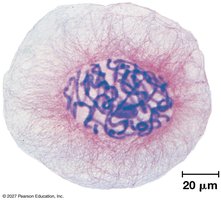
All the DNA in a cell constitutes its genome. In eukaryotes, DNA is packaged into chromosomes, which are made of chromatin (a complex of DNA and proteins). Each species has a characteristic number of chromosomes.
Somatic cells: Non-reproductive cells with two sets of chromosomes.
Gametes: Reproductive cells (sperm and eggs) with half as many chromosomes as somatic cells.
Chromosome Duplication and Distribution
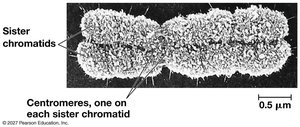
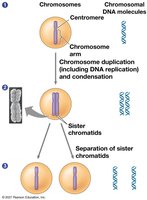
Before cell division, chromosomes are duplicated. Each duplicated chromosome consists of two sister chromatids joined at a region called the centromere. During division, sister chromatids separate and are distributed to daughter cells.
Phases of Mitosis
Stages of Mitosis
Mitosis is divided into five stages:
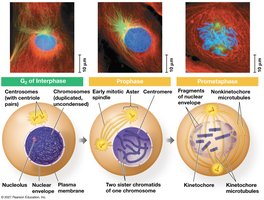
Prophase: Chromosomes condense, spindle apparatus forms.
Prometaphase: Nuclear envelope fragments, spindle fibers attach to kinetochores.
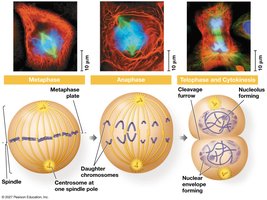
Metaphase: Chromosomes align at the metaphase plate.
Anaphase: Sister chromatids separate and move to opposite poles.
Telophase: Nuclear envelopes reform, chromosomes decondense.
Cytokinesis
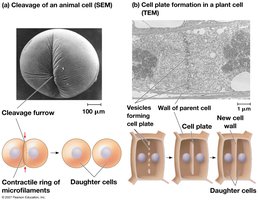
Cytokinesis is the division of the cytoplasm, resulting in two separate daughter cells. In animal cells, this occurs via a cleavage furrow; in plant cells, a cell plate forms.
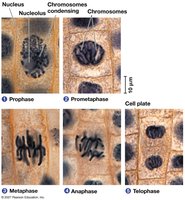
The Mitotic Spindle and Chromosome Movement
Mitotic Spindle Structure and Function
The mitotic spindle is a structure made of microtubules that orchestrates the movement of chromosomes during mitosis. It originates from centrosomes and includes spindle microtubules and asters.
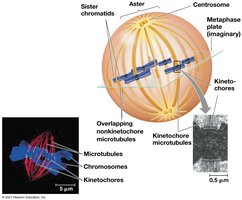
Mechanisms of Chromosome Movement
During anaphase, motor proteins and microtubule depolymerization move chromosomes toward spindle poles. Both the 'Pac-man' mechanism (chromosomes move as microtubules shorten at the kinetochore end) and 'reeling in' at the spindle poles are involved.
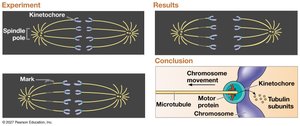
Cell Division in Prokaryotes: Binary Fission
Binary Fission
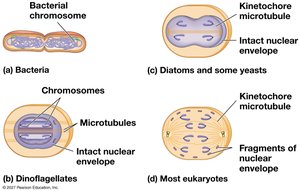
Prokaryotes (bacteria and archaea) divide by binary fission. The chromosome replicates, and the cell splits into two genetically identical daughter cells.
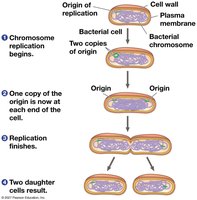
Evolution of Mitosis
Mitosis likely evolved from binary fission. Some unicellular eukaryotes show intermediate forms of cell division.
Regulation of the Cell Cycle
Cell Cycle Control System
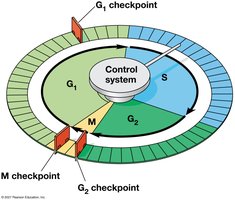
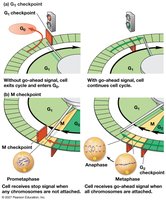
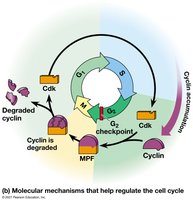
The cell cycle is regulated by a molecular control system with checkpoints (G1, G2, and M). These checkpoints ensure proper division and respond to internal and external signals.
Cyclins and Cyclin-Dependent Kinases (Cdks)
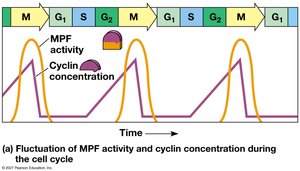
Cyclins are proteins whose concentrations fluctuate during the cell cycle. Cyclin-dependent kinases (Cdks) are enzymes that, when bound to cyclins, regulate cell cycle progression. The maturation-promoting factor (MPF) is a cyclin-Cdk complex that triggers the cell's passage into mitosis.
Internal and External Signals
Checkpoints are influenced by:
Internal signals: e.g., proper attachment of chromosomes to the spindle at metaphase.
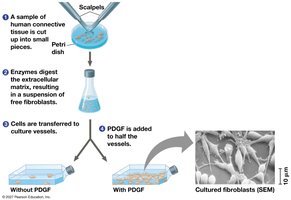
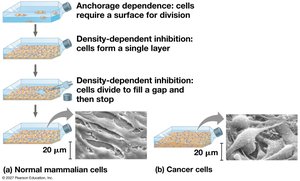
External signals: e.g., growth factors like PDGF, density-dependent inhibition, and anchorage dependence.
Loss of Cell Cycle Control and Cancer
Cancer and the Cell Cycle
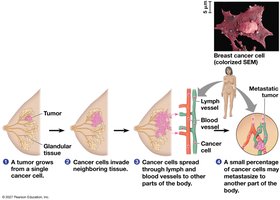
Cancer cells evade normal cell cycle controls, leading to uncontrolled division. They may form benign tumors (localized) or malignant tumors (invasive, metastatic). Cancer treatments often target rapidly dividing cells.
Summary Table: Key Differences in Cell Division
Feature | Mitosis (Eukaryotes) | Binary Fission (Prokaryotes) |
|---|---|---|
Chromosome Number | Multiple, linear | Single, circular |
Spindle Apparatus | Present | Absent |
Nuclear Envelope | Breaks down during division | No nucleus |
Genetic Outcome | Genetically identical daughter cells | Genetically identical daughter cells |
Key Terms
Chromosome: A DNA molecule with part or all of the genetic material of an organism.
Chromatid: Each of the two thread-like strands into which a chromosome divides during cell division.
Centromere: The region of a chromosome where the two sister chromatids are joined.
Kinetochore: A protein structure on chromatids where the spindle fibers attach during cell division.
Mitotic spindle: A structure made of microtubules that segregates chromosomes during mitosis.
Checkpoints: Control points in the cell cycle where stop and go-ahead signals regulate the cycle.
Cyclin: Regulatory protein whose levels fluctuate during the cell cycle.
Cdk: Cyclin-dependent kinase, an enzyme that, when combined with cyclin, can trigger cell cycle events.
MPF: Maturation-promoting factor, a cyclin-Cdk complex that triggers mitosis.
