 Indietro
The Cell Cycle: Structure, Function, and Regulation
Guida di studio - Note intelligenti
 Appunti personalizzati basati sui tuoi materiali, ampliati con definizioni chiave, esempi e contesto.
The Cell Cycle
Overview of the Cell Cycle
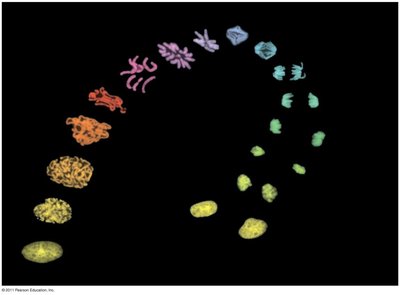
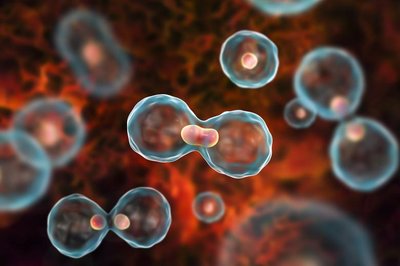
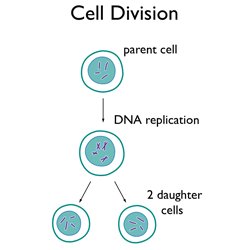
The cell cycle is an ordered sequence of events that describes how a single cell divides to produce two daughter cells. This process is fundamental for growth, development, tissue repair, and maintenance in multicellular organisms.
Cell cycle stages: Cells can be in one of three states: being a normal cell, preparing to divide, or actively dividing.
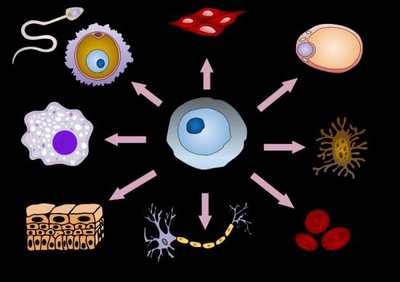
Functions of cell division: Growth, development (differentiation of stem cells), replacement of damaged or old cells, immune response, and maintaining optimal surface area-to-volume ratio.
Why Do Cells Divide?
Cell division is essential for several biological processes:
Growth: Increasing the number of cells in an organism.
Development: Stem cells differentiate into specialized cell types.
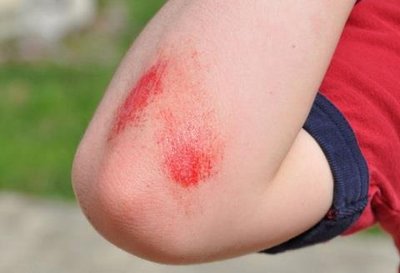
Repair: Replacement of damaged cells, such as after injury.
Maintenance: Replacement of old cells to maintain tissue health.
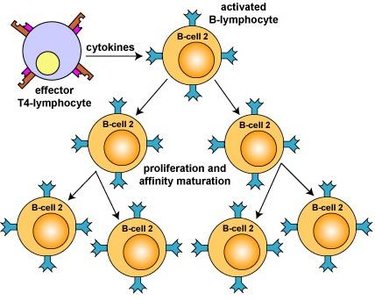
Immune response: Production of immune cells to fight infections.
Surface area-to-volume ratio: Cells divide to stay small and efficient.

Cell Division: Mitosis and Meiosis
Types of Cell Division
Cell division occurs in two main forms:
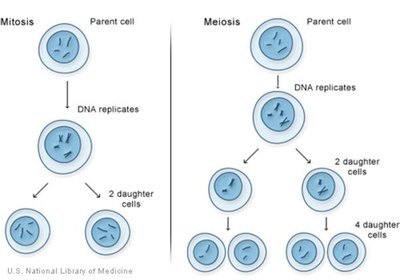
Mitosis: Division of somatic (body) cells, resulting in two genetically identical daughter cells.
Meiosis: Division of gametes (egg and sperm), resulting in four genetically unique daughter cells with half the chromosome number.
Genetic Material and Genome
Each cell contains the organism's full genome, which is the complete set of DNA, including both coding and non-coding regions. Coding regions contain instructions for making RNA and proteins, while non-coding regions have regulatory and other functions.
Genome: All cells (except gametes) have a full set of genetic material.
DNA replication: Ensures each daughter cell receives an exact copy of the genome.
Phases of the Cell Cycle
Stages and Mnemonics
The cell cycle is divided into distinct phases, often remembered by mnemonics:
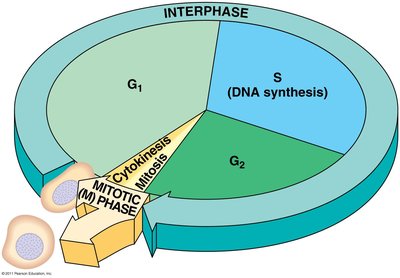
Stages: G1 (Gap 1), S (Synthesis), G2 (Gap 2), M (Mitosis), C (Cytokinesis)
Phases of cell division: Interphase (G1, S, G2) and Mitotic phase (Mitosis and Cytokinesis)
Mnemonic: "Go, Sally, Go Make Children!" for G1 → S → G2 → M → C
Mnemonic: "I Passed My Anatomy Test! Cool!" for Interphase → Prophase → Metaphase → Anaphase → Telophase → Cytokinesis
Time Spent in Phases
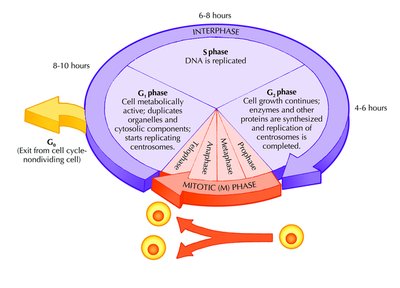
Cells spend most of their time in interphase (about 90%), which includes cell growth, organelle replication, and DNA replication. The mitotic phase (mitosis and cytokinesis) is much shorter, accounting for about 10% of the cycle.
Regulation of the Cell Cycle
Cyclins and Checkpoints
Progression through the cell cycle is regulated by signaling proteins called cyclins, which act as checkpoints to ensure proper division. If cells are not dividing, they enter the G0 phase. If errors occur, apoptosis (programmed cell death) may be triggered to prevent damaged cells from proliferating.
Cyclins: Control passage from one stage to the next.
Checkpoints: Ensure DNA is properly replicated and cell is ready to divide.
G0 phase: Non-dividing state for cells not actively cycling.
Apoptosis: Programmed cell death to remove faulty cells.
Cell Turnover Rates
Variation by Tissue and Age
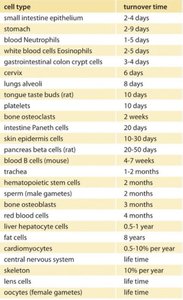
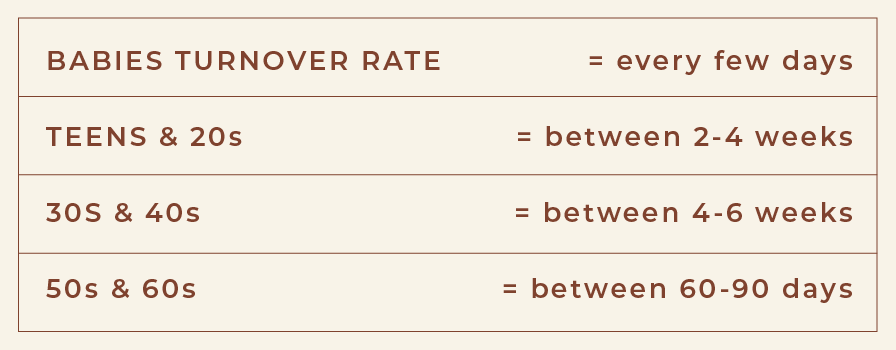
Cell turnover rates vary by tissue type and age. Some tissues, like skin and intestine, renew rapidly, while others, like neurons, have much slower turnover.
Turnover rate: Frequency at which cells are replaced.
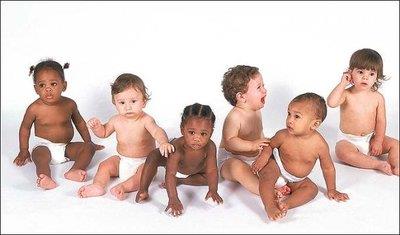
Age-dependent turnover: Younger individuals have faster cell turnover than older adults.
Cell Type | Turnover Time |
|---|---|
Small intestine epithelium | 2-4 days |
Blood Neutrophils | 1-2 days |
Skin epidermis cells | 20-30 days |
Red blood cells | 4 months |
Cardiomyocytes | 0.5-1% per year |
Oocytes (female gametes) | Lifetime |
Additional info: See image_11 for more cell types and turnover times. |
Age Group | Turnover Rate |
|---|---|
Babies | Every few days |
Teens & 20s | 2-4 weeks |
30s & 40s | 4-6 weeks |
50s & 60s | 60-90 days |
Mitosis and Cytokinesis
Definition and Process
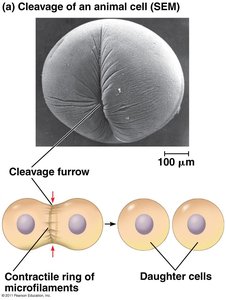
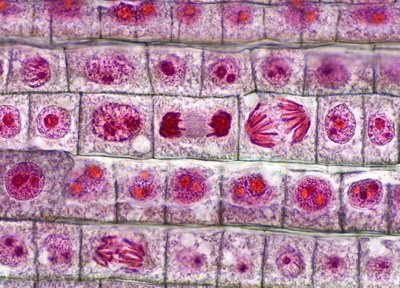
Mitosis is the division of the nucleus and genetic material (DNA) in somatic cells, resulting in two daughter cells. Cytokinesis is the division of the cytoplasm, usually following mitosis.
Mitosis: Ensures each daughter cell receives an identical copy of DNA.
Cytokinesis: Physical separation of the cytoplasm into two cells.
Regulation Failure: Cancer
Uncontrolled Cell Division
When cyclins or checkpoints fail due to mutations, cells may divide uncontrollably, leading to cancer. Cancer cells lose contact inhibition, pile up to form tumors, and can metastasize to other tissues.
Mutation in cyclin genes: Leads to loss of cell cycle control.
Tumor formation: Mass of abnormal cells.
Metastasis: Spread of cancer cells to other tissues via blood.



Summary
The cell cycle is a tightly regulated process essential for organismal growth, development, and maintenance. Proper regulation ensures healthy cell division, while failures in regulation can lead to diseases such as cancer.
