 Indietro
The Cell Cycle: Structure, Phases, and Cellular Division
Guida di studio - Note intelligenti
 Appunti personalizzati basati sui tuoi materiali, ampliati con definizioni chiave, esempi e contesto.
Cell Cycle and Cell Division
Overview of Cell Division
Cell division is a fundamental process in biology, essential for growth, development, tissue renewal, and asexual reproduction. It ensures that new cells are genetically identical to the parent cell, maintaining organismal integrity.
Growth and Development: Multicellular organisms grow by increasing their cell number through division.
Tissue Renewal: Damaged or old cells are replaced by new cells.
Asexual Reproduction: Some organisms reproduce by dividing a single cell into two identical offspring.
Phases of the Cell Cycle
The cell cycle consists of two main parts: Interphase and the Mitotic phase. Interphase is the period of growth and DNA replication, while the Mitotic phase involves the division of the nucleus and cytoplasm.
Interphase:
G1 phase: Cell grows and prepares for DNA replication.
S phase: DNA synthesis occurs, resulting in duplicated chromosomes.
G2 phase: Cell continues to grow and prepares for mitosis.
Mitotic Phase:
Mitosis: Division of the nucleus.
Cytokinesis: Division of the cytoplasm, resulting in two daughter cells.
Mitosis: Cellular Structures and Functions
Cytoskeleton and Centrosomes
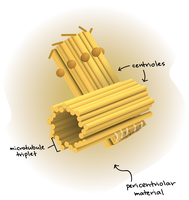
The cytoskeleton, particularly microtubules, plays a crucial role in organizing and moving chromosomes during mitosis. Centrosomes, composed of two centrioles, organize microtubules in animal cells.
Microtubules: Form the spindle apparatus that separates chromosomes.
Centrosomes: Serve as microtubule organizing centers.
Centrioles: Cylindrical structures within centrosomes.
Nucleus and Chromatin
The nucleus contains chromosomes, which are protected by the nuclear envelope. During interphase, chromosomes exist as relaxed chromatin. The nucleolus is visible and is the site of ribosome production. Chromosomes condense at the start of mitosis.
Nuclear Envelope: Double membrane protecting chromosomes.
Nucleolus: Site of ribosome synthesis, visible during interphase.
Chromatin: Relaxed form of chromosomes during interphase.
Chromosome Condensation: Occurs at the onset of mitosis.
Phases of Mitosis
Key Events in Mitosis
Mitosis is divided into several phases, each characterized by specific changes in the cytoskeleton, DNA, and nucleus.
Prophase: Chromosomes condense, spindle forms.
Metaphase: Chromosomes align at the cell's equator.
Anaphase: Sister chromatids are pulled apart.
Telophase: Nuclear envelope reforms, chromosomes decondense.
Chromosome Structure in Metaphase
During metaphase, chromosomes are highly organized. Key structures include:
Centromere: Region where sister chromatids are joined.
Kinetochore: Protein complex at the centromere, attaches to microtubules.
Cohesin: Protein that holds sister chromatids together.
Sister Chromatids: Identical copies of a chromosome.
Cytokinesis: Animal vs. Plant Cells
Cytokinesis in Animal Cells
In animal cells, cytokinesis occurs by pinching the membrane, forming a cleavage furrow. This process uses actin microfilaments.
Cleavage Furrow: Indentation that deepens to split the cell.
Actin Microfilaments: Contractile proteins involved in membrane pinching.
Cytokinesis in Plant Cells
Plant cells undergo cytokinesis by forming a cell plate. Vesicles from the Golgi apparatus assemble and fuse to create the new cell wall.
Cell Plate: Structure that becomes the new cell wall.
Golgi Vesicles: Deliver materials for cell plate formation.
Binary Fission in Prokaryotes
Binary Fission Process
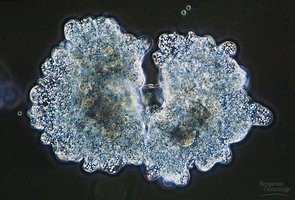
Binary fission is the method of cell division in prokaryotes, such as bacteria. It involves the division of both DNA and cytoplasm, resulting in two identical cells.
DNA Replication: Chromosome is copied.
Cytoplasmic Division: Cell splits into two.
Additional Context: Cancer Biology and Cell Cycle Regulation
Dr. Jewel Plummer-Cobb's Contributions
Dr. Jewel Plummer-Cobb was a pioneering cancer biologist who studied melanin pigment granules and medications for cancer treatment, such as methotrexate. Her work highlights the importance of cell cycle regulation in cancer biology.
Cancer Biology: Uncontrolled cell division leads to tumor formation.
Cell Cycle Regulation: Proper control prevents cancerous growth.
Summary Table: Cell Division Mechanisms
Process | Organism Type | Main Features |
|---|---|---|
Mitosis | Eukaryotes | Produces identical cells, involves spindle apparatus |
Cytokinesis (Animal) | Eukaryotes | Membrane pinching, actin microfilaments |
Cytokinesis (Plant) | Eukaryotes | Cell plate formation, Golgi vesicles |
Binary Fission | Prokaryotes | Simple division, no spindle, DNA and cytoplasm split |
Key Equations and Concepts
DNA Replication Formula
During the S phase, DNA is replicated so that each daughter cell receives a complete set of chromosomes:
Cell Cycle Regulation
Cell cycle checkpoints ensure proper division:
Additional info:
Expanded explanations of cell cycle phases and mitosis based on standard biology textbooks.
Binary fission image included as it directly illustrates prokaryotic cell division.
Centrosome image included to clarify its role in mitosis.
