 Indietro
The Cell Cycle: Structure, Regulation, and Significance
Guida di studio - Note intelligenti
 Appunti personalizzati basati sui tuoi materiali, ampliati con definizioni chiave, esempi e contesto.
The Cell Cycle
Introduction to the Cell Cycle
The cell cycle is a fundamental process in biology, responsible for the growth, development, and maintenance of all living organisms. It encompasses the sequence of events that cells undergo to divide and produce genetically identical daughter cells. Understanding the cell cycle is essential for comprehending how organisms develop, repair tissues, and reproduce.
Key Points:
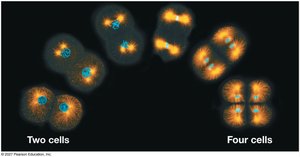
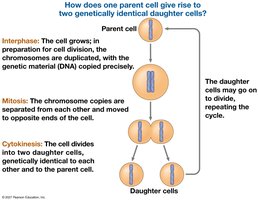
Cell division is the process by which a parent cell divides into two daughter cells.
It is crucial for growth, development, tissue renewal, and reproduction.
Cell division ensures the accurate distribution of genetic material (DNA) to daughter cells.
Key Roles of Cell Division
Functions of Cell Division
Cell division serves several essential functions in both unicellular and multicellular organisms.
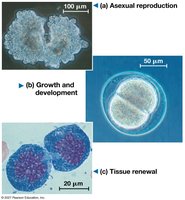
Asexual reproduction: Single-celled organisms reproduce by dividing, creating new organisms.
Growth and development: Multicellular organisms grow and develop from a single cell through repeated cell divisions.
Tissue renewal: Cell division replaces damaged or dead cells in tissues.
Cellular Organization of Genetic Material
Chromosomes and Chromatin
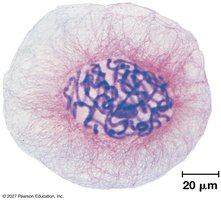
Genetic material in cells is organized into chromosomes, which are composed of DNA and associated proteins.
Genome: All the DNA in a cell; can be a single molecule (prokaryotes) or multiple molecules (eukaryotes).
Chromatin: The complex of DNA and protein that condenses to form chromosomes during cell division.
Somatic cells: Nonreproductive cells with two sets of chromosomes.
Gametes: Reproductive cells (sperm and eggs) with half the chromosome number of somatic cells.
Distribution of Chromosomes During Cell Division
Chromosome Replication and Separation
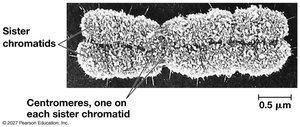
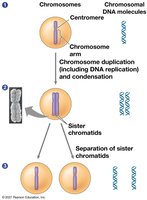
Before cell division, chromosomes are duplicated, and each consists of two sister chromatids joined at the centromere. During division, chromatids separate and are distributed to daughter cells.
Sister chromatids: Identical copies of a chromosome, joined at the centromere.
Centromere: The region where chromatids are most closely attached.
Phases of the Cell Cycle
Overview of Cell Cycle Phases
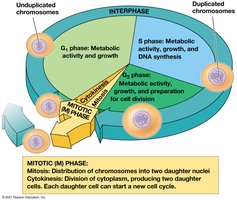
The cell cycle consists of two main phases:
Mitotic (M) phase: Includes mitosis (nuclear division) and cytokinesis (cytoplasmic division).
Interphase: Period of cell growth and chromosome duplication, divided into G1, S, and G2 phases.
Stages of Mitosis
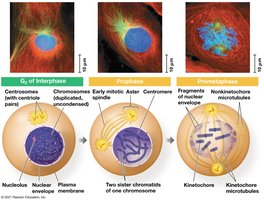
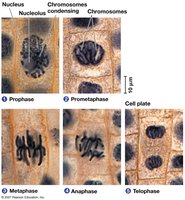
Mitosis is conventionally divided into five stages:
Prophase
Prometaphase
Metaphase
Anaphase
Telophase
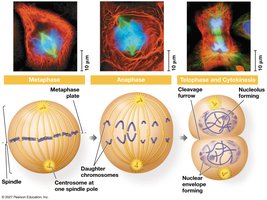
The Mitotic Spindle
Structure and Function
The mitotic spindle is a microtubule-based structure that orchestrates chromosome movement during mitosis.
Centrosome: Microtubule-organizing center; replicates and migrates to opposite cell poles.
Aster: Radial array of short microtubules extending from each centrosome.
Kinetochore: Protein complex at the centromere; attaches chromosomes to spindle microtubules.
Metaphase plate: Imaginary plane where chromosomes align during metaphase.
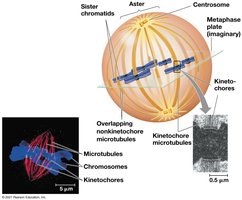
Chromosome Movement During Anaphase
Chromosomes are moved by motor proteins along microtubules, which depolymerize at the kinetochore ends. Both "Pac-man" and "reeling in" mechanisms are used. 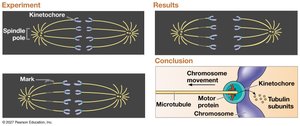
Cytokinesis
Mechanisms in Animal and Plant Cells
Cytokinesis is the process of cytoplasmic division, differing between animal and plant cells.
Animal cells: Occurs by cleavage, forming a cleavage furrow.
Plant cells: Occurs by formation of a cell plate, which develops into a new cell wall.
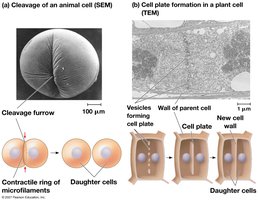
Binary Fission in Bacteria
Prokaryotic Cell Division
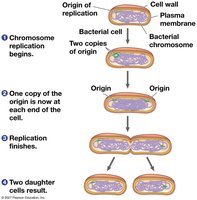
Prokaryotes divide by binary fission, a simpler process than mitosis.
Chromosome replication: Begins at the origin of replication.
Plasma membrane: Pinches inward, dividing the cell.
Evolution of Mitosis
Comparative Mechanisms
Mitosis likely evolved from binary fission, with intermediate forms observed in some unicellular eukaryotes. 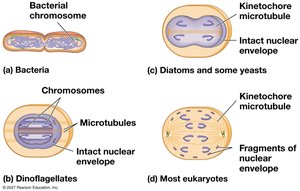
Regulation of the Cell Cycle
Molecular Control System
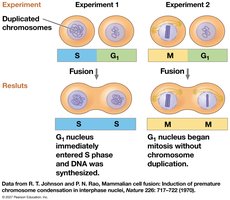
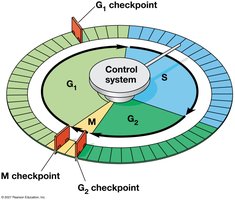
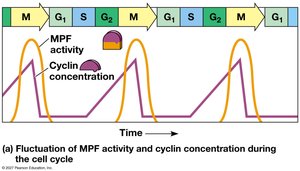
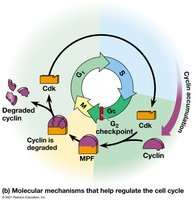
The cell cycle is regulated by molecular signals, including cyclins and cyclin-dependent kinases (Cdks).
Cyclins: Proteins with cyclically fluctuating concentrations.
Cdk: Enzyme that must bind cyclin to be active.
MPF (Maturation-Promoting Factor): Cyclin-Cdk complex that triggers entry into M phase.
Cell Cycle Checkpoints
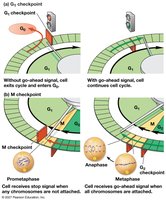
Checkpoints are control points where the cell cycle can be halted until certain conditions are met.
G1 checkpoint: Most important; determines if cell will proceed or enter G0 (nondividing state).
G2 and M checkpoints: Ensure proper DNA replication and chromosome attachment.
Internal and External Signals
Internal signals: Ensure chromosomes are properly attached before anaphase.
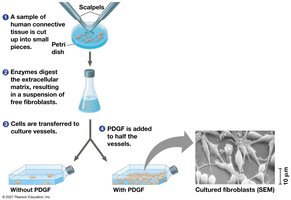
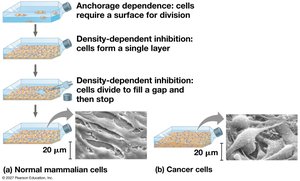
External signals: Include growth factors like PDGF, density-dependent inhibition, and anchorage dependence.
Loss of Cell Cycle Controls in Cancer Cells
Cancer and Cell Cycle Regulation
Cancer cells evade normal cell cycle controls, leading to uncontrolled division and tumor formation.
Transformation: Cells acquire ability to divide indefinitely.
Benign tumors: Remain at original site.
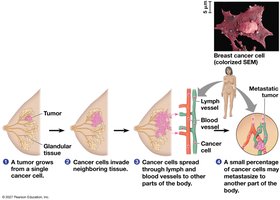
Malignant tumors: Invade tissues and metastasize to other parts of the body.
Metastasis: Spread of cancer cells via blood or lymph.
Skills Exercise: Interpreting Histograms
Experimental Data Analysis
Histograms are used to analyze cell populations, such as the effect of treatments on cell cycle progression. 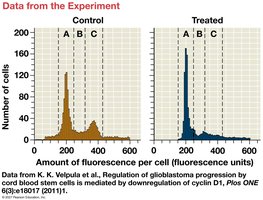
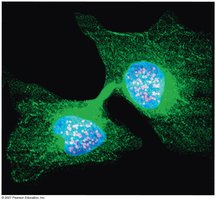
Summary of Key Concepts
Mitotic (M) Phase Overview
The mitotic phase includes the stages of mitosis and cytokinesis, resulting in two genetically identical daughter cells. 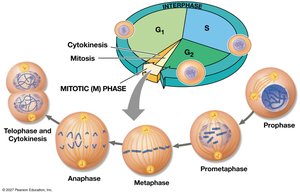
Test Your Understanding
Onion Root Cells and HeLa Cancer Cells
Application questions test understanding of cell cycle concepts in real biological contexts. 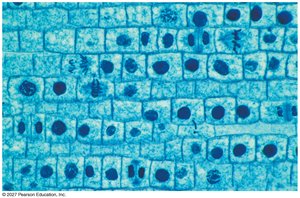
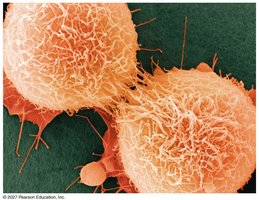
Conclusion
The cell cycle is a highly regulated process essential for life. Its accurate execution ensures proper growth, development, and maintenance of organisms, while its dysregulation can lead to diseases such as cancer.
Additional info:
Equations for cell cycle regulation often involve rates of cyclin synthesis and degradation, but are not explicitly provided in the source.
Comparative tables of cell division mechanisms (binary fission vs. mitosis) can be constructed for further study.
