 Indietro
The Chemical Context of Life: Atoms, Elements, and Water
Guida di studio - Note intelligenti
 Appunti personalizzati basati sui tuoi materiali, ampliati con definizioni chiave, esempi e contesto.
Levels of Biological Organization
Hierarchy of Structure in Living Organisms
Living organisms are organized into a hierarchy of structural levels, each building on the levels below. This organization is fundamental to understanding biological complexity.
Atom: The smallest unit of matter that retains the properties of an element.
Molecule: Two or more atoms bonded together.
Organelle: Specialized structures within cells.
Cell: The basic unit of life.
Tissue: Groups of similar cells performing a specific function.
Organ: Structures composed of multiple tissues working together.
Organ System: Groups of organs that perform related functions.
Organism: An individual living entity.
Population: All individuals of a species in a given area.
Community: All populations of different species in an area.
Ecosystem: The community plus the physical environment.
Biosphere: All ecosystems on Earth.
The Chemical Basis of Life
Atoms and Elements
All matter, living and nonliving, is composed of atoms. Atoms are the smallest units of matter that cannot be broken down by chemical reactions. Elements are pure substances consisting of only one type of atom.
Atoms are made of subatomic particles: protons (positive charge), neutrons (no charge), and electrons (negative charge).
Protons and neutrons are located in the atomic nucleus; electrons move rapidly around the nucleus.
The Periodic Table lists all known elements, each defined by its number of protons (atomic number).
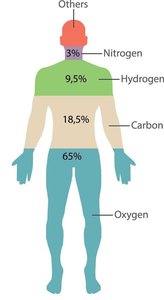
Key Elements in Living Organisms: Oxygen, Carbon, Hydrogen, and Nitrogen make up the majority of living matter.
Atomic Structure and Isotopes
Atomic Number: Number of protons in an atom; determines the element.
Mass Number: Total number of protons and neutrons in the nucleus.
Isotopes: Atoms of the same element with different numbers of neutrons, thus different mass numbers.
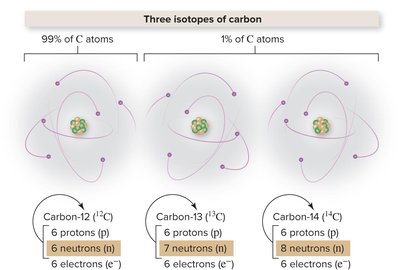
Example: Carbon-12, Carbon-13, and Carbon-14 are isotopes of carbon, all with 6 protons but different numbers of neutrons.
Atomic Mass and Radioisotopes
Atomic Mass (atomic weight): The average mass of all isotopes of an element, weighted by their natural abundance.
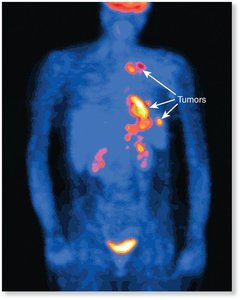
Radioisotopes: Unstable isotopes that decay, releasing radiation. Used in dating fossils, tracing atoms in metabolism, and medical diagnostics.
Ions and Electron Arrangement
Ions: Atoms that have gained or lost electrons, resulting in a net charge. Cations are positively charged (lost electrons), anions are negatively charged (gained electrons).
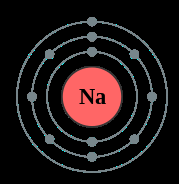
Electron Shells: Electrons occupy energy levels (shells) around the nucleus. The arrangement of electrons determines chemical reactivity.
Chemical Bonds and Molecules
Types of Chemical Bonds
Atoms form chemical bonds to achieve stable electron configurations. The main types of bonds are ionic, covalent (polar and nonpolar), and hydrogen bonds.
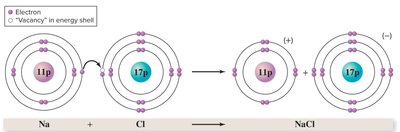
Ionic Bonds: Formed when electrons are transferred from one atom to another, creating oppositely charged ions that attract each other.
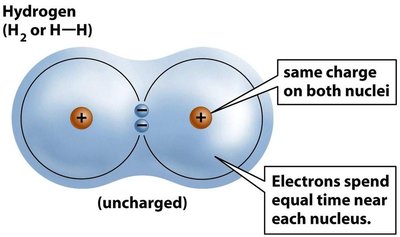
Covalent Bonds: Formed when atoms share electrons. If sharing is equal, the bond is nonpolar; if unequal, the bond is polar.
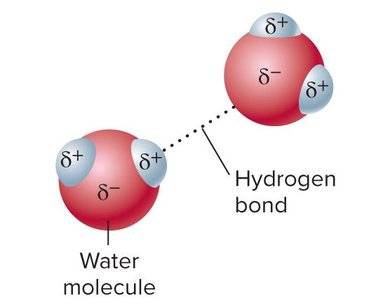
Hydrogen Bonds: Weak attractions between a slightly positive hydrogen atom and a slightly negative atom (often oxygen or nitrogen) in another molecule.
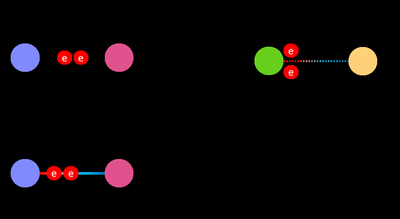
Ionic Bonds
Ionic bonds occur between atoms with large differences in electronegativity. The resulting ions are held together by electrostatic attraction.
Covalent Bonds
Nonpolar Covalent Bonds: Electrons are shared equally; no charge difference across the molecule.
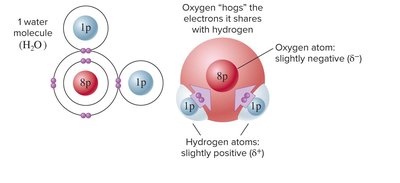
Polar Covalent Bonds: Electrons are shared unequally, creating partial charges (δ+ and δ−) on different parts of the molecule.
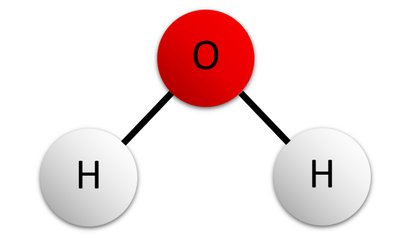
Hydrogen Bonds and Van der Waals Forces
Hydrogen bonds are weak individually but strong collectively. They are crucial for the structure of water, DNA, and proteins. Van der Waals forces are even weaker attractions between molecules.
Relative Strengths of Bonds
BOND TYPE | LENGTH (nm) | STRENGTH (kcal/mole) IN VACUUM | STRENGTH (kcal/mole) IN WATER |
|---|---|---|---|
Covalent | 0.15 | 90 | 90 |
Noncovalent: ionic* | 0.25 | 80 | 3 |
Hydrogen | 0.30 | 4 | 1 |
Van der Waals attraction (per atom) | 0.35 | 0.1 | 0.1 |
Additional info: In biological systems, ionic bonds are weak in water due to competition with water molecules.
Water and Life
Importance of Water
Water is essential for life due to its unique chemical and physical properties, which arise from its polarity and ability to form hydrogen bonds.
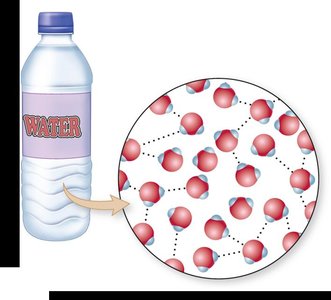
Cohesion: Water molecules stick to each other, creating surface tension.
Adhesion: Water molecules stick to other substances.
High Specific Heat: Water resists temperature changes, stabilizing environments and organisms.
High Heat of Vaporization: Water absorbs a lot of heat when it evaporates, allowing for evaporative cooling.
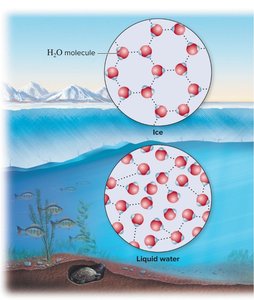
Expansion Upon Freezing: Ice is less dense than liquid water, so it floats, insulating aquatic life in winter.
Versatile Solvent: Water dissolves many substances, facilitating chemical reactions in cells.
Cohesion and Surface Tension
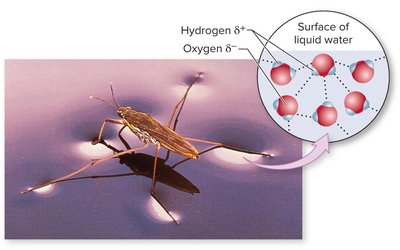
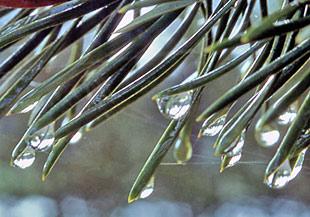
Cohesion allows water molecules to stick together, resulting in high surface tension. This property enables small objects, like insects, to rest on water surfaces without sinking.
Adhesion and Capillary Action
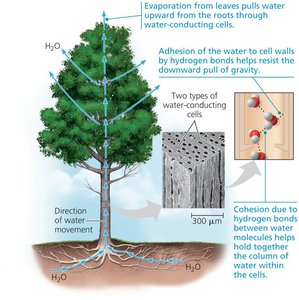
Adhesion helps water molecules stick to other surfaces, such as the walls of plant vessels, aiding in the transport of water from roots to leaves (capillary action).
Specific Heat and Temperature Regulation
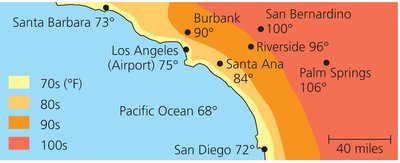
Water's high specific heat allows it to absorb or release large amounts of heat with little temperature change, helping organisms maintain stable internal temperatures and moderating Earth's climate.
Heat of Vaporization and Evaporative Cooling
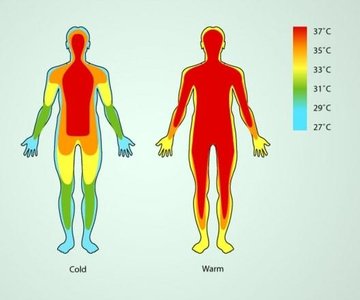
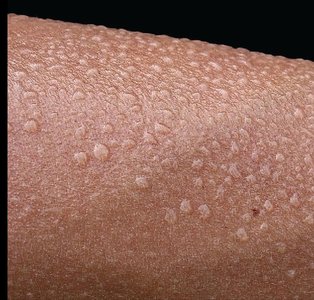
Water's high heat of vaporization means it takes a lot of energy to convert liquid water to vapor. This property enables evaporative cooling, such as sweating in humans, to regulate body temperature.
Water vs. Ice: Density and Insulation
Unlike most substances, water expands when it freezes due to the formation of a crystalline structure stabilized by hydrogen bonds. As a result, ice is less dense than liquid water and floats, insulating aquatic environments in winter.
Water as a Solvent
Water is known as the "universal solvent" because its polarity allows it to dissolve many ionic and polar substances, facilitating chemical reactions in biological systems. Solutions where water is the solvent are called aqueous solutions.
Hydrophilic, Hydrophobic, and Amphipathic Substances
Hydrophilic: Substances that dissolve easily in water (ionic and polar molecules).
Hydrophobic: Substances that do not dissolve in water (nonpolar molecules).
Amphipathic: Molecules with both hydrophilic and hydrophobic regions (e.g., phospholipids).
pH and Acidity
pH Scale
The pH scale measures the concentration of hydrogen ions (H+) in a solution. It ranges from 0 (most acidic) to 14 (most basic), with 7 being neutral.
Acidic solutions: pH < 7, high H+ concentration.
Neutral solutions: pH = 7, equal H+ and OH- concentrations.
Basic solutions: pH > 7, low H+ concentration.
Example: Gastric juice (pH 2) is more acidic than pure water (pH 7); household bleach (pH 13) is more basic.
Additional info: The ability of water to dissociate into H+ and OH- ions is fundamental to acid-base chemistry in biology.
