 Indietro
The Chemical Context of Life: Essential Chemistry for Biology
Guida di studio - Note intelligenti
 Appunti personalizzati basati sui tuoi materiali, ampliati con definizioni chiave, esempi e contesto.
Chapter 2: The Chemical Context of Life
Overview: The Importance of Chemistry to Life
Biology is deeply interconnected with chemistry, as all living organisms are composed of chemical substances. Understanding the chemical properties of water and other molecules is fundamental to the study of life.
Biology is an interdisciplinary science, integrating principles from chemistry and physics.
Water's unique chemical properties are central to supporting life on Earth.
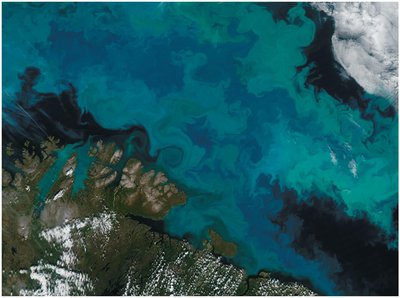
Concept 2.1: Matter Consists of Chemical Elements in Pure Form and in Combinations Called Compounds
Elements and Compounds
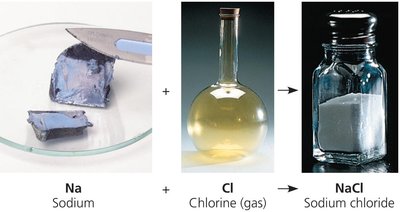
Matter is anything that occupies space and has mass. It is composed of elements and compounds.
Element: A substance that cannot be broken down into other substances by chemical reactions.
Compound: A substance consisting of two or more elements in a fixed ratio, exhibiting emergent properties distinct from its constituent elements.
Emergent properties: New characteristics that arise when elements combine to form compounds.
The Elements of Life
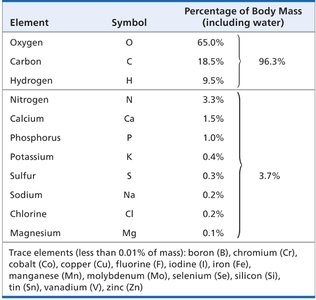
Of the 92 naturally occurring elements, only a small fraction are essential for life. These are required for an organism to live, grow, and reproduce.
Essential elements: About 20–25% of elements are essential for life.
Trace elements: Required in minute quantities (e.g., iodine for thyroid function).
Deficiency example: Iodine deficiency in humans can cause goiter.
Element | Symbol | Percentage of Body Mass (including water) |
|---|---|---|
Oxygen | O | 65.0% |
Carbon | C | 18.5% |
Hydrogen | H | 9.5% |
Nitrogen | N | 3.3% |
Calcium | Ca | 1.5% |
Phosphorus | P | 1.0% |
Potassium | K | 0.4% |
Sulfur | S | 0.3% |
Sodium | Na | 0.2% |
Chlorine | Cl | 0.2% |
Magnesium | Mg | 0.1% |
Evolution of Tolerance to Toxic Elements
Some elements are toxic, but certain species have evolved mechanisms to tolerate or even utilize these elements. For example, sunflowers can absorb heavy metals from contaminated soils, aiding in environmental detoxification.
Concept 2.2: An Element’s Properties Depend on the Structure of Its Atoms
Atomic Structure and Subatomic Particles
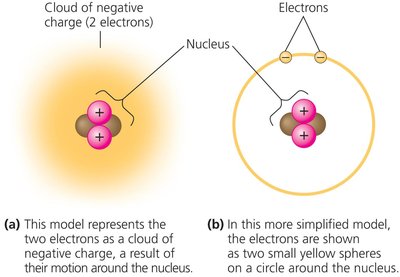
Each element consists of a unique type of atom, the smallest unit retaining the properties of the element. Atoms are composed of subatomic particles:
Protons: Positively charged, found in the nucleus.
Neutrons: No charge, found in the nucleus.
Electrons: Negatively charged, orbit the nucleus in a cloud.
Atomic Number, Mass Number, and Isotopes
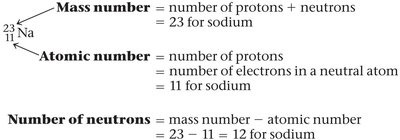
The identity and properties of an atom are determined by the number of protons, neutrons, and electrons.
Atomic number: Number of protons in the nucleus.
Mass number: Sum of protons and neutrons.
Atomic mass: Approximate total mass of an atom (in daltons).
Isotopes: Atoms of the same element with different numbers of neutrons.
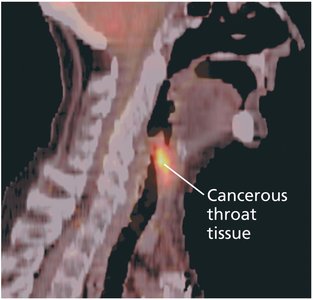
Radioactive isotopes: Unstable isotopes that decay, emitting particles and energy; used in dating fossils, tracing metabolic pathways, and medical diagnostics.
Energy Levels of Electrons
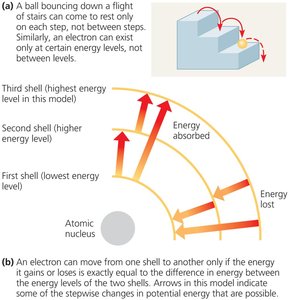
Electrons occupy specific energy levels or shells around the nucleus. The energy of an electron increases with its distance from the nucleus.
Electrons can move between shells by absorbing or releasing energy.
Each shell has a characteristic energy level.
Electron Distribution and Chemical Properties
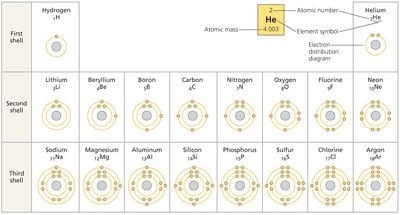
The chemical behavior of an atom is largely determined by the arrangement of electrons, especially those in the outermost shell (valence shell).
Valence electrons: Electrons in the outermost shell; determine reactivity.
Atoms with full valence shells are chemically inert.
Concept 2.3: The Formation and Function of Molecules Depend on Chemical Bonding Between Atoms
Covalent Bonds
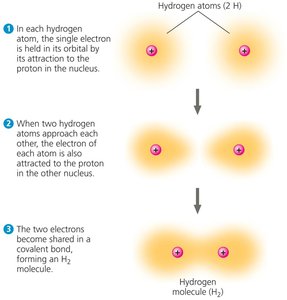
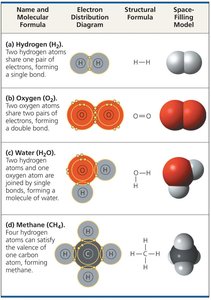
Covalent bonds involve the sharing of valence electrons between atoms, resulting in the formation of molecules.
Single bond: Sharing of one pair of electrons (e.g., H—H).
Double bond: Sharing of two pairs of electrons (e.g., O=O).
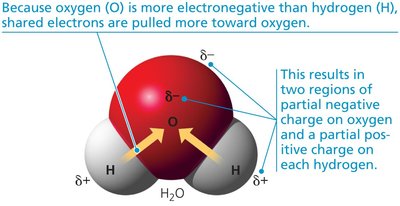
Electronegativity: The attraction of an atom for electrons in a covalent bond.
Nonpolar covalent bond: Electrons are shared equally.
Polar covalent bond: Electrons are shared unequally, creating partial charges.
Ionic Bonds
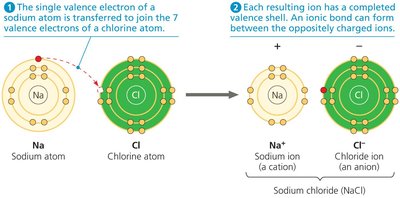
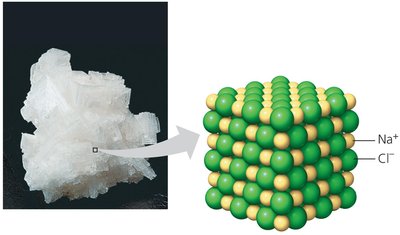
Ionic bonds form when electrons are transferred from one atom to another, resulting in oppositely charged ions that attract each other.
Cation: Positively charged ion.
Anion: Negatively charged ion.
Ionic compound (salt): Compound formed by ionic bonds, often crystalline in structure (e.g., NaCl).
Weak Chemical Interactions
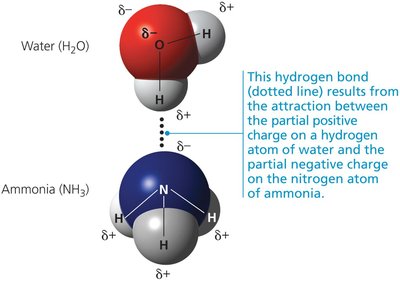
Weak bonds, such as hydrogen bonds and van der Waals interactions, play crucial roles in the structure and function of biological molecules.
Hydrogen bond: Attraction between a hydrogen atom covalently bonded to an electronegative atom and another electronegative atom.
Van der Waals interactions: Weak attractions due to transient local partial charges.
Molecular Shape and Function
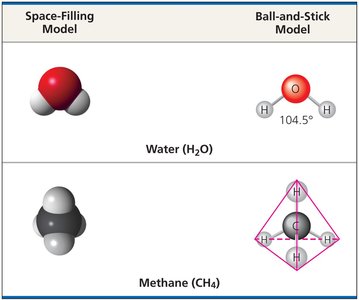
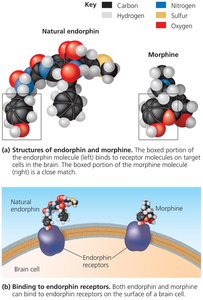
The shape of a molecule is determined by the positions of its atoms' orbitals and is critical for its biological function. Molecules with similar shapes can have similar effects, such as natural endorphins and morphine binding to the same brain receptors.
Concept 2.4: Chemical Reactions Make and Break Chemical Bonds
Chemical Reactions
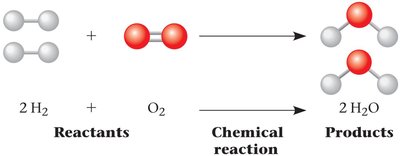
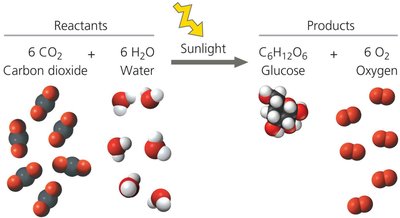
Chemical reactions involve the making and breaking of chemical bonds, transforming reactants into products. All reactions are reversible, and equilibrium is reached when the rates of forward and reverse reactions are equal.
Reactants: Starting substances in a reaction.
Products: Substances formed by the reaction.
Chemical equilibrium: State where forward and reverse reaction rates are equal.
Concept 2.5: Hydrogen Bonding Gives Water Properties That Help Make Life Possible on Earth
Structure and Properties of Water
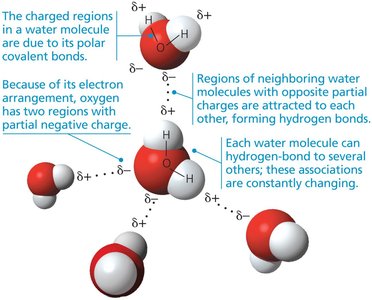
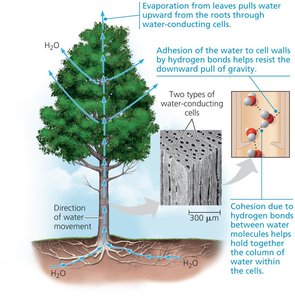
Water is a polar molecule, with hydrogen bonds forming between molecules. These bonds give rise to water's unique properties essential for life.
Cohesion: Water molecules stick together due to hydrogen bonding.
Adhesion: Water molecules cling to other substances.
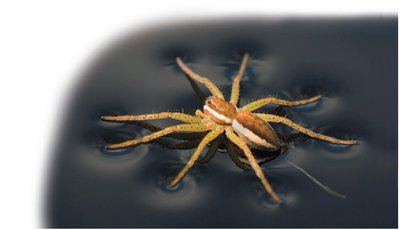
Surface tension: Measure of how difficult it is to break the surface of a liquid.
Moderation of Temperature by Water
Water moderates temperature by absorbing and releasing heat with minimal temperature change, due to its high specific heat and heat of vaporization.
Specific heat: Amount of heat required to change the temperature of 1 g of a substance by 1°C.
Evaporative cooling: As water evaporates, it cools the surface, stabilizing temperatures in organisms and environments.
Floating of Ice on Liquid Water
Ice is less dense than liquid water because hydrogen bonds keep water molecules further apart in the solid state. This property insulates aquatic life in cold climates.
Water: The Solvent of Life
Water's polarity makes it an excellent solvent, capable of dissolving ionic and polar substances. Hydration shells form around dissolved ions, and even large polar molecules like proteins can dissolve if they have ionic or polar regions.
Hydrophilic: Substances with an affinity for water.
Hydrophobic: Substances that repel water, usually nonpolar.
Solute Concentration in Aqueous Solutions
Chemical reactions in cells depend on solute concentrations, measured in moles and molarity (M).
Molecular mass: Sum of all atomic masses in a molecule.
Avogadro’s number: molecules per mole.
Molarity (M): Moles of solute per liter of solution.
Acids, Bases, and pH
Acids increase the concentration of H+ ions in solution, while bases decrease it. The pH scale measures the concentration of H+ ions, with lower values being more acidic and higher values more basic.
pH equation:
Neutral solutions have pH 7; biological fluids typically range from pH 6 to 8.
Buffers
Buffers are substances that minimize changes in pH by accepting or donating H+ ions. Most buffers consist of a weak acid and its conjugate base, such as carbonic acid in blood.
Acidification: A Threat to Our Oceans
Human activities, such as burning fossil fuels, increase atmospheric CO2, which dissolves in oceans and forms carbonic acid, leading to ocean acidification. This process reduces carbonate ion concentration, threatening organisms that build shells or coral reefs.
