 Indietro
The Chemical Context of Life: Principles of Biology Chapter 2 Study Guide
Guida di studio - Note intelligenti
 Appunti personalizzati basati sui tuoi materiali, ampliati con definizioni chiave, esempi e contesto.
The Chemical Context of Life
2.1 Matter, Elements, and Compounds
Understanding the chemical basis of life is fundamental to biology. Living organisms depend on a specific set of chemical elements, and their behaviors—even those of simple insects—are governed by chemistry.
Matter: Anything that takes up space and has mass.
Element: A substance that cannot be broken down into other substances by chemical reactions.
Compound: A substance formed when two or more elements combine in a fixed ratio. Compounds often have properties distinct from their constituent elements.
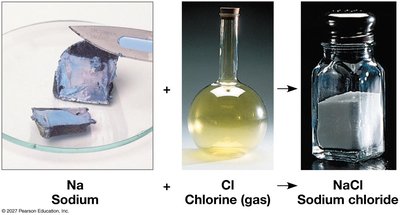
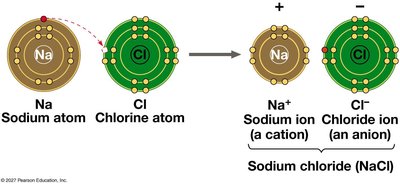
Emergent Properties: New characteristics that arise when elements combine, such as table salt (NaCl) formed from sodium and chlorine.
Example: Sodium (Na) and chlorine (Cl) are hazardous individually, but together they form edible table salt (NaCl).
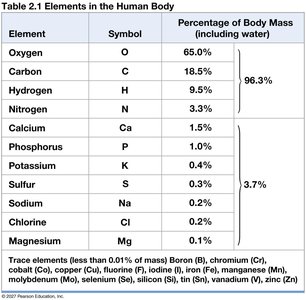
Elements Essential to Life: Of the 92 natural elements, about 20–25% are essential for life. Four elements—carbon, hydrogen, oxygen, and nitrogen—make up 96% of living matter. The remaining 4% includes calcium, phosphorus, potassium, and sulfur. Trace elements are required only in minute quantities.
When Elements Turn Toxic: Some elements are toxic to organisms, but certain species can evolve tolerance to these elements, such as plants adapted to serpentine soils high in toxic metals.

2.2 An Element's Properties Depend on Atomic Structure
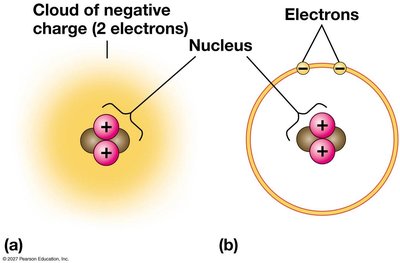
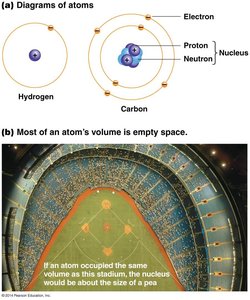
The properties of elements are determined by their atomic structure, which consists of subatomic particles: protons, neutrons, and electrons.
Protons: Positively charged particles found in the nucleus.
Neutrons: Neutral particles also found in the nucleus.
Electrons: Negatively charged particles forming a cloud around the nucleus.
Atoms are mostly empty space; the nucleus is tiny compared to the overall atom.
Molecular Mass: The sum of the masses of all atoms in a molecule.
Mole: A unit representing 6.02 × 10²³ molecules (Avogadro's number).
Molarity (M): Number of moles of solute per liter of solution.
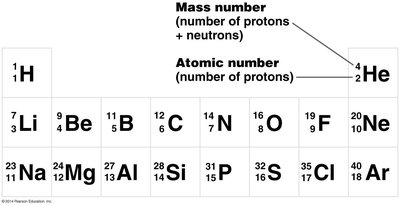
Atomic Number: Number of protons in the nucleus. Mass Number: Sum of protons and neutrons. Isotopes: Variants of an element with different numbers of neutrons.
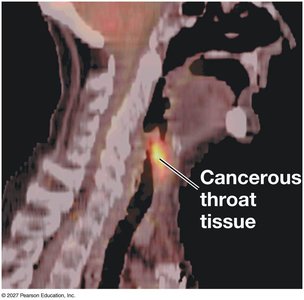
Radioactive Isotopes: These decay spontaneously, releasing energy and particles. They are used as tracers in medicine and for radiometric dating.
Electron Energy Levels: Electrons occupy shells at fixed distances from the nucleus, each with a characteristic energy level. Electrons can only exist at specific energy levels.
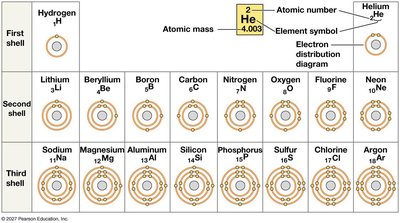
Valence Electrons: Electrons in the outermost shell, determining chemical reactivity.
Orbitals: 3D regions where electrons are found about 90% of the time; each holds up to 2 electrons.
2.3 Chemical Bonding
Atoms form molecules by sharing, transferring, or weakly attracting electrons. The type of bond formed depends on the interaction between atoms.
Covalent Bonds
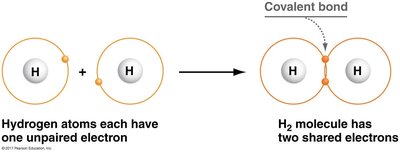
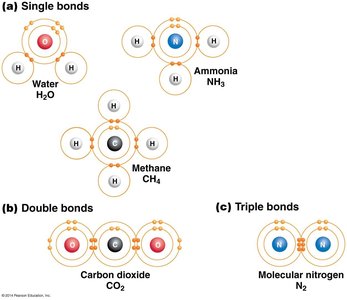
Covalent Bond: Formed when two atoms share a pair of valence electrons.
Bonding Capacity: Determined by the number of unpaired valence electrons.
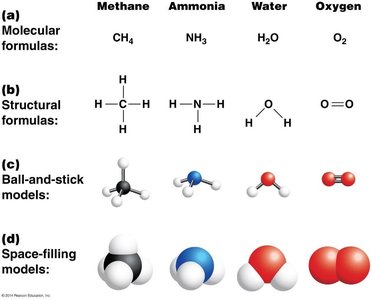
Single, double, and triple covalent bonds share one, two, or three pairs of electrons, respectively.
Electronegativity and Polarity
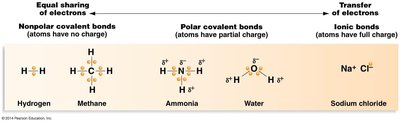
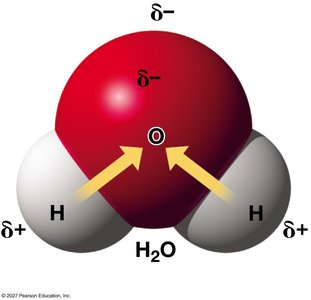
Electronegativity: An atom's ability to attract shared electrons.
Nonpolar Covalent Bond: Electrons are shared equally.
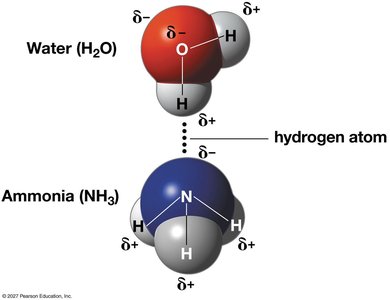
Polar Covalent Bond: One atom attracts electrons more strongly, creating partial charges.
Ionic Bonds
Atoms may transfer electrons completely, forming ions.
Cation: Positively charged ion.
Anion: Negatively charged ion.
Ionic Bond: Attraction between oppositely charged ions.
Weak Chemical Interactions
Hydrogen Bond: Attraction between a hydrogen atom and an electronegative atom (usually oxygen or nitrogen).
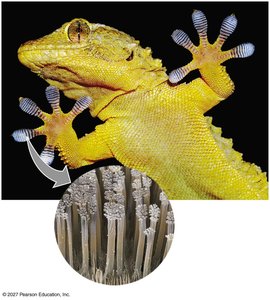
Van der Waals Interactions: Weak attractions between molecules due to transient local partial charges.
Weak bonds are essential for the dynamic structure and function of biological molecules.
Molecular Shape and Function
A molecule's shape is determined by the positions of its atoms' orbitals.
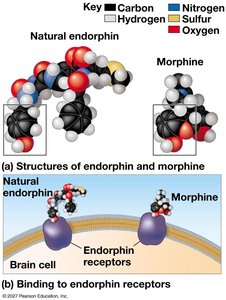
Shape is crucial for biological function and molecular recognition.
Molecules with similar shapes can bind the same receptors, as seen with morphine and endorphins.
2.4 Chemical Reactions
Chemical reactions involve the making and breaking of bonds, transforming reactants into products. All reactions are reversible, and equilibrium is reached when forward and reverse rates are equal.
Reactants: Starting molecules in a reaction.
Products: Resulting molecules.
Chemical Equilibrium: State where forward and reverse reaction rates are equal.
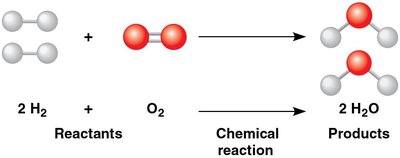
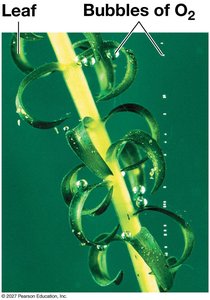
Photosynthesis Equation:
Example of Chemical Equilibrium:
Summary Table: Elements in the Human Body
Element | Symbol | Percentage of Body Mass (including water) |
|---|---|---|
Oxygen | O | 65.0% |
Carbon | C | 18.5% |
Hydrogen | H | 9.5% |
Nitrogen | N | 3.3% |
Calcium | Ca | 1.5% |
Phosphorus | P | 1.0% |
Potassium | K | 0.4% |
Sulfur | S | 0.3% |
Sodium | Na | 0.2% |
Chlorine | Cl | 0.2% |
Magnesium | Mg | 0.1% |
Trace elements (less than 0.01% of mass): Boron (B), chromium (Cr), cobalt (Co), copper (Cu), fluorine (F), iodine (I), iron (Fe), manganese (Mn), molybdenum (Mo), selenium (Se), silicon (Si), tin (Sn), vanadium (V), zinc (Zn).
Additional info: This study guide expands on brief points with academic context, definitions, and examples to ensure completeness and clarity for exam preparation.
