 Indietro
The Chemistry of Life: Atoms, Elements, and Biomolecules
Guida di studio - Note intelligenti
 Appunti personalizzati basati sui tuoi materiali, ampliati con definizioni chiave, esempi e contesto.
The Chemistry of Life
Introduction to Biological Chemistry
All living organisms are composed of non-living atoms and molecules. The unique properties and combinations of these atoms give rise to the complexity and diversity of life. Biological molecules not only provide structure but also contain and transmit information essential for life processes.
CHNOPS Elements: The six most important elements in biology are Carbon (C), Hydrogen (H), Nitrogen (N), Oxygen (O), Phosphorus (P), and Sulfur (S).
Atoms: The basic unit of matter, consisting of protons, neutrons, and electrons.
Biological Molecules: Combinations of atoms that form the macromolecules essential for life, such as carbohydrates, lipids, proteins, and nucleic acids.
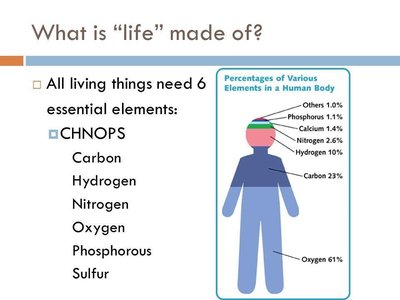
Atoms and Their Properties
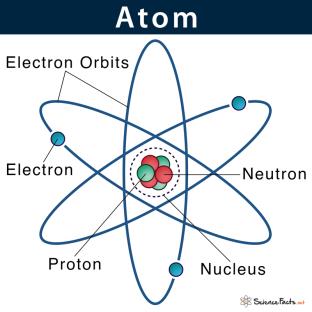
Structure of Atoms
Atoms are composed of a central nucleus (containing protons and neutrons) surrounded by electrons in orbitals. Most of the atom's volume is empty space, and the arrangement of electrons determines chemical behavior.
Protons: Positively charged particles in the nucleus.
Neutrons: Neutral particles in the nucleus.
Electrons: Negatively charged particles in orbitals around the nucleus.
Atomic Number: Number of protons in an atom, defining the element.
Isotopes: Atoms of the same element with different numbers of neutrons.
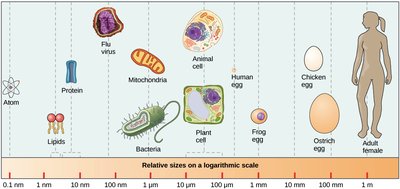
Scale and Estimation in Biology
Biological systems operate at scales ranging from atoms to entire organisms. Estimations are crucial for understanding the vast differences in size and number, such as the number of atoms or cells in the human body.
Avogadro's Number: atoms/mole.
Scale: Atoms are about meters in diameter.
Elements Essential for Life: CHNOPS
Overview of CHNOPS Elements
The elements CHNOPS are the primary building blocks of biological molecules. Each element has unique properties that contribute to the structure and function of biomolecules.
Element | Key Properties | Biological Role |
|---|---|---|
Carbon (C) | Forms 4 bonds, versatile, can catenate | Backbone of all organic molecules |
Hydrogen (H) | Forms 1 bond, best electron donor | Part of water, organic molecules |
Nitrogen (N) | Forms 3 bonds, basic, positive relative to O | Proteins, nucleic acids |
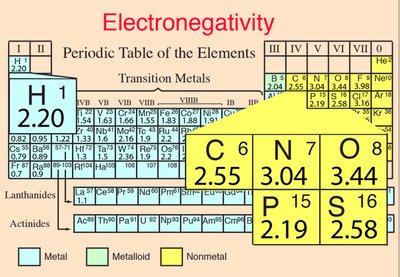
Oxygen (O) | Highly electronegative, forms 2 bonds | Water, organic molecules, acids |
Phosphorus (P) | Forms 5 bonds, always with O | ATP, nucleic acids |
Sulfur (S) | Forms 2 bonds, electronegative | Proteins, redox reactions |
Carbon: The Backbone of Life
Carbon is the most versatile element in biology, capable of forming four covalent bonds with other atoms, including itself. This allows for the creation of complex molecules such as chains, rings, and branched structures.
Single, Double, Triple Bonds: Carbon can form various types of bonds, contributing to molecular diversity.
Non-polar and Polar Structures: Carbon-based molecules can be hydrophobic or hydrophilic depending on their structure.
Hydrogen: The Electron Donor
Hydrogen is the simplest and most abundant element in the universe. In biology, it forms one covalent bond and is a key player in energy transfer and molecular structure.
Flexible Bonds: Hydrogen bonds are crucial for the structure of water and biological macromolecules.
Nitrogen: The Information Carrier
Nitrogen is essential for the structure of amino acids and nucleic acids. It often acts as a base in chemical reactions and is involved in the transfer of information within cells.
Found in: Proteins, DNA, RNA.
Oxygen: The Electronegative Atom
Oxygen is the most electronegative atom in biological systems, making it a key player in energy transfer and the formation of acids. It is essential for cellular respiration and water formation.
Role in Water: Oxygen's electronegativity leads to the polarity of water molecules.
Phosphorus: The Energy Carrier
Phosphorus is always found surrounded by oxygen in biological systems, primarily as phosphate. It is crucial for energy transfer (ATP) and the structure of nucleic acids.
ATP: Adenosine triphosphate, the energy currency of the cell, contains phosphate groups.
Sulfur: Protein Folding and Redox
Sulfur is important for the correct folding of proteins and for redox reactions in cells. It is found in certain amino acids and cofactors.
Disulfide Bonds: Sulfur forms covalent bonds that stabilize protein structure.
Biological Molecules and Information
Macromolecules: Carbohydrates, Lipids, Proteins, Nucleic Acids
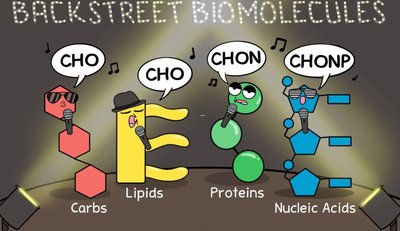
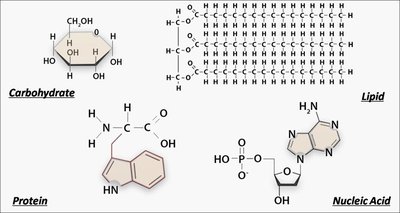
Biological macromolecules are large, complex molecules that perform a wide range of functions in living organisms. They are primarily composed of CHNOPS elements.
Carbohydrates: Composed of C, H, and O. Serve as energy sources and structural components.
Lipids: Composed mainly of C and H, with some O. Function as energy storage, insulation, and membrane structure.
Proteins: Composed of C, H, O, and N (sometimes S). Serve as enzymes, structural components, and signaling molecules.
Nucleic Acids: Composed of C, H, O, N, and P. Store and transmit genetic information (DNA and RNA).
Information Flow in Biological Systems
Biological molecules contain information in their structure. Small changes in molecular structure can lead to significant changes in function, allowing for communication and regulation within cells.
DNA and RNA: Store genetic information using sequences of nucleotides.
Proteins: Sequence of amino acids determines structure and function.
Chemical Bonds in Biology
Covalent Bonds
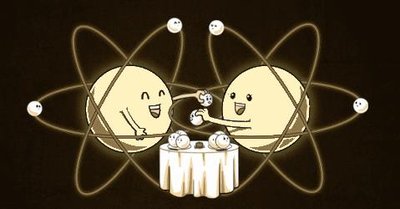
Covalent bonds involve the sharing of electrons between atoms. They are the strongest type of bond in biological molecules and are responsible for the stability of macromolecules.
Non-polar Covalent Bonds: Electrons are shared equally (e.g., C-H bonds).
Polar Covalent Bonds: Electrons are shared unequally, leading to partial charges (e.g., O-H bonds).
Ionic and Other Bonds
Ionic bonds form when electrons are transferred from one atom to another, creating charged ions. Other important interactions include hydrogen bonds and van der Waals forces, which contribute to the structure and function of biological molecules.
Ionic Bonds: Attraction between oppositely charged ions.
Hydrogen Bonds: Weak bonds important in water, DNA, and protein structure.
Van der Waals Forces: Weak attractions due to transient charge differences.
Representing Atoms and Molecules
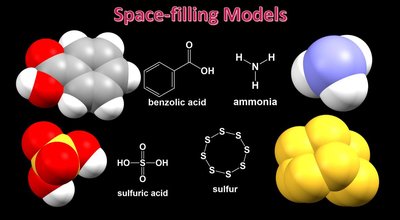
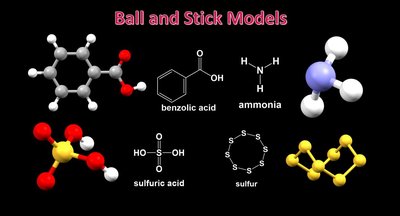
There are several ways to represent atoms and molecules, each with its own advantages for visualizing structure and function.
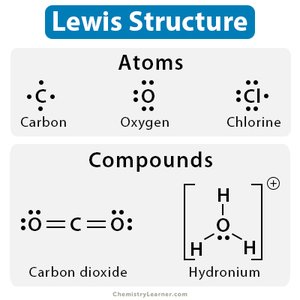
Lewis Dot Structures: Show valence electrons and bonding.
Ball-and-Stick Models: Show spatial arrangement of atoms and bonds.
Space-Filling Models: Show the actual volume occupied by atoms.
Key Chemical Reactions in Biology
Formation and Breakdown of Biomolecules
Chemical reactions in living organisms involve the making and breaking of covalent bonds. These reactions are essential for metabolism, energy transfer, and the synthesis of new molecules.
Example Reaction: Cellular respiration:
Enzymes: Biological catalysts that speed up chemical reactions.
Summary Table: CHNOPS Elements and Their Roles
Element | Symbol | Major Biological Role |
|---|---|---|
Carbon | C | Backbone of organic molecules |
Hydrogen | H | Part of water, organic molecules |
Nitrogen | N | Proteins, nucleic acids |
Oxygen | O | Water, respiration, acids |
Phosphorus | P | ATP, nucleic acids |
Sulfur | S | Proteins, redox reactions |
