 Indietro
The Chemistry of Life: Atoms, Elements, and Chemical Bonds
Guida di studio - Note intelligenti
 Appunti personalizzati basati sui tuoi materiali, ampliati con definizioni chiave, esempi e contesto.
The Chemistry of Life
Atoms & Elements in Living Systems
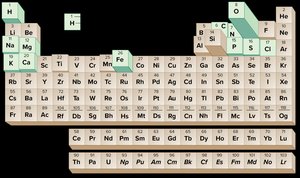
All living and non-living matter is composed of atoms, which are the fundamental units of elements. Elements are substances that cannot be broken down into other substances by chemical reactions. Living organisms are primarily composed of a limited set of elements, with a few being essential for life.
Matter: Anything that occupies space and has mass.
Atom: The smallest unit of an element that retains its properties.
Element: A pure substance consisting of only one type of atom.
Essential elements: Elements required for an organism's survival (e.g., humans require 25, plants require 17).
Trace elements: Required in minute quantities (e.g., iron (Fe), iodine (I)).
Compounds and Emergent Properties
Compounds are substances formed from two or more different elements combined in fixed ratios. Compounds often have properties distinct from their constituent elements.
Compound: Substance with atoms of different elements in a fixed ratio (e.g., NaCl, H2O).
Emergent properties: New characteristics that arise when elements combine to form compounds.
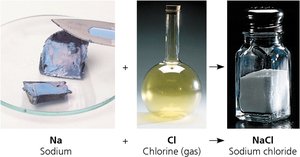
Example: Table salt (NaCl) is formed from sodium (a reactive metal) and chlorine (a poisonous gas), but together they form a stable edible compound.
Atomic Structure
Subatomic Particles
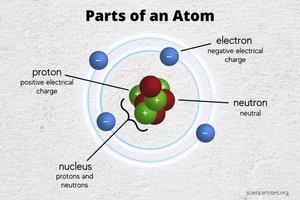
Atoms are composed of three main subatomic particles: protons, neutrons, and electrons. The arrangement and number of these particles determine the atom's properties.
Proton: Positive charge, located in the nucleus, mass ≈ 1 Dalton.
Neutron: No charge, located in the nucleus, mass ≈ 1 Dalton.
Electron: Negative charge, orbits the nucleus, mass ≈ 1/2000 Dalton.
Atomic number: Number of protons (defines the element).
Mass number: Protons + neutrons.
Atomic mass: Approximate total mass of an atom.
Isotopes and Radioactivity
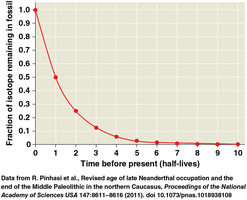
Isotopes are atoms of the same element with different numbers of neutrons. Some isotopes are unstable (radioactive) and decay over time, releasing energy and particles.
Isotope: Atoms with the same number of protons but different numbers of neutrons.
Radioactive isotope: Unstable isotope that decays spontaneously.
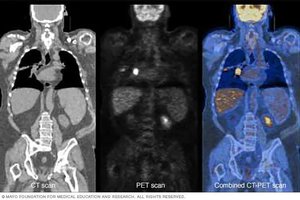
Applications: Radiometric dating (determining the age of fossils/rocks), radioactive tracers in medicine (e.g., PET scans).
Electron Arrangement and Chemical Properties
Electron Shells and Energy Levels
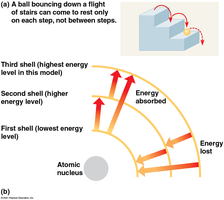
Electrons occupy specific energy levels or shells around the nucleus. The arrangement of electrons determines how atoms interact and bond with each other.
Electron shell: Energy level where electrons are found.
Valence electrons: Electrons in the outermost shell; determine chemical reactivity.
Atoms are most stable when their valence shell is full.
Periodic Table and Element Properties
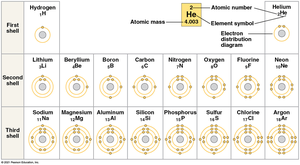
The periodic table organizes elements by increasing atomic number and similar chemical properties. The arrangement reflects recurring patterns in electron configuration and reactivity.
Elements in the same column (group) have similar valence electron configurations and chemical behavior.
Rows (periods) correspond to the filling of electron shells.
Chemical Bonds
Covalent Bonds
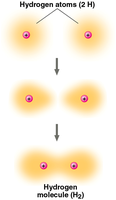
Covalent bonds form when two atoms share pairs of valence electrons. These bonds are strong and are the basis for most molecules in living organisms.
Covalent bond: Sharing of a pair of valence electrons between atoms.
Can be single, double, or triple bonds depending on the number of shared electron pairs.
Molecule: Two or more atoms held together by covalent bonds.
Electronegativity and Bond Polarity
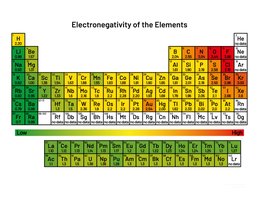
Electronegativity is an atom's ability to attract electrons in a covalent bond. Differences in electronegativity lead to polar or nonpolar covalent bonds.
Nonpolar covalent bond: Electrons are shared equally (e.g., H2, O2).
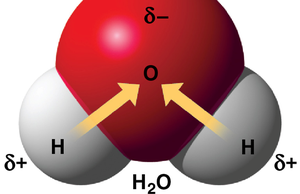
Polar covalent bond: Electrons are shared unequally, resulting in partial charges (e.g., H2O).
Ionic Bonds and Salts
Ionic bonds form when one atom transfers electrons to another, resulting in oppositely charged ions that attract each other. Ionic compounds are often called salts.
Ionic bond: Attraction between positively and negatively charged ions.
Salt: Ionic compound formed from the reaction of an acid and a base (e.g., NaCl).
Salts are stable when dry but dissociate easily in water.
Molecular Shape and Function
Molecular Shape
The shape of a molecule is determined by the arrangement of its atoms and the orbitals involved in bonding. Shape is crucial for molecular recognition and function in biological systems.
Hybridization of orbitals can create specific molecular geometries.
Molecules with similar shapes can have similar biological effects (e.g., morphine and endorphins).
Chemical Reactions
Making and Breaking Bonds
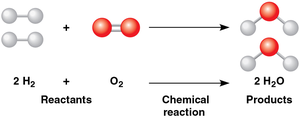
Chemical reactions involve the making and breaking of chemical bonds, transforming reactants into products. The direction and rate of reactions are influenced by several factors.
Reactants: Starting substances in a chemical reaction.
Products: Substances formed as a result of a chemical reaction.
Catalyst: Substance that increases reaction rate without being consumed (in biology, enzymes serve this role).
Factors affecting reaction rates: Temperature, concentration of reactants/products, and presence of catalysts.
Reversibility and Chemical Equilibrium
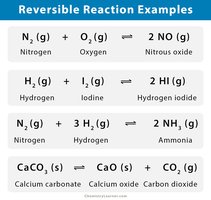
All chemical reactions are theoretically reversible. Chemical equilibrium is reached when the forward and reverse reactions occur at the same rate, and the concentrations of reactants and products remain constant.
Chemical equilibrium: State where the rates of forward and reverse reactions are equal.
At equilibrium, the system is stable, but reactions continue to occur in both directions.
Summary Table: Key Terms and Concepts
Term | Definition |
|---|---|
Atom | Smallest unit of an element retaining its properties |
Element | Substance that cannot be broken down by chemical means |
Compound | Substance formed from two or more elements in fixed ratio |
Isotope | Atoms of the same element with different numbers of neutrons |
Covalent bond | Bond formed by sharing electrons |
Ionic bond | Bond formed by transfer of electrons and attraction of ions |
Valence electron | Electron in the outermost shell, determines reactivity |
Catalyst | Substance that speeds up a chemical reaction |
Chemical equilibrium | State where forward and reverse reaction rates are equal |
