 Indietro
The Chemistry of Living Things: Study Notes for General Biology
Guida di studio - Note intelligenti
 Appunti personalizzati basati sui tuoi materiali, ampliati con definizioni chiave, esempi e contesto.
The Chemistry of Living Things
Introduction to Chemistry in Biology
Chemistry is fundamental to understanding biological processes, as all living organisms are composed of chemicals that interact in complex ways. Matter, which has mass and occupies space, is made up of elements, and energy is required to drive biological functions.
Matter: Anything with mass and volume; composed of elements.
Elements: Pure substances that cannot be broken down further; listed in the periodic table.
Energy: The capacity to do work; essential for life.
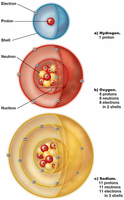
Atoms: The Building Blocks of Elements
Atoms are the smallest functional units of elements. Their structure determines chemical properties and interactions.
Nucleus: Contains protons (positive charge, mass) and neutrons (neutral, mass).
Shells: Surround the nucleus; contain electrons (negative charge, negligible mass).
Atomic Number: Number of protons; defines the element.
Electron Distribution and Chemical Properties
The arrangement of electrons in shells determines how atoms interact and form bonds. Atoms seek to fill their outermost electron shells, leading to chemical bonding.
Electron shells correspond to energy levels.
Atoms with incomplete outer shells will share, donate, or receive electrons.
Isotopes and Radioactivity
Isotopes are variants of elements with different numbers of neutrons. Some are unstable (radioisotopes) and emit radiation, which can be useful or harmful in biological contexts.
Isotopes: Same element, different neutron number, different atomic mass.
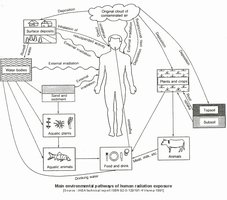
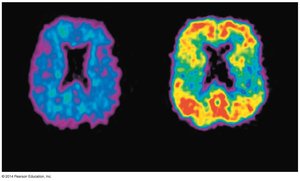
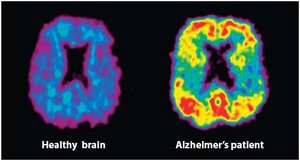
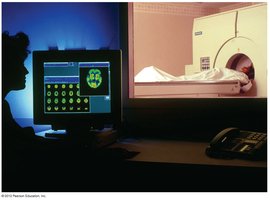
Radioisotopes: Unstable, emit energy/particles; used in fossil dating, medical imaging, cancer treatment.
Radioactive tracers can monitor biological processes.
Free Radicals
Free radicals are atoms or molecules with unpaired electrons, making them highly reactive and potentially damaging to proteins and DNA.
Can accelerate cellular aging.
May contribute to disease processes.
Chemical Bonds
Chemical bonds are attractive forces that hold atoms together, forming molecules. The main types are covalent, ionic, and hydrogen bonds.
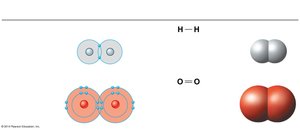
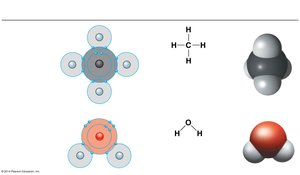
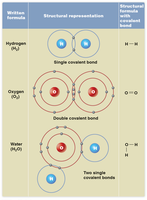
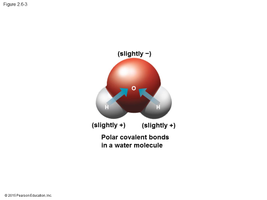
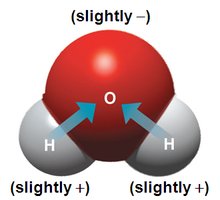
Covalent Bonds: Atoms share electrons; can be nonpolar (equal sharing) or polar (unequal sharing).
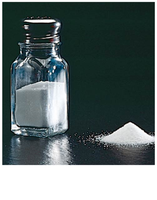
Ionic Bonds: Formed between oppositely charged ions (electron transfer).
Hydrogen Bonds: Weak attractions between polar molecules.
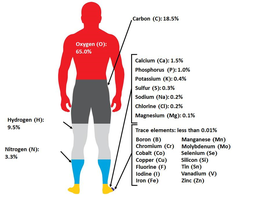
Elements Essential for Life
Living organisms contain only certain elements, with six accounting for 99% of body weight: oxygen, carbon, hydrogen, nitrogen, calcium, and phosphorus.
Other important elements: potassium, sulfur, sodium, chlorine, magnesium.
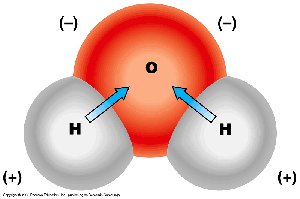
Properties of Water
Water is vital for life due to its unique properties, which arise from its polarity and hydrogen bonding.
Solvent: Dissolves many substances; hydrophilic molecules interact easily, hydrophobic do not.
Liquid at body temperature: Facilitates transport and reactions.
Heat absorption: Regulates body temperature.
Evaporation: Cools the body.
Participates in reactions: Essential for metabolism.
Acids, Bases, and pH
The chemistry of life is sensitive to acidic and basic conditions. The pH scale measures hydrogen ion concentration, ranging from 0 (acidic) to 14 (basic).
Acid: Donates H+ ions.
Base: Accepts H+ ions or donates OH- ions.
Buffer: Maintains pH stability by accepting or donating H+ ions.
Example: Carbonic acid buffer system in blood:
$\mathrm{H_2CO_3 \rightarrow HCO_3^- + H^+}$ (response to rise in pH)
$\mathrm{H_2CO_3 \leftarrow HCO_3^- + H^+}$ (response to drop in pH)
Organic Molecules
Organic molecules are carbon-based and include carbohydrates, lipids, proteins, and nucleic acids. They are essential for structure and function in living organisms.
Carbohydrates: Energy storage and structural support.
Lipids: Energy storage, cell membrane structure, hormones.
Proteins: Structure, enzymes, transport, signaling.
Nucleic Acids: Store and transmit genetic information.
Carbohydrates
Carbohydrates are composed of carbon, hydrogen, and oxygen. They are hydrophilic and include sugars, starch, and cellulose.
Monosaccharides: Simple sugars (glucose, fructose, galactose).
Disaccharides: Two monosaccharides linked (sucrose, maltose, lactose).
Polysaccharides: Long chains for energy storage (starch, glycogen) or structural support (cellulose).
Lipids
Lipids are hydrophobic molecules important for energy storage, membrane structure, and signaling.
Triglycerides: Glycerol + three fatty acids; saturated (solid, animal fats) or unsaturated (liquid, plant oils).
Phospholipids: Main component of cell membranes; amphipathic (hydrophilic head, hydrophobic tails).
Steroids: Four carbon rings; include cholesterol and hormones.
Proteins
Proteins are polymers of amino acids, joined by peptide bonds. Their structure determines their function.
Primary structure: Amino acid sequence.
Secondary structure: Alpha helix, beta sheets (hydrogen bonds).
Tertiary structure: 3D shape (covalent, ionic, hydrophobic, hydrogen bonds).
Quaternary structure: Multiple polypeptide chains.
Denaturation: Loss of structure and function due to heat or pH changes.
Enzymes: Proteins that catalyze biochemical reactions.
Example: Enzyme activity depends on temperature, pH, ion concentration, and inhibitors.
Nucleic Acids
Nucleic acids (DNA and RNA) store genetic information and direct protein synthesis.
Nucleotides: Monomers with a five-carbon sugar, nitrogenous base, and phosphate group.
DNA: Double-stranded; bases are adenine, thymine, cytosine, guanine.
RNA: Single-stranded; bases are adenine, uracil, cytosine, guanine.
ATP: The Energy Currency of the Cell
Adenosine triphosphate (ATP) is a nucleotide that stores and transfers energy within cells. Hydrolysis of ATP releases energy for cellular work.
Phosphorylation: Transfer of phosphate group to another molecule.
Most cellular work depends on ATP.
Summary Table: Types of Chemical Bonds
Bond Type | Definition | Example |
|---|---|---|
Covalent | Atoms share electrons | H2, O2, H2O |
Ionic | Electrons transferred; ions attract | NaCl (table salt) |
Hydrogen | Weak attraction between polar molecules | Between water molecules |
Summary Table: Major Classes of Organic Molecules
Class | Monomer | Main Function | Example |
|---|---|---|---|
Carbohydrates | Monosaccharide | Energy, structure | Glucose, starch, cellulose |
Lipids | Fatty acids (not true polymers) | Energy, membranes, hormones | Triglycerides, phospholipids, steroids |
Proteins | Amino acids | Structure, enzymes, transport | Hemoglobin, enzymes |
Nucleic Acids | Nucleotides | Genetic information | DNA, RNA |
Additional info: Academic context was added to clarify the structure and function of molecules, the importance of chemical bonds, and the role of water, acids, bases, and buffers in biological systems.
