 Indietro
The Chromosomal Basis of Inheritance: Study Guide
Guida di studio - Note intelligenti
 Appunti personalizzati basati sui tuoi materiali, ampliati con definizioni chiave, esempi e contesto.
The Chromosomal Basis of Inheritance
Genes and Chromosomes
The physical basis of inheritance lies in the behavior of chromosomes during cell division. Genes are located on chromosomes, and their transmission from parent to offspring follows predictable patterns.
Chromosomes are structures within cells that carry genetic information in the form of genes.
Each chromosome contains many genes, except for the Y chromosome, which has fewer.
During meiosis, homologous chromosomes separate, ensuring each gamete receives one chromosome from each pair.
Offspring inherit one allele for each gene from each parent.
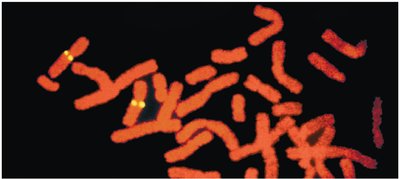
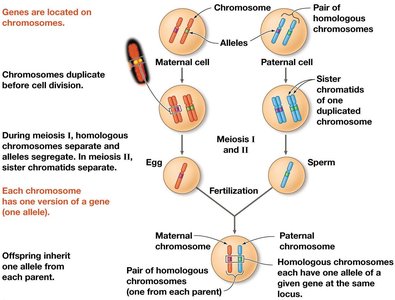
Example: The inheritance of alleles during meiosis explains Mendel's laws of segregation and independent assortment.
Morgan’s Experimental System: Fruit Flies
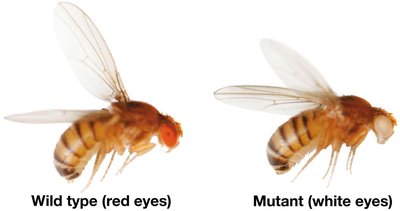
Thomas Hunt Morgan used Drosophila melanogaster (fruit flies) to study genetic inheritance. Fruit flies are ideal for genetic studies due to their short generation time, ease of breeding, and only four pairs of chromosomes.
Fruit flies produce many offspring quickly.
They are easily mutagenized, allowing for the study of genetic variants.
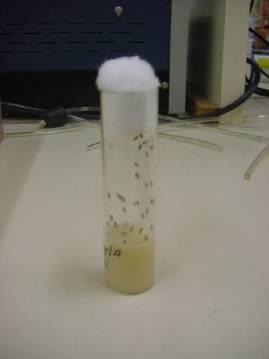
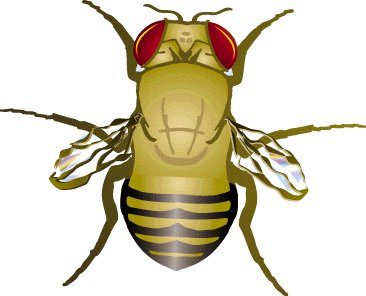
Example: Morgan discovered a mutation affecting eye color in fruit flies, leading to foundational studies in genetics.
Correlating Gene Behavior with Chromosome Behavior
The behavior of alleles during inheritance correlates with the behavior of chromosome pairs during meiosis. Homologous chromosomes carry alleles for the same genes and segregate during meiosis, explaining Mendelian inheritance.
Example: The segregation of chromosomes during meiosis results in the separation of alleles, as observed in Mendel's experiments.
Sex-Linked Genes and Chromosomal Basis of Sex
Sex Chromosomes and Sex Determination
Sex chromosomes determine the biological sex of an organism. In humans, the X and Y chromosomes are responsible for sex determination.
XX individuals are typically female; XY individuals are typically male.
The SRY gene on the Y chromosome triggers testis development.
Mutations or absence of the SRY gene can affect sexual development.
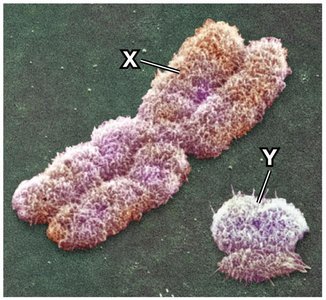
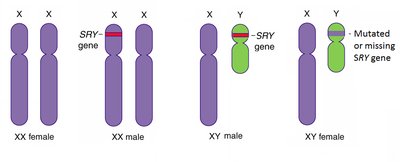
Example: The presence of the SRY gene on the Y chromosome leads to male development, while its absence or mutation can result in atypical sex determination.
Sex-Linked Genes and Patterns of Inheritance
Genes located on sex chromosomes exhibit unique inheritance patterns. X-linked genes are more commonly expressed in males due to their single X chromosome.
X-linked recessive traits require two recessive alleles in females but only one in males.
Males are hemizygous for X-linked genes.
Fathers pass their X chromosome to daughters, not sons.
X-linked recessive disorders include color blindness, Duchenne muscular dystrophy, and hemophilia.
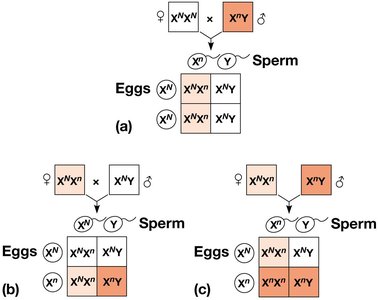
Example: X-linked recessive traits are more common in males because they only need one copy of the recessive allele to express the trait.
X Inactivation in Female Mammals
In female mammals, one X chromosome in each cell is randomly inactivated early in embryonic development, forming a Barr body. This leads to mosaic expression of X-linked genes.
Random X inactivation produces mosaic patterns in heterozygous females.
The inactive X chromosome condenses into a Barr body.
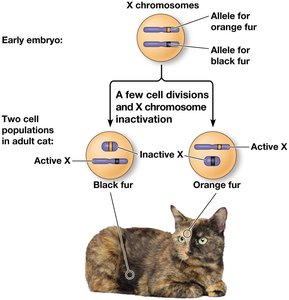
Example: Tortoiseshell cats display mosaic fur coloration due to X inactivation.
Linked Genes and Genetic Recombination
Linked Genes
Linked genes are located near each other on the same chromosome and tend to be inherited together. The closer two genes are, the lower the chance of recombination between them.
Linked genes do not assort independently.
Crossing over during meiosis can separate linked genes, producing recombinant offspring.
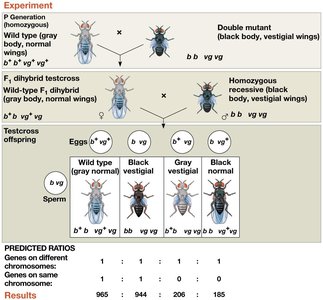
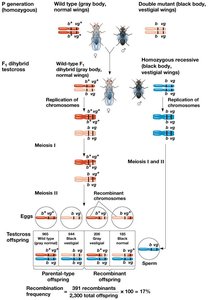
Example: In Morgan's experiments, parental types were more common than recombinant types, indicating linkage.
Recombination of Unlinked Genes
Unlinked genes, located on different chromosomes, assort independently, resulting in approximately 50% recombinant offspring.
Genetic recombination produces new allele combinations in offspring.
Parental types have allele combinations found in the parents; recombinant types have new combinations.
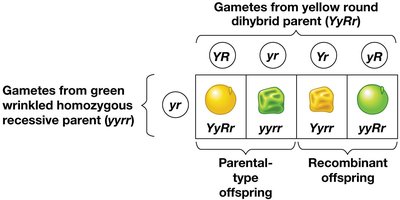
Example: Mendel's dihybrid crosses demonstrated independent assortment of unlinked genes.
Alterations of Chromosome Number and Structure
Nondisjunction and Aneuploidy
Nondisjunction occurs when chromosomes fail to separate properly during meiosis, leading to gametes with abnormal chromosome numbers. This can result in aneuploidy, such as trisomy or monosomy.
Trisomy (2n+1): Three copies of a chromosome.
Monosomy (2n-1): One copy of a chromosome.
Polyploidy: More than two complete sets of chromosomes, common in plants.
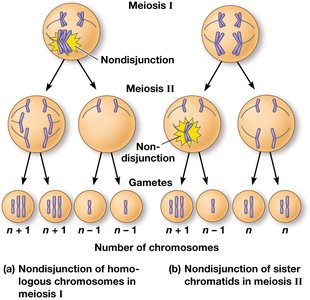
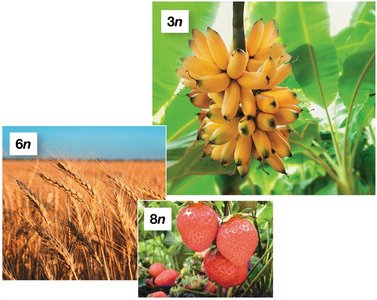
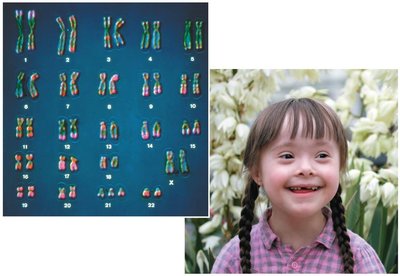
Example: Down syndrome is caused by trisomy 21, resulting from nondisjunction.
Alterations of Chromosome Structure
Chromosome structure can be altered by deletion, duplication, inversion, or translocation. These changes can cause genetic disorders.
Deletion: Loss of a chromosome segment.
Duplication: Repetition of a segment.
Inversion: Reversal of a segment within a chromosome.
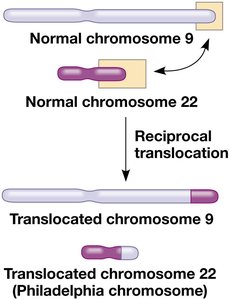
Translocation: Movement of a segment to a nonhomologous chromosome.
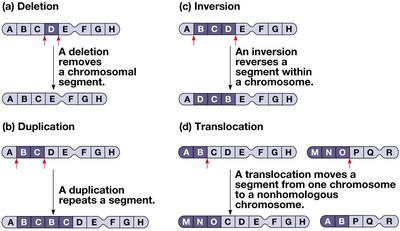
Example: Cri du chat syndrome is caused by a deletion in chromosome 5; chronic myelogenous leukemia is caused by a translocation between chromosomes 9 and 22.
Exceptions to Standard Mendelian Inheritance
Genomic Imprinting
Genomic imprinting occurs when the expression of a gene depends on which parent contributed the allele. One parental allele is silenced, and the other is expressed.
Imprinting affects nuclear genes.
The same allele can have different effects depending on the parent of origin.
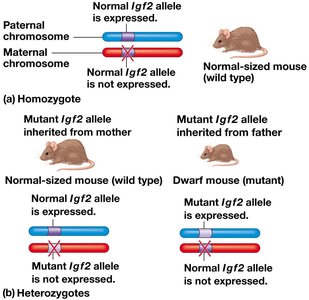
Example: The Igf2 gene in mice is expressed only from the paternal allele.
Organelle Inheritance
Genes located outside the nucleus, such as those in mitochondria and chloroplasts, follow non-Mendelian inheritance patterns. In most animals, mitochondrial DNA is inherited from the mother.
Organelle genes can produce unique inheritance patterns.
Most of the zygote’s cytoplasm comes from the egg, leading to maternal inheritance.
Example: Mitochondrial disorders are inherited maternally.
Summary Table: Chromosomal Basis of Inheritance
Topic | Key Points |
|---|---|
Chromosomal Basis | Genes on chromosomes; meiosis explains Mendel's laws; sex-linked genes |
Linked Genes | Genes on same chromosome; crossing over produces recombinants; closer genes = lower recombination |
Chromosome Alterations | Nondisjunction, aneuploidy, polyploidy, structural changes (deletion, duplication, inversion, translocation) |
Non-Mendelian Exceptions | Genomic imprinting, organelle inheritance |
Additional info: This study guide covers the main concepts from Chapter 15, including the chromosomal basis of inheritance, sex-linked genes, linked genes, chromosomal alterations, and exceptions to Mendelian inheritance. It is suitable for General Biology college students preparing for exams.
