 Indietro
The Chromosomal Basis of Inheritance: Study Guide
Guida di studio - Note intelligenti
 Appunti personalizzati basati sui tuoi materiali, ampliati con definizioni chiave, esempi e contesto.
Chapter 15: The Chromosomal Basis of Inheritance
The Chromosomal Basis of Mendel’s Laws
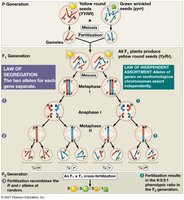
Mendel’s laws of segregation and independent assortment are explained by the behavior of chromosomes during meiosis. Chromosomes carry genes, and their movement and recombination during gamete formation underlie genetic inheritance.
Law of Segregation: Each individual has two alleles for each gene, which segregate during gamete formation.
Law of Independent Assortment: Alleles of different genes assort independently during meiosis, unless they are linked.
Meiosis: The process by which gametes are formed, ensuring genetic diversity.
Fertilization: Restores the diploid number and combines genetic material from both parents.
Sex Chromosomes and Sex Determination
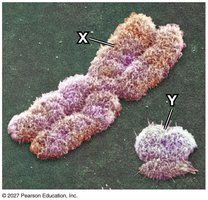
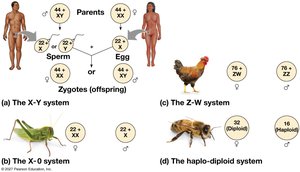
Humans and other mammals have two types of sex chromosomes: the larger X chromosome and the smaller Y chromosome. The combination of these chromosomes determines biological sex.
XX: Typically female anatomy.
XY: Typically male anatomy.
SRY gene: Located on the Y chromosome, responsible for testis development.
Other systems: Not all organisms use the X-Y system; alternatives include X-0, Z-W, and haplo-diploid systems.
Sex-Linked Genes and Inheritance Patterns
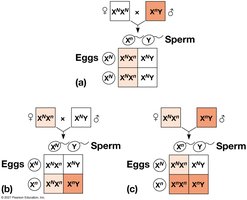
Genes located on sex chromosomes are called sex-linked genes. X-linked genes are found on the X chromosome, while Y-linked genes are found on the Y chromosome. X-linked recessive traits are more common in males due to their single X chromosome.
Hemizygosity: Males have only one X chromosome, so a single recessive allele can cause a disorder.
Common X-linked disorders: Color blindness, Duchenne muscular dystrophy, hemophilia.
Inheritance patterns: Females need two copies of a recessive allele to express the trait; males need only one.
X Chromosome Inactivation
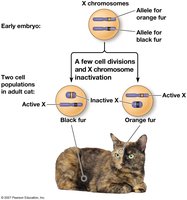
In mammalian females, one of the two X chromosomes in each cell is randomly inactivated during embryonic development, forming a Barr body. This process ensures dosage compensation between males and females.
Barr body: The condensed, inactive X chromosome.
Mosaicism: Heterozygous females may show mosaic expression of X-linked traits.
XIST gene: Initiates X inactivation.
Linked Genes and Genetic Recombination
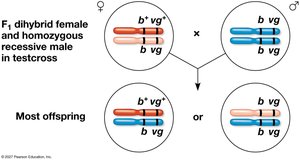
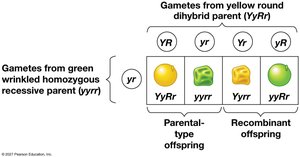
Genes located on the same chromosome tend to be inherited together and are called linked genes. However, crossing over during meiosis can separate linked genes, producing recombinant offspring.
Parental types: Offspring with phenotypes matching the parents.
Recombinant types: Offspring with new combinations of traits.
Recombination frequency: A 50% frequency indicates genes are on different chromosomes or far apart on the same chromosome.
Genetic Mapping and Linkage Maps
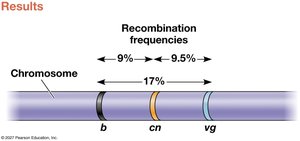
Genetic maps, or linkage maps, are constructed based on recombination frequencies between genes. The farther apart two genes are, the higher the probability of crossover and recombination.
Map units: One map unit equals a 1% recombination frequency.
Relative distance: Map units indicate relative gene positions, not exact locations.
Chromosomal Alterations: Number and Structure
Large-scale chromosomal alterations can lead to developmental disorders or miscarriages. Plants tolerate these changes better than animals.
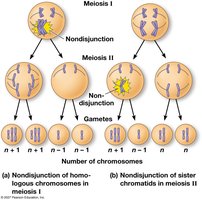
Nondisjunction: Failure of homologous chromosomes or sister chromatids to separate during meiosis, resulting in abnormal chromosome numbers.
Aneuploidy: Abnormal number of chromosomes (e.g., monosomy, trisomy).
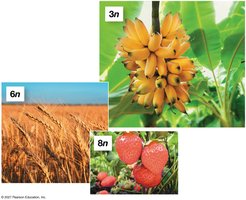
Polyploidy: More than two complete sets of chromosomes, common in plants.
Alterations of Chromosome Structure
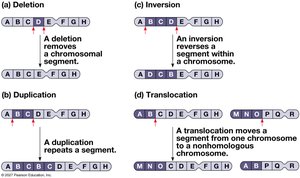
Chromosome breakage can cause structural changes: deletion, duplication, inversion, and translocation. These changes can have significant effects on phenotype and health.
Deletion: Loss of a chromosomal segment.
Duplication: Repetition of a segment.
Inversion: Reversal of a segment within a chromosome.
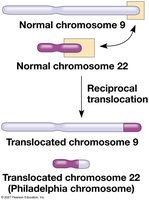
Translocation: Movement of a segment to another chromosome.
Human Disorders Associated with Chromosomal Alterations
Alterations in chromosome number and structure are linked to various syndromes and diseases. Some aneuploid conditions are survivable and have characteristic symptoms.
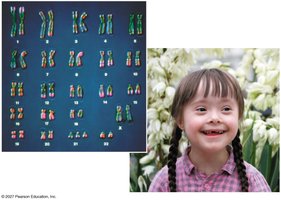
Down syndrome: Trisomy 21, associated with intellectual disability and distinct physical features.
Klinefelter syndrome: XXY males, often with mild symptoms.
Turner syndrome: XO females, sterile and only viable monosomy in humans.
Cri du chat syndrome: Deletion in chromosome 5, severe intellectual disability.
Chronic myelogenous leukemia (CML): Caused by chromosomal translocation.
Exceptions to Mendelian Genetics: Genomic Imprinting and Extranuclear Genes
Some inheritance patterns deviate from Mendelian genetics due to genomic imprinting and extranuclear genes.
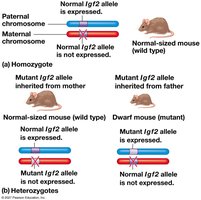
Genomic imprinting: Expression of an allele depends on the parent of origin, often due to DNA methylation.
Extranuclear genes: Genes found in mitochondria and chloroplasts, inherited maternally.
Diseases: Mitochondrial myopathy, Leber’s hereditary optic neuropathy.
Additional info: Extranuclear inheritance can be manipulated to avoid passing mitochondrial disorders by transferring chromosomes from an affected mother’s egg to a healthy donor egg.
