 Indietro
chap 26
Guida di studio - Note intelligenti
 Appunti personalizzati basati sui tuoi materiali, ampliati con definizioni chiave, esempi e contesto.
The Greening of Earth
Introduction to Terrestrial Life
For much of Earth's early history, the land was devoid of life. The colonization of land by plants, fungi, and animals marked a major evolutionary milestone, fundamentally transforming terrestrial ecosystems.
Cyanobacteria and protists likely existed on land about 1.2 billion years ago.
Plants, fungi, and animals began colonizing land within the last 500 million years.
The first forests appeared approximately 385 million years ago.
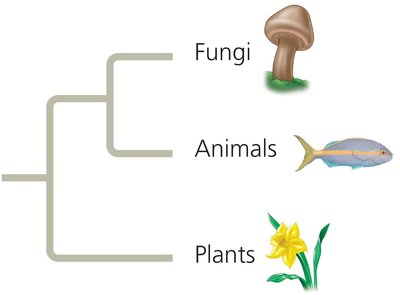
Fungi, though more closely related to animals, colonized land as partners with plants, aiding in nutrient cycling.
Plants supply oxygen and are the primary source of food for terrestrial animals.
Animals colonized land after plants and fungi.
Fossil Evidence and Algal Ancestry
Origins of Land Plants
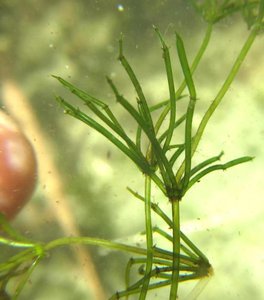
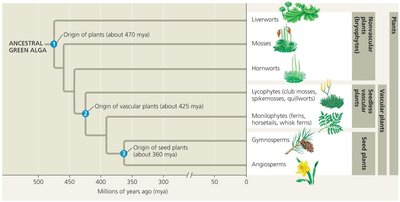
Fossil records indicate that plants colonized land more than 470 million years ago. The closest relatives of land plants are green algae known as charophytes.
Plants are multicellular, eukaryotic, photosynthetic autotrophs with cell walls made of cellulose and chloroplasts containing chlorophyll a and b.
Some, but not all, algae share these characteristics.
Adaptations for Life on Land
Opportunities and Challenges
The terrestrial environment offered new opportunities, such as unfiltered sunlight, abundant CO2, and nutrient-rich soil. However, it also posed challenges, including water scarcity and lack of structural support against gravity.
Key adaptations enabled plants to thrive on land, including mechanisms to prevent water loss and provide structural support.
Derived Traits of Land Plants
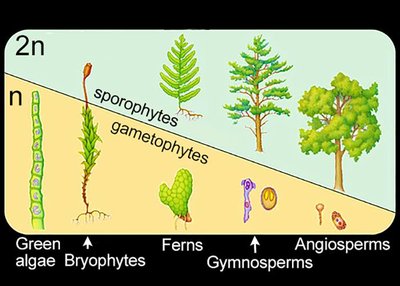
Alternation of generations: Life cycles alternate between multicellular haploid (gametophyte) and diploid (sporophyte) generations.
Multicellular, dependent embryos: Embryos are retained within female gametophyte tissue and receive nutrients via placental transfer cells.
Walled spores in sporangia: Spores are produced in multicellular organs (sporangia) and have walls containing sporopollenin for protection.
Apical meristems: Localized regions of cell division at the tips of roots and shoots enable growth throughout the plant's life.
Cuticle: A waxy coating that prevents water loss and protects against microbial attack.
Stomata: Specialized pores for gas exchange.
Early Plant Evolution and Morphological Adaptations
Fossil Evidence
Fossilized spores and tissues date back at least 470 million years.
Large plant structures, including sporangia, appear in the fossil record by 425 million years ago.
Early plants developed specialized tissues for water transport, cuticles, stomata, and branched sporophytes.
Maximizing Surface Area
Branching, flattening, folding, and projections increase surface area for efficient uptake of energy and nutrients.
Major Plant Lineages and Evolution
Plant Classification by Vascular Tissue
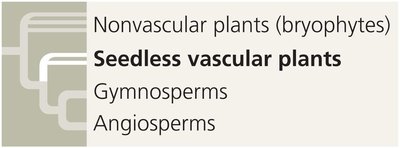
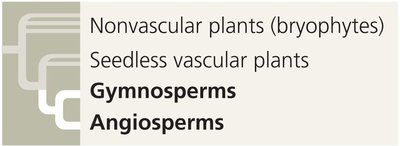
Plants are grouped based on the presence or absence of vascular tissue, which is specialized for transporting water and nutrients.
Vascular plants: Have vascular tissue (xylem and phloem).
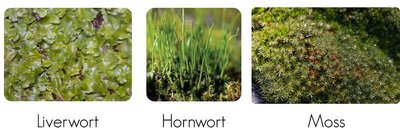
Nonvascular plants (bryophytes): Lack vascular tissue; include liverworts, mosses, and hornworts.
Bryophytes: Basal Plant Lineages
Three main clades: liverworts, mosses, and hornworts.
Root-like structures called rhizoids anchor bryophytes but do not transport water or minerals.
Gametophytes are larger and longer-living than sporophytes.
Require moist habitats for reproduction due to flagellated sperm.
Seedless Vascular Plants
First appeared about 425 million years ago.
Include lycophytes and monilophytes (ferns, horsetails, whisk ferns).
Vascular tissue allowed these plants to grow tall and compete for sunlight.
Transport in Xylem and Phloem
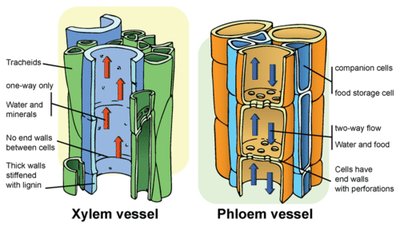
Xylem: Conducts water and minerals; contains tracheids strengthened by lignin for support.
Phloem: Distributes sugars, amino acids, and other organic products.
Lignified vascular tissue enabled the evolution of tall plants and forests.
Roots and Leaves
Roots: Anchor plants and absorb water and nutrients.
Leaves: Main organs of photosynthesis.
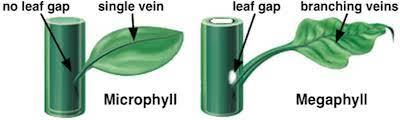
Two types of leaves: Microphylls (single vein) and Megaphylls (branched veins).
Seed Plants: Gymnosperms and Angiosperms
Seeds and Pollen: Key Adaptations
Seed plants originated about 360 million years ago.
A seed consists of an embryo, food supply, and protective coat.
Seeds can remain dormant and are dispersed by wind or animals.
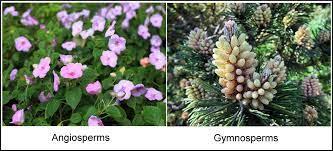
Two major clades: Gymnosperms (naked seeds) and Angiosperms (seeds in ovaries).
Terrestrial Adaptations in Seed Plants
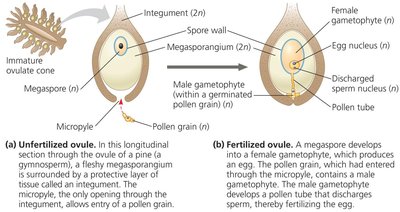
Reduced gametophytes: Microscopic and protected within parent sporophyte tissues.
Ovules: Structures containing the female gametophyte and egg cell, surrounded by integument.
Pollen: Male gametophyte enclosed in a protective wall; enables fertilization without water.
Evolutionary Advantages of Seeds
Seeds are multicellular, have a protective coat, and contain stored food.
Can remain dormant until conditions are favorable for germination.
Provide greater survival and dispersal advantages compared to spores.
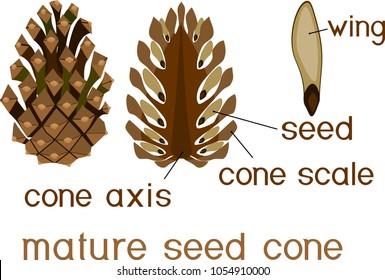
Gymnosperms
Dominated terrestrial ecosystems during the Mesozoic era (252–66 million years ago).
Adapted to dry conditions with thick cuticles and needle-like leaves.
Modern examples include conifers, which dominate northern forests.
Angiosperms: Flowering Plants
Most diverse and widespread group of plants (over 250,000 species).
Produce flowers and fruits as reproductive structures.
Flowers facilitate pollination by animals or wind.
Fruits protect seeds and aid in their dispersal.
Flower Structure
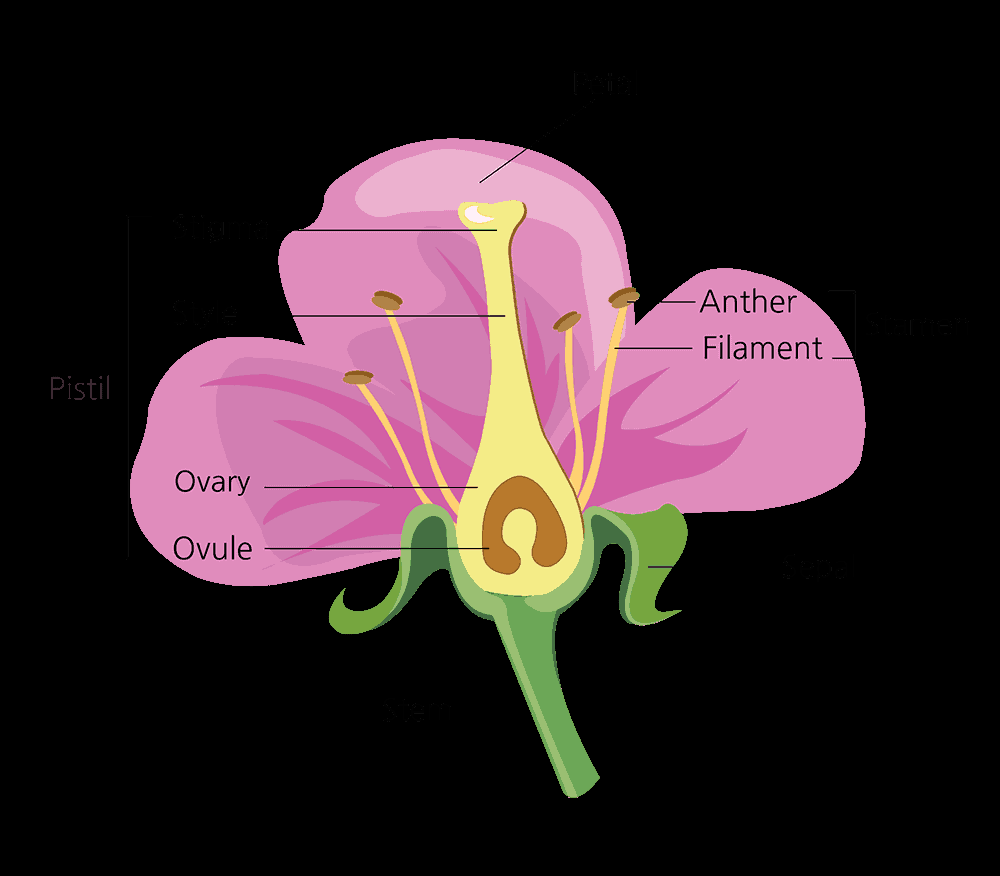
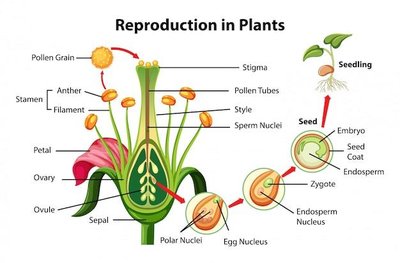
Sepals: Enclose the flower before it opens.
Petals: Attract pollinators with bright colors.
Stamens: Produce pollen (male reproductive organ).
Carpels: Produce ovules (female reproductive organ); may be single or fused (pistil).
Fruit Structure and Seed Dispersal
Fruits develop from the ovary after fertilization and protect seeds.
Adaptations for dispersal include wind, water, and animal transport.
Angiosperm Evolution
Originated at least 140 million years ago; dominated by the end of the Cretaceous period (66 million years ago).
Earliest angiosperm fossils are pollen grains from 130 million years ago.
Summary Table: Major Plant Groups and Key Features
Group | Vascular Tissue | Seeds | Flowers | Examples |
|---|---|---|---|---|
Bryophytes | No | No | No | Mosses, Liverworts, Hornworts |
Seedless Vascular Plants | Yes | No | No | Ferns, Lycophytes |
Gymnosperms | Yes | Yes (naked) | No | Conifers, Cycads |
Angiosperms | Yes | Yes (enclosed in fruit) | Yes | Flowering plants |
