 Indietro
The Eukaryotic Cell Cycle: Mitosis, Regulation, and Cancer
Guida di studio - Note intelligenti
 Appunti personalizzati basati sui tuoi materiali, ampliati con definizioni chiave, esempi e contesto.
Chapter 12: The Cell Cycle
Overview and Roadmap
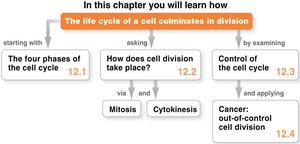
The cell cycle is the series of events that cells go through as they grow and divide. This chapter explores the phases of the cell cycle, the mechanisms of cell division (mitosis and cytokinesis), the regulation of the cycle, and the consequences of uncontrolled cell division, such as cancer.
The Cell Cycle: Phases and Key Events
Introduction to the Cell Cycle
Cell division is essential for growth, development, and repair in multicellular organisms.
Cells arise only from the division of preexisting cells.
Meiosis produces gametes (reproductive cells), while mitosis produces somatic (body) cells.
Basic Steps of Cell Replication
Copying the DNA (genome duplication)
Separating the DNA copies (chromosome segregation)
Dividing the cytoplasm (cytokinesis) to form two complete cells
The Four Phases of the Eukaryotic Cell Cycle
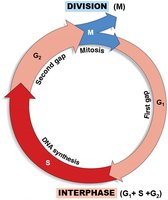
The cell cycle consists of four main phases:
G1 phase (First Gap): Cell grows and performs normal functions.
S phase (Synthesis): DNA is replicated.
G2 phase (Second Gap): Cell prepares for division.
M phase (Mitosis): Division of the nucleus and cytoplasm.
Interphase and M Phase
Interphase includes G1, S, and G2 phases. Chromosomes are uncoiled, and the cell grows and prepares for division.
M phase is when the cell divides. Chromosomes condense, and mitosis and cytokinesis occur.
Cells spend most of their time in interphase.
Discovery of S Phase
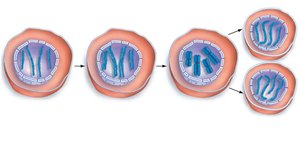
Chromosome replication occurs during the S (Synthesis) phase of interphase.
DNA Replication and Chromosome Condensation
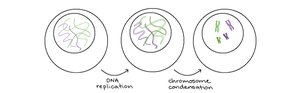
During S phase, DNA is replicated, resulting in two identical sister chromatids for each chromosome.
Chromosome condensation occurs at the start of M phase, making chromosomes visible under a microscope.
Chromosome Structure and Replication
What Is a Chromosome?
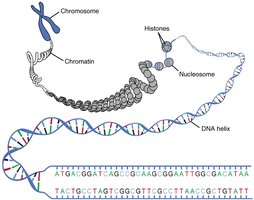
A chromosome is a single, long double helix of DNA wrapped around proteins called histones.
The DNA-protein complex is called chromatin.
Genes are segments of DNA that code for specific RNAs and proteins.
Homologous Chromosomes and Sister Chromatids
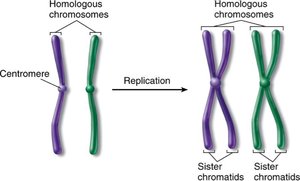
Homologous chromosomes have the same genes but may have different alleles.
After DNA replication, each chromosome consists of two identical sister chromatids joined at the centromere.
Changes in Chromosome Morphology
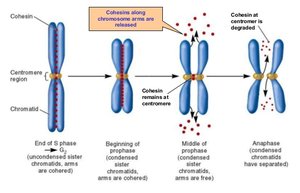
Before mitosis, chromosomes are replicated and consist of two sister chromatids.
During mitosis, sister chromatids are separated into two daughter cells.
Chromosome Condensation
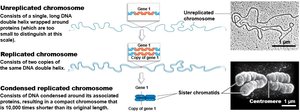
Chromosomes condense to facilitate their segregation during mitosis.
Condensed chromosomes are much shorter and more compact than uncondensed chromatin.
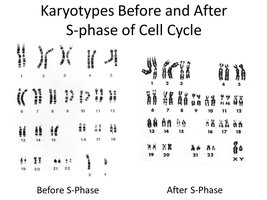
Karyotypes Before and After S Phase
Karyotypes show the number and appearance of chromosomes in a cell.
After S phase, each chromosome consists of two sister chromatids, but the chromosome number remains the same.
Mitosis and Cytokinesis
Overview of M Phase
Mitosis is the division of replicated chromosomes into two nuclei.
Cytokinesis is the division of the cytoplasm, resulting in two daughter cells.
Humans have 46 chromosomes in somatic cells.
Phases of Mitosis
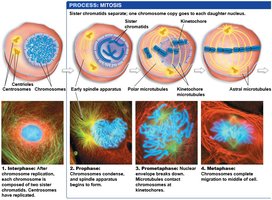
Mitosis is a continuous process divided into five subphases:
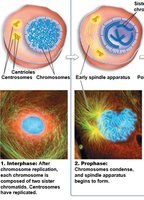
Prophase: Chromosomes condense, and the spindle apparatus forms.
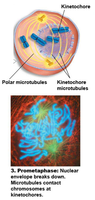
Prometaphase: Nuclear envelope breaks down; microtubules attach to kinetochores.
Metaphase: Chromosomes align at the metaphase plate.
Anaphase: Sister chromatids separate and move to opposite poles.
Telophase: Nuclear envelopes reform, and chromosomes decondense.
Prophase
Chromosomes condense and become visible.
The spindle apparatus, made of microtubules, begins to form from microtubule-organizing centers (MTOCs).
In animal cells, MTOCs are centrosomes, each containing a pair of centrioles.
Prometaphase
The nuclear envelope disintegrates.
Microtubules attach to chromosomes at kinetochores, which form at the centromere.
Chromosomes are moved toward the center of the cell.
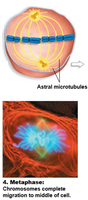
Metaphase
Mitotic spindle is fully formed.
Chromosomes are aligned at the metaphase plate, held by kinetochore microtubules from opposite poles.
Astral microtubules help position the spindle apparatus.
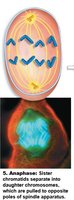
Anaphase
Cohesins holding sister chromatids together are cleaved.
Sister chromatids are pulled to opposite poles by spindle fibers, creating two identical sets of chromosomes.
Movement is driven by shortening of kinetochore microtubules and motor proteins pushing spindle poles apart.
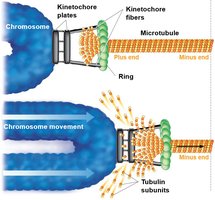
How Do Chromosomes Move during Anaphase?
Kinetochore microtubules shorten at the plus end as tubulin subunits are lost.
Kinetochore proteins move along the microtubule as it disassembles, pulling chromatids toward the poles.
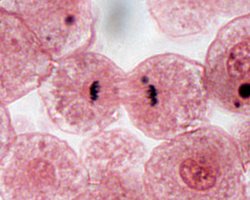
Telophase
New nuclear envelopes form around each set of chromosomes.
Chromosomes begin to decondense.
Mitosis is complete when two independent nuclei have formed.
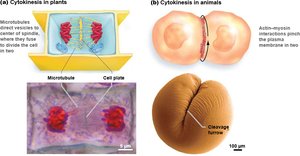
Cytokinesis
Division of the cytoplasm to form two daughter cells.
In animal cells, a ring of actin and myosin filaments contracts to form a cleavage furrow.
In plant cells, vesicles from the Golgi apparatus form a cell plate that develops into a new cell wall.
Bacterial Cell Replication
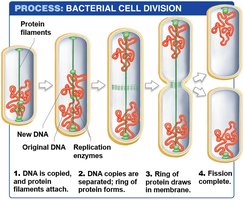
Bacteria divide by binary fission, a process similar to eukaryotic M phase but simpler.
The bacterial chromosome is replicated, and proteins help segregate the DNA and divide the cytoplasm.
Regulation of the Cell Cycle
Control of the Cell Cycle
Cell cycle length varies among cell types, mainly due to differences in the G1 phase.
Some cells divide rapidly, while others enter a nondividing state called G0.
Regulation ensures cells divide only when appropriate.
Key Regulators: Kinases and Cyclins
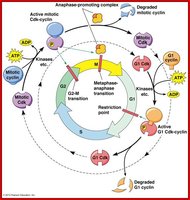
Kinases are enzymes that add phosphate groups to proteins, turning them on.
Phosphatases remove phosphate groups, turning proteins off.
Cyclin-dependent kinases (Cdks) require cyclins to be active. Cyclin levels fluctuate during the cell cycle.
MPF (M Phase Promoting Factor) is a key complex of cyclin and Cdk that triggers mitosis.
Cell Cycle Checkpoints
Checkpoints are control mechanisms that ensure the cell cycle does not proceed if conditions are unfavorable or if DNA is damaged.
There are three main checkpoints: G1, G2, and M phase.
Checkpoint | Main Function |
|---|---|
G1 | Checks cell size, nutrients, growth signals, and DNA integrity |
G2 | Ensures DNA replication is complete and undamaged |
M | Ensures chromosomes are properly attached to spindle before separation |
G1 Checkpoint
The most important checkpoint; determines if the cell will divide or enter G0.
Factors: cell size, nutrient availability, social signals, and DNA damage.
If DNA is damaged, the p53 protein can pause the cycle or trigger apoptosis (programmed cell death).
G2 Checkpoint
Ensures DNA replication is complete and undamaged before mitosis.
If errors are detected, the cell remains in G2 and does not proceed to mitosis.
M Phase Checkpoint
Ensures all chromosomes are properly attached to the spindle before anaphase.
Prevents chromosome separation until all kinetochores are attached.
Cancer: Uncontrolled Cell Division
What Is Cancer?
Cancer results from uncontrolled cell division due to defects in cell cycle regulation.
Two main types of defects:
Activation of growth-promoting genes (oncogenes)
Loss of function in tumor suppressor genes (e.g., p53)
Benign tumors are noninvasive; malignant tumors invade other tissues (metastasis).
Importance of Early Detection
Early detection and treatment of cancer improve prognosis.
Awareness of cancer signs and regular medical checkups are crucial for prevention and early intervention.
