 Indietro
The Evolution and Diversity of Fungi
Guida di studio - Note intelligenti
 Appunti personalizzati basati sui tuoi materiali, ampliati con definizioni chiave, esempi e contesto.
The Evolution of Fungal Diversity
Introduction to Fungi
Fungi are a diverse kingdom of eukaryotic organisms that play crucial ecological and practical roles. They are primarily heterotrophic, absorbing nutrients from their environment, and are essential decomposers in ecosystems. Fungi exhibit a wide range of forms and reproductive strategies, and their evolutionary history is closely linked to that of plants and animals.
Fungal Structure and Nutrition
Hyphae and Mycelium
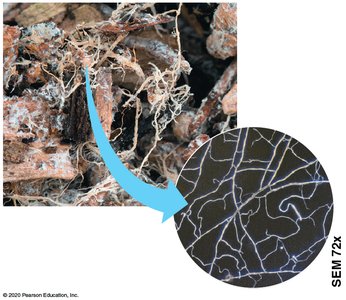
Hyphae are threadlike filaments that make up the body of a fungus. They branch extensively, forming a network called a mycelium.
The mycelium grows through and within the substrate (such as soil or decaying wood), maximizing surface area for nutrient absorption.
Fungi digest food externally by secreting enzymes onto their food source and then absorbing the resulting small organic molecules.
Symbiosis: Mycorrhizae
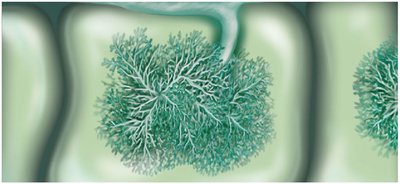
A mycorrhiza is a symbiotic association between fungal hyphae and plant roots.
The fungus helps the plant absorb phosphorus and other minerals from the soil, while the plant supplies the fungus with organic nutrients.
Fungal Reproduction
Spore Production and Life Cycles
Fungi reproduce by releasing large numbers of haploid spores, which can be produced sexually or asexually.
In sexual reproduction, fusion of haploid hyphae from two parents produces a heterokaryotic stage (cells with two different nuclei), followed by nuclear fusion and meiosis to generate new spores.
Some fungi, called imperfect fungi, reproduce only asexually. These include many molds and yeasts.
Molds are rapidly growing fungi that reproduce asexually by producing spores at the tips of specialized hyphae.
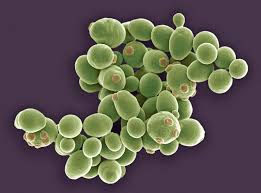
Yeasts are single-celled fungi that typically reproduce by budding.
Fungal Phylogeny and Classification
Evolutionary Relationships
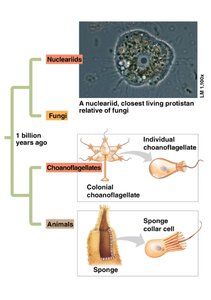
Fungi and animals share a common ancestor with flagellated protists, diverging about 1 billion years ago.
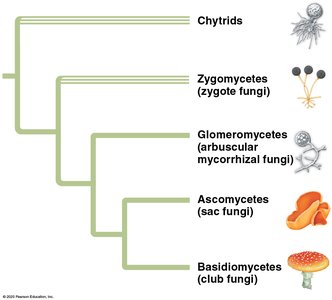
Molecular analyses have revealed five major groups of fungi, though some (chytrids and zygomycetes) are not monophyletic.
Major Groups of Fungi
Chytrids: Produce flagellated spores; mostly aquatic decomposers.
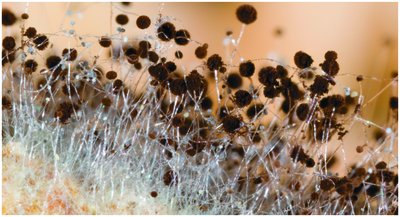
Zygomycetes: Form zygosporangia where zygotes produce haploid spores; includes black bread mold and some parasites.
Glomeromycetes: Form arbuscular mycorrhizae with plant roots, aiding in nutrient exchange.
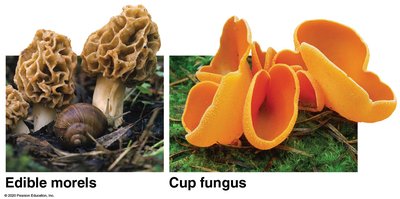
Ascomycetes (sac fungi): Produce spores in sac-like asci; includes unicellular yeasts, edible morels, cup fungi, and plant pathogens. Many form lichens in symbiosis with algae or cyanobacteria.
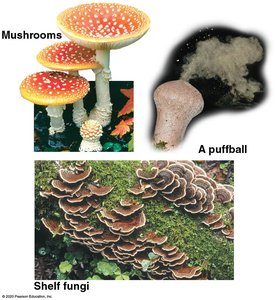
Basidiomycetes (club fungi): Produce spores on club-shaped basidia; includes mushrooms, puffballs, shelf fungi, and plant pathogens like rusts and smuts.
Lichens: Symbiotic Associations
Structure and Function
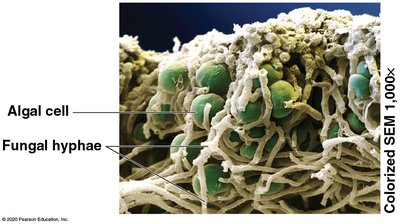
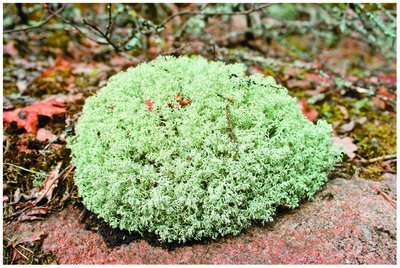
Lichens are symbiotic associations between a fungus (usually an ascomycete) and photosynthetic organisms (green algae or cyanobacteria).
The fungus provides structure, water, and mineral absorption, while the photosynthetic partner supplies food.
Ecological and Practical Roles of Fungi
Ecological Benefits
Fungi are essential decomposers, breaking down organic matter and recycling nutrients in ecosystems.
Mycorrhizal fungi enhance plant nutrient uptake, supporting plant growth and ecosystem productivity.
Some fungi are used in bioremediation to digest petroleum products and clean up environmental pollutants.
Practical Uses
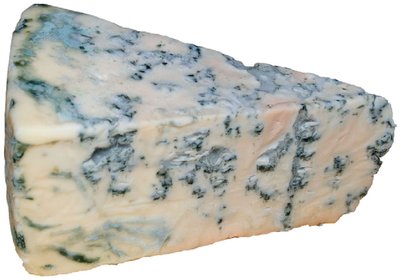
Fungi are used in food production (e.g., mushrooms, cheeses, bread, and alcoholic beverages).
Yeasts are important in biotechnology and molecular genetics research.
Some fungi produce antibiotics, such as Penicillium (source of penicillin).
Fungi may play a role in future biofuel production from plant material.
Fungi as Parasites and Pathogens
Impact on Plants and Animals
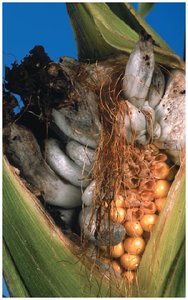
About 30% of known fungal species are parasites or pathogens, causing diseases in plants and animals.
Fungal diseases in plants can lead to significant agricultural losses and may produce toxins harmful to humans.
Fungal diseases in humans include ringworm, athlete’s foot, and yeast infections.
Summary Table: Major Fungal Groups and Their Characteristics
Group | Key Features | Examples |
|---|---|---|
Chytrids | Flagellated spores, aquatic decomposers | Chytridium |
Zygomycetes | Zygosporangia, fast-growing molds | Black bread mold (Rhizopus) |
Glomeromycetes | Arbuscular mycorrhizae, symbiosis with plants | Glomus species |
Ascomycetes | Asci (sacs), diverse forms, includes yeasts and lichens | Morels, cup fungi, Penicillium |
Basidiomycetes | Basidia (clubs), decomposers, plant pathogens | Mushrooms, shelf fungi, rusts, smuts |
Key Concepts for Review
Fungi absorb nutrients after external digestion and form symbiotic relationships with plants (mycorrhizae).
Fungi reproduce via spores, with both sexual and asexual cycles.
Major fungal groups are classified based on reproductive structures and molecular data.
Lichens are mutualistic associations between fungi and photosynthetic organisms.
Fungi are vital for ecosystem function, human industry, and can also be harmful as pathogens.
