 Indietro
The Evolution and Diversity of Land Plants Exam #2
Guida di studio - Note intelligenti
 Appunti personalizzati basati sui tuoi materiali, ampliati con definizioni chiave, esempi e contesto.
The Colonization of Land by Plants
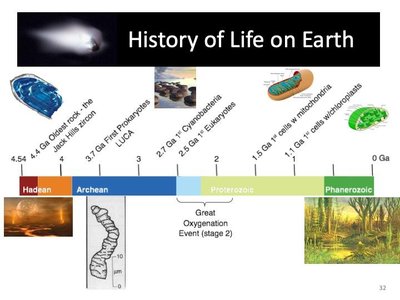
History of Life on Earth
The colonization of land by plants was a major evolutionary event that transformed Earth's biosphere. For much of Earth's early history, the land was lifeless, but over time, plants, fungi, and animals moved onto land, leading to the formation of the first forests.
Cyanobacteria and protists likely existed on land about 1.2 billion years ago.
Plants, fungi, and animals began colonizing land within the last 500 million years.
The first forests formed about 385 million years ago.
Plant Kingdom Overview
Major Groups of Plants
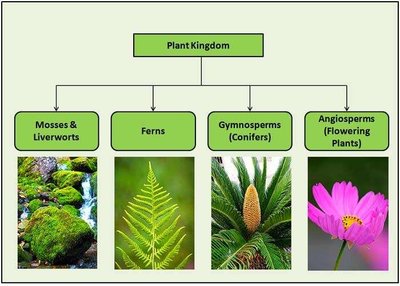
Plants are classified into several major groups based on their evolutionary history and structural features. These include mosses and liverworts, ferns, gymnosperms, and angiosperms.
Mosses & Liverworts: Nonvascular plants (bryophytes)
Ferns: Seedless vascular plants
Gymnosperms: Seed plants with "naked" seeds (conifers)
Angiosperms: Flowering plants with seeds enclosed in ovaries
Evolutionary Timeline of Plants
Key Events in Plant Evolution
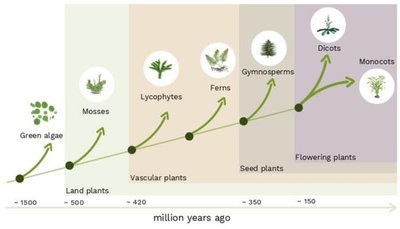
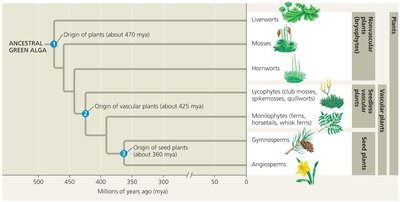
The evolution of plants is marked by several key innovations, including the development of vascular tissue, seeds, and flowers. These adaptations allowed plants to diversify and colonize a wide range of terrestrial environments.
Green algae are the ancestors of land plants.
Mosses represent early land plants.
Vascular plants evolved specialized tissues for water and nutrient transport.
Seed plants (gymnosperms and angiosperms) evolved adaptations for reproduction and dispersal.
Relationships Among Plants, Fungi, and Animals
Phylogenetic Relationships
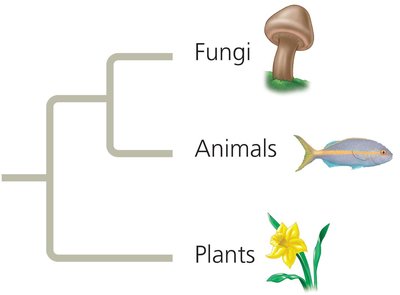
Although fungi are more closely related to animals than to plants, they colonized land as partners with plants. Plants provide oxygen and food, while fungi break down organic material and make nutrients available.
Fungi and plants are not closely related, but their partnership was crucial for terrestrial colonization.
Animals moved onto land after plants and fungi.
Algal Ancestry and Plant Traits
Charophytes and Land Plant Traits
Green algae called charophytes are the closest relatives of land plants. Plants are multicellular, eukaryotic, photosynthetic autotrophs with cell walls made of cellulose and chloroplasts containing chlorophyll a and b.
Some, but not all, algae share these traits.
Key plant traits include alternation of generations, multicellular embryos, walled spores, and apical meristems.
Alternation of Generations
Plant Life Cycles
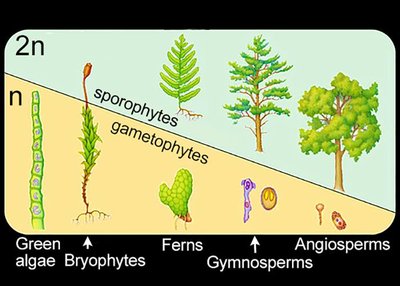
Plants alternate between two generations: the haploid gametophyte and the diploid sporophyte. The gametophyte produces gametes by mitosis, and fusion of gametes gives rise to the sporophyte, which produces spores by meiosis.
Gametophyte: Haploid, produces gametes
Sporophyte: Diploid, produces spores
Plant Evolution and Diversity
Major Lineages and Innovations
Plants can be grouped based on the presence or absence of vascular tissue. Most present-day plants are vascular, while bryophytes are nonvascular. The evolution of roots, leaves, seeds, and flowers enabled plants to diversify.
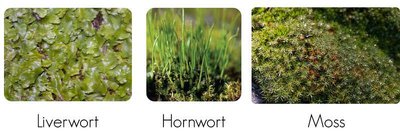
Bryophytes: Liverworts, mosses, hornworts
Seedless vascular plants: Lycophytes, ferns
Seed plants: Gymnosperms and angiosperms
Bryophytes: Basal Plant Lineages
Characteristics and Examples
Bryophytes are small, nonwoody plants that include liverworts, mosses, and hornworts. They are limited to moist habitats and have root-like structures called rhizoids for anchorage.
Rhizoids anchor bryophytes but do not transport water or minerals.
Gametophytes are larger and longer-living than sporophytes.
Bryophytes produce flagellated sperm that require water for fertilization.
Seedless Vascular Plants
Structure and Evolution
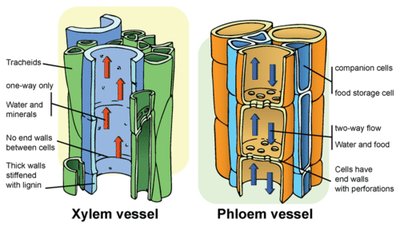
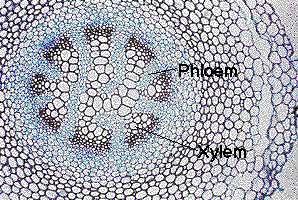
Seedless vascular plants, such as ferns and lycophytes, were the first plants to grow tall due to the presence of vascular tissue. Xylem and phloem are specialized tissues for water, mineral, and nutrient transport.
Xylem: Conducts water and minerals; strengthened by lignin
Phloem: Distributes sugars, amino acids, and organic products
Vascular tissue provides structural support for tall growth
Roots and Leaves
Evolution and Types
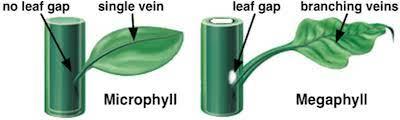
Roots anchor vascular plants and absorb water and nutrients. Leaves are the primary photosynthetic organs. There are two types of leaves: microphylls (single vein) and megaphylls (branched veins).
Microphylls: Small leaves with a single vein
Megaphylls: Larger leaves with a highly branched vascular system
Seed Plants: Gymnosperms and Angiosperms
Adaptations for Life on Land
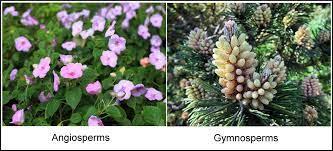
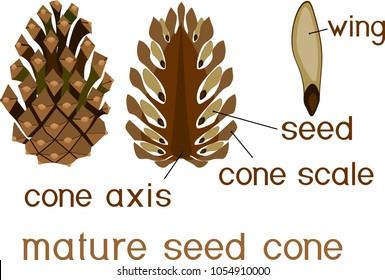
Seed plants evolved about 360 million years ago. Seeds consist of an embryo, food supply, and protective coat. Seed plants are divided into gymnosperms (naked seeds) and angiosperms (seeds in ovaries).
Gymnosperms: Seeds not enclosed in chambers
Angiosperms: Seeds develop inside ovaries
Seed Structure and Evolutionary Advantage
Ovules, Pollen, and Seed Dispersal
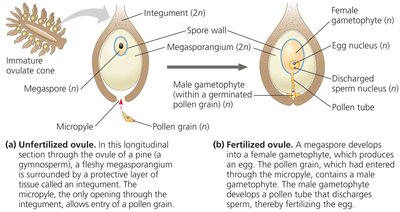
Seeds provide evolutionary advantages over spores, including protection, dormancy, and stored food. Ovules and pollen grains are key adaptations for reproduction without water.
Ovule: Egg-producing female gametophyte surrounded by integument
Pollen: Male gametophyte surrounded by protective wall
Pollination allows sperm transfer without water
Angiosperms: Flowering Plants
Flowers and Fruits
Angiosperms are the most diverse group of plants, producing flowers and fruits. Flowers are specialized for sexual reproduction, and fruits aid in seed dispersal.
Floral organs: Sepals, petals, stamens, carpels
Stamens: Produce pollen
Carpels: Produce ovules
Fruits protect seeds and aid in dispersal by wind, water, or animals
*Additional info: Angiosperms make up about 90% of all plant species, with over 250,000 known species.*
Summary Table: Major Plant Groups
Group | Vascular Tissue | Seeds | Flowers | Examples |
|---|---|---|---|---|
Bryophytes | No | No | No | Mosses, liverworts, hornworts |
Seedless Vascular Plants | Yes | No | No | Ferns, lycophytes |
Gymnosperms | Yes | Yes | No | Conifers, cycads |
Angiosperms | Yes | Yes | Yes | Flowering plants |
