 Indietro
The Evolution and Structure of Eukaryotic Cells
Guida di studio - Note intelligenti
 Appunti personalizzati basati sui tuoi materiali, ampliati con definizioni chiave, esempi e contesto.
Cells: The Basic Units of Life
Definition and Universal Features
Cells are the fundamental structural and functional units of all living organisms. Despite the diversity of life, all cells share several key characteristics:
Plasma membrane: A selective barrier that encloses the cell.
Cytosol: The fluid component of the cytoplasm where cellular processes occur.
Chromosomes: Structures containing genetic material (DNA).
Ribosomes: Complexes that synthesize proteins.
Types of Cells: Prokaryotic vs. Eukaryotic
Major Differences and Domains
Cells are classified into two main types based on their structural organization:
Prokaryotic Cells: Found in the domains Bacteria and Archaea. Their DNA is circular and located in a region called the nucleoid, which is not membrane-bound. Prokaryotic cells are generally smaller and lack membrane-bound organelles.
Eukaryotic Cells: Found in Protists, Fungi, Animals, and Plants. Their DNA is linear and contained within a membrane-bound nucleus. Eukaryotic cells possess various membrane-bound organelles.
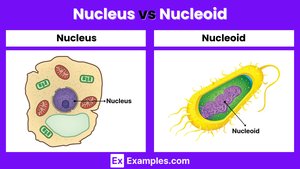
Key distinction: The nucleus in eukaryotes is membrane-bound, while the nucleoid in prokaryotes is not.
The Origin of Eukaryotic Cells: Endosymbiotic Theory
How Eukaryotes Evolved from Prokaryotes
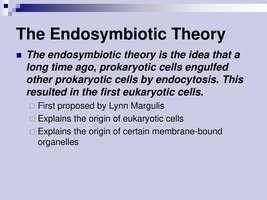
The endosymbiotic theory explains the evolutionary transition from prokaryotic to eukaryotic cells. According to this theory, ancestral prokaryotic cells engulfed other free-living bacteria, forming a symbiotic relationship that eventually led to the development of modern eukaryotic cells.
First proposed by Lynn Margulis.
Explains the origin of eukaryotic cells and certain membrane-bound organelles.
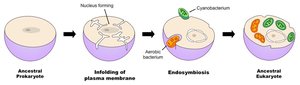
Key steps:
Infolding of the plasma membrane formed internal compartments (precursors to organelles).
Engulfment of aerobic bacteria led to mitochondria.
Engulfment of photosynthetic bacteria led to chloroplasts (in plants and algae).
Evidence Supporting the Endosymbiotic Theory
Double membranes: Mitochondria and chloroplasts have two membranes, consistent with engulfment.
Own ribosomes: These organelles contain ribosomes similar to those of prokaryotes.
Circular DNA: Both organelles have their own circular DNA, like bacteria.
Independent division: Mitochondria and chloroplasts replicate independently of the cell cycle.
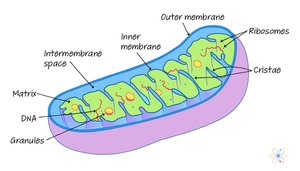
Example: Mitochondria in animal cells and chloroplasts in plant cells both show these features, supporting their prokaryotic ancestry.
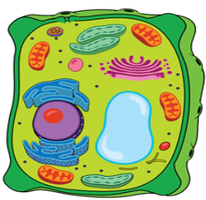
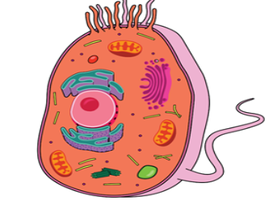
Cell Components: Plants vs. Animals
Key Differences in Organelles
Plant and animal cells share many organelles but also have distinct differences:
Feature | Plant Cells | Animal Cells |
|---|---|---|
Chloroplasts | Present | Absent |
Large central vacuole | Present | Absent |
Cell wall | Present | Absent |
Lysosomes | Rare | Present |
Small vacuoles | Absent | Present |
Centrosomes | Absent | Present |
Flagella | Rare | Sometimes present |
Organelles: Structure and Function
Definition and Classification
Organelles are specialized structures within cells that perform distinct functions. They are classified into two main groups:
Endomembrane organelles: Involved in synthesis, modification, and transport of molecules.
Energy organelles: Involved in energy conversion processes.
Endomembrane Organelles
Nucleus: Contains the cell's genetic material and is surrounded by a double membrane (nuclear envelope).
Endoplasmic reticulum (ER): Network of membranes involved in protein and lipid synthesis. Divided into rough ER (with ribosomes) and smooth ER (without ribosomes).
Golgi complex: Modifies, sorts, and packages proteins and lipids for transport.
Lysosomes: Contain digestive enzymes to break down macromolecules.
Vesicles/Vacuoles: Storage and transport compartments.
Plasma membrane: Regulates entry and exit of substances.
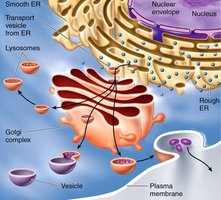
These organelles work together to ensure proper synthesis, processing, and transport of cellular materials.
Energy Organelles
Mitochondria: Site of cellular respiration, converting glucose into ATP (energy currency of the cell).
Chloroplasts: Site of photosynthesis in plants and algae, converting light energy into chemical energy (glucose).
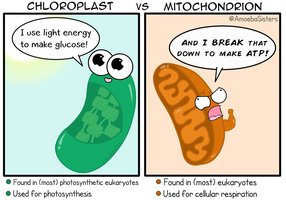
Example: Mitochondria are found in almost all eukaryotic cells, while chloroplasts are found only in photosynthetic eukaryotes.
Other Important Organelles
Peroxisomes: Membrane-bound compartments that carry out metabolic reactions, including the breakdown of fatty acids and detoxification of hydrogen peroxide (H2O2), converting it to water and oxygen.
Note: Some structures, like ribosomes, are not membrane-bound and are sometimes referred to as cell structures rather than organelles.
Summary Table: Key Features of Major Organelles
Organelle | Main Function | Membrane Bound? |
|---|---|---|
Nucleus | Stores genetic material | Yes |
Mitochondria | ATP production (cellular respiration) | Yes |
Chloroplast | Photosynthesis | Yes |
Endoplasmic Reticulum | Protein/lipid synthesis | Yes |
Golgi Complex | Protein/lipid modification and sorting | Yes |
Lysosome | Digestion of macromolecules | Yes |
Peroxisome | Breakdown of fatty acids, detoxification | Yes |
Ribosome | Protein synthesis | No |
Conclusion
The evolution of eukaryotic cells from prokaryotic ancestors was a major event in the history of life, leading to the diversity of complex organisms seen today. Understanding the structure and function of cellular organelles is fundamental to the study of biology.
