 Indietro
The Evolution of Invertebrate Diversity: Animal Evolution and Body Plans
Guida di studio - Note intelligenti
 Appunti personalizzati basati sui tuoi materiali, ampliati con definizioni chiave, esempi e contesto.
The Evolution of Invertebrate Diversity
Introduction to Animal Diversity
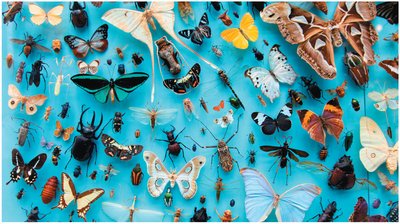
Animals are a highly diverse group of eukaryotic, multicellular heterotrophs that lack cell walls. They obtain nutrients by ingestion and digest food internally. Animal diversity is reflected in their wide range of body plans, habitats, and life cycles. Invertebrates, which lack backbones, make up about 96% of all animal species, while vertebrates possess a backbone.
Invertebrates: Animals without a backbone; the most numerous animal group.
Vertebrates: Animals with a backbone composed of vertebrae.
Animal Evolution and Phylogeny
Origins of Animals
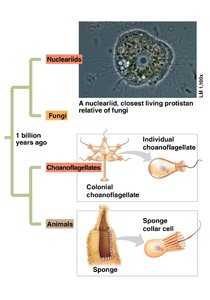
The animal lineage diverged from a flagellated unikont ancestor, similar to modern choanoflagellates, approximately 770 million years ago. This evolutionary relationship is supported by molecular and morphological evidence.
Defining Characteristics of Animals
Eukaryotic: Cells contain a nucleus and organelles.
Multicellular: Composed of multiple cells with specialized functions.
Heterotrophic: Obtain energy by consuming other organisms.
Lack cell walls: Unlike plants and fungi, animal cells do not have rigid cell walls.
Muscle and nerve cells: Most animals possess specialized cells for movement and response to stimuli.
Sexual reproduction: Most animals reproduce sexually, with unique embryonic development stages.
Animal Life Cycle and Embryonic Development
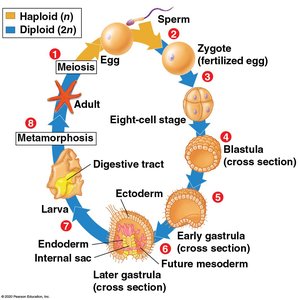
Animals typically have a diploid-dominant life cycle. The only haploid cells are gametes (egg and sperm). Fertilization produces a diploid zygote, which undergoes mitosis to form a blastula, followed by gastrulation and the formation of tissue layers.
Animal Diversification Through Geological Time
The Ediacaran and Cambrian Periods
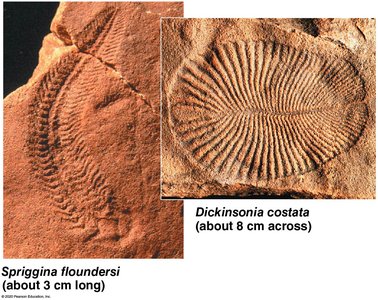
The oldest animal fossils date to the late Ediacaran period (~560 million years ago) and are impressions of soft-bodied organisms. Animal diversification accelerated during the Cambrian explosion (535–525 million years ago), when many animals developed hard body parts such as shells and spikes. This period marks the emergence of most major animal phyla.
Hypotheses for Cambrian Explosion:
Increased atmospheric oxygen levels
Evolution of complex predator-prey relationships
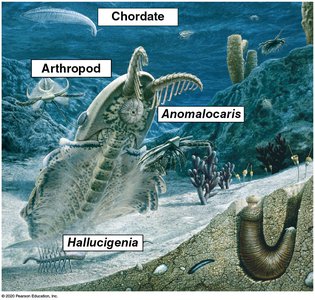
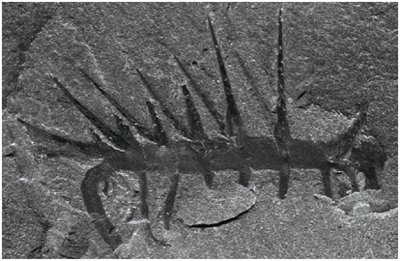
Animal Body Plans
Key Features of Body Plans
Biologists classify animals based on body plan characteristics, fossil evidence, and molecular data. Important features include symmetry, number of tissue layers, presence of a body cavity, and embryonic development patterns.
Symmetry
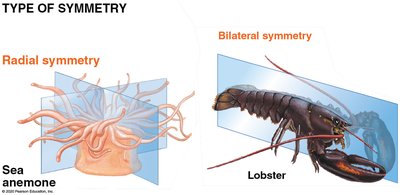
Radial Symmetry: Any longitudinal slice through the central axis produces mirror images. These animals have a top and bottom but no distinct left or right sides. Example: sea anemones.
Bilateral Symmetry: Only one plane divides the animal into mirror-image right and left sides. These animals have distinct anterior (head), posterior (tail), dorsal (back), and ventral (belly) surfaces. Example: lobsters.
Tissue Layers
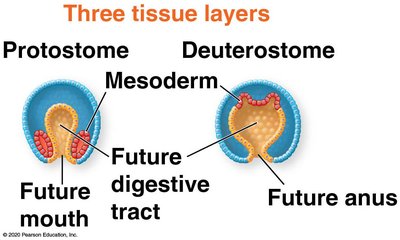
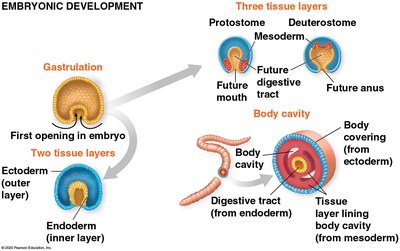
Ectoderm: Outer cell layer; forms the outer covering and, in some phyla, the nervous system.
Endoderm: Inner cell layer; lines the digestive tract.
Mesoderm: Middle layer; forms muscles and internal organs (present in animals with three tissue layers).
Body Cavities (Coelom)
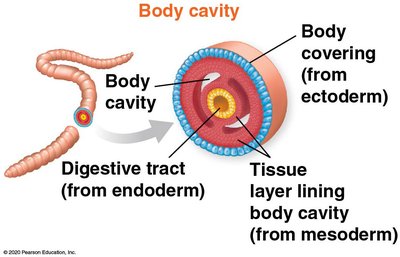
A body cavity is a fluid-filled space between the digestive tract and the outer body wall, where internal organs are suspended. Animals with three tissue layers may have a true coelom, a pseudocoelom, or no body cavity.
Coelom: A true body cavity completely lined by mesoderm-derived tissue.
Pseudocoelom: A body cavity not completely lined by mesoderm.
Acoelomate: Lacking a body cavity.
Embryonic Development: Protostomes vs. Deuterostomes
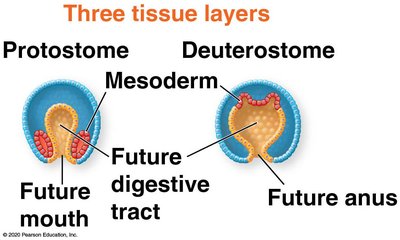
Protostomes: The first opening formed during gastrulation becomes the mouth.
Deuterostomes: The first opening becomes the anus; the mouth forms from a second opening.
Phylogenetic Relationships Among Animals
Major Animal Lineages
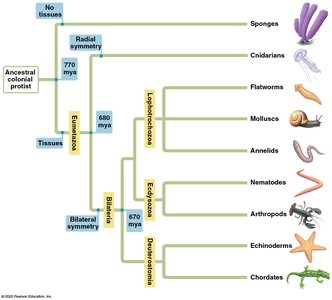
Phylogenetic trees are constructed using body plan features, fossil records, and molecular data. Major divisions include:
Sponges: Lack true tissues.
Eumetazoans (true animals): Have true tissues and are divided into two main groups based on symmetry and tissue layers:
Radial symmetry: Cnidarians
Bilateral symmetry: Flatworms, molluscs, annelids, nematodes, arthropods, echinoderms, chordates
Checkpoint: Shared Derived Character
Question: What shared derived character separates flatworms and molluscs from cnidarians?
Answer: The presence of three tissue layers (triploblastic organization) separates flatworms and molluscs from cnidarians, which have only two tissue layers (diploblastic).
Additional info: The study of animal evolution and diversity provides insight into the origins of complex life forms and the relationships among major animal groups. Understanding body plans and embryonic development is fundamental for classifying animals and tracing their evolutionary history.
