 Indietro
The Evolution of Plant Diversity: Adaptations, Life Cycles, and Reproductive Strategies
Guida di studio - Note intelligenti
 Appunti personalizzati basati sui tuoi materiali, ampliati con definizioni chiave, esempi e contesto.
Plant Evolution and Diversity
Adaptations for Life on Land
Plants evolved from algal ancestors more than 500 million years ago, adapting to terrestrial environments. These adaptations enabled plants to thrive outside aquatic habitats, facing new challenges and opportunities.
Algal Ancestors: Plants and green algae called charophytes share a common ancestor and are photosynthetic eukaryotes with complex multicellular bodies.
Opportunities on Land: Bright sunlight, abundant atmospheric CO2, and initially few pathogens or herbivores.
Challenges: Maintaining moisture, structural support, reproduction without water, anchoring in soil, and resource acquisition from both soil and air.
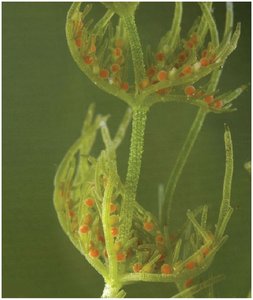
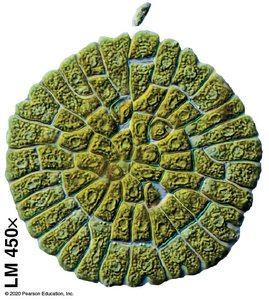
Some species accumulated adaptations such as cuticles, stomata, and vascular tissues to survive on dry land.
Plant Diversity and Evolutionary History
Key Events in Plant Evolution
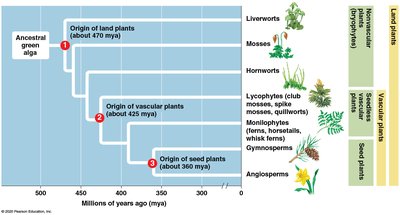
Three major evolutionary events shaped the plant kingdom:
Origin of non-vascular seedless land plants (bryophytes)
Origin of seedless vascular plants
Origin of vascular seed-bearing plants
Classification of Plants
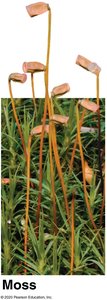
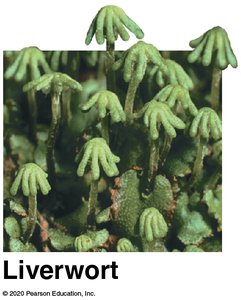
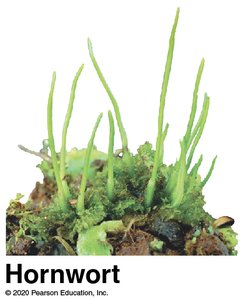
Nonvascular Plants (Bryophytes): Include mosses, hornworts, and liverworts. They lack true roots and leaves, and do not have lignified tissue for upright growth.
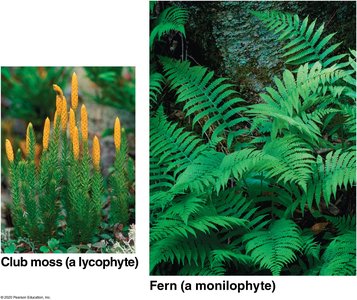
Vascular Plants: Possess lignin-hardened vascular tissues for support and transport. Require moist conditions for fertilization and disperse spores by air.
Seed Plants: Have pollen grains for sperm transport and protect embryos in seeds. Gymnosperms produce seeds in cones; angiosperms develop seeds within ovaries.
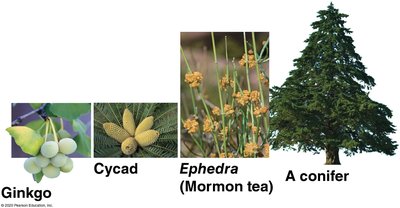
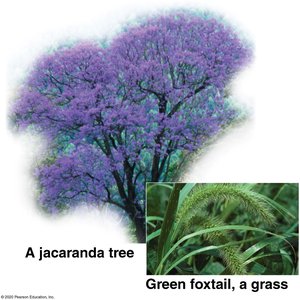
Key Adaptations in Plant Evolution
Adaptations such as vascular tissue, roots, leaves, spores, pollen, and seeds enabled plants to colonize land and diversify.
Vascular Tissue: Provides structural support and efficient transport of water and nutrients.
Roots and Leaves: Roots anchor plants and absorb water; leaves are sites of photosynthesis.
Pollen and Seeds: Allow reproduction without water and protect developing embryos.
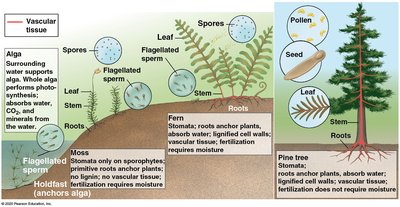
Alternation of Generations and Plant Life Cycles
Haploid and Diploid Generations
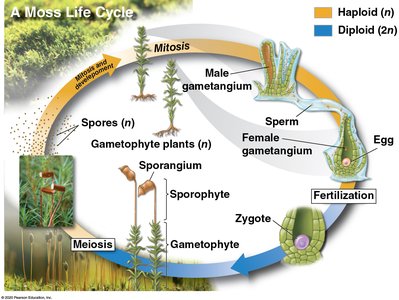
Plants exhibit alternation of generations, with distinct multicellular haploid (gametophyte) and diploid (sporophyte) stages.
Gametophyte (n): Produces gametes (sperm and egg) via mitosis.
Sporophyte (2n): Produces spores via meiosis.
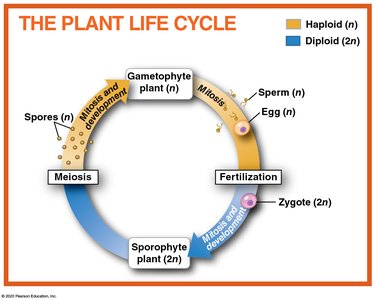
Moss Life Cycle
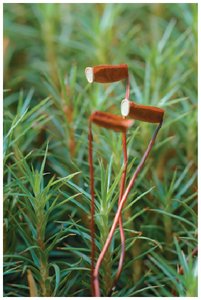
In mosses, the gametophyte is the dominant stage. Fertilization requires moisture, and the sporophyte is dependent on the gametophyte.
Gametophyte: Produces sperm and eggs.
Sporophyte: Grows from the fertilized egg and produces spores.
Fern Life Cycle
In ferns, the sporophyte is the dominant stage and is independent of the gametophyte. Fertilization also requires moisture.
Gametophyte: Small and short-lived, produces gametes.
Sporophyte: Large, independent, produces spores in sporangia.
Seedless Vascular Plants and Ancient Coal Forests
Formation of Fossil Fuels
Seedless vascular plants dominated ancient forests during the Carboniferous period. Their remains formed peat deposits, which eventually became coal, oil, and natural gas.
Coal Formation: Pressure and heat converted peat into coal.
Oil and Gas: Formed from marine organisms.
Impact: Burning fossil fuels releases CO2, contributing to climate change.
Pollen and Seeds: Key Adaptations for Terrestrial Life
Pollen and Seed Formation
Seed plants use pollen grains to transport sperm through the air, enabling reproduction without water. Fertilization results in a seed containing an embryo, food supply, and protective coat.
Pollen: Sperm-producing cells carried by wind or animals.
Seed: Contains embryo (sporophyte), food supply, and seed coat.
Angiosperm Reproduction and Life Cycle
Flower Structure and Function
Flowers are the reproductive centers of angiosperms, housing male and female sporangia and gametophytes.
Sepals: Enclose the flower before it opens.
Petals: Attract pollinators.
Stamens: Male structures; filament and anther (produces pollen).
Carpels: Female structures; stigma, style, and ovary (encloses ovules).
Angiosperm Life Cycle
The sporophyte is the dominant generation, with tiny gametophytes protected in flowers. Ovules become seeds, and ovaries become fruits.
Pollination: Transfer of pollen from stamens to carpels.
Fertilization: Union of egg and sperm; sperm released from pollen tube into ovule.
Fruit Structure and Seed Dispersal
Fruit Adaptations
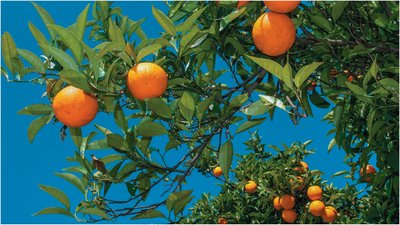
Fruits are ripened ovaries that aid in seed dispersal, contributing to angiosperm success.
Dispersal Mechanisms: Wind, animal transport, and edible fruits.
Ecological Role: Animals deposit seeds away from parent plants, promoting genetic diversity.
Pollination and Angiosperm Evolution
Pollinator Attraction
Flowers attract pollinators through color and scent, offering nectar and pollen as rewards. Animal pollination has influenced angiosperm evolution.
Wind Pollination: Some flowers rely on wind to carry pollen.
Animal Pollination: Showy flowers attract insects, birds, and other animals.
Summary Table: Plant Evolutionary Adaptations
Plant Group | Key Adaptations | Dominant Generation | Reproduction |
|---|---|---|---|
Algae | Photosynthesis, water support | N/A | Water-dependent |
Bryophytes (Mosses, Liverworts, Hornworts) | Primitive roots, no lignin, no vascular tissue | Gametophyte | Moisture required |
Seedless Vascular Plants (Ferns, Lycophytes) | Vascular tissue, roots, lignified cell walls | Sporophyte | Moisture required |
Seed Plants (Gymnosperms, Angiosperms) | Pollen, seeds, vascular tissue | Sporophyte | Moisture not required |
Key Terms and Concepts
Alternation of Generations: Life cycle alternating between haploid gametophyte and diploid sporophyte.
Gametophyte: Haploid, produces gametes.
Sporophyte: Diploid, produces spores.
Vascular Tissue: Xylem and phloem for transport and support.
Pollen: Sperm transport structure in seed plants.
Seed: Embryo, food supply, and protective coat.
Fruit: Ripened ovary, aids in seed dispersal.
Key Equations
Alternation of generations can be summarized as:
Additional info: Academic context was added to clarify evolutionary events, plant adaptations, and reproductive strategies, ensuring completeness and self-contained study notes.
