 Indietro
The Immune System: Innate and Adaptive Immunity
Guida di studio - Note intelligenti
 Appunti personalizzati basati sui tuoi materiali, ampliati con definizioni chiave, esempi e contesto.
Ch. 24 The Immune System
Concept: Immune System
The immune system is the complex network of cells, tissues, and molecules that defends animals against pathogens such as bacteria, viruses, and other microorganisms. It is divided into two main branches: innate immunity (nonspecific, immediate response) and adaptive immunity (specific, acquired response).
Pathogen: Any microorganism that causes disease, including bacteria and viruses.
Innate immunity: Provides a generic, nonspecific defense against pathogens.
Adaptive immunity: Acquired, specific defense that targets particular pathogens and confers long-term immunity.
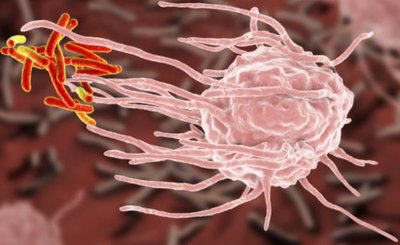
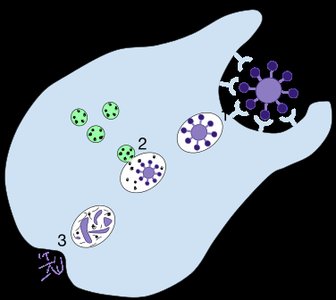
Phagocytosis: Process by which immune cells engulf and digest pathogens.
Cytokines: Signaling molecules released by immune cells to recruit other cells and coordinate the immune response.
Antigen presentation: Display of pathogen-derived molecules (antigens) on cell surfaces to alert other immune cells.
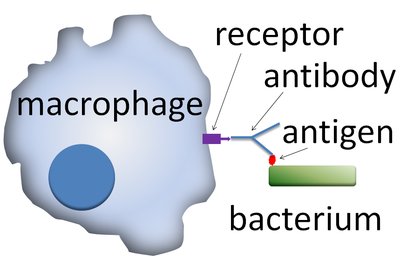
Antigen: Any molecule that induces an immune response.
Antibody: Protein produced by the immune system to recognize and bind antigens.
Example: Phagocytosis is a key mechanism by which immune cells recognize and remove pathogens. Cytokines help recruit additional immune cells to the site of infection, and antigen presentation allows the adaptive immune system to learn and mount a specific defense.
Concept: Innate Immunity
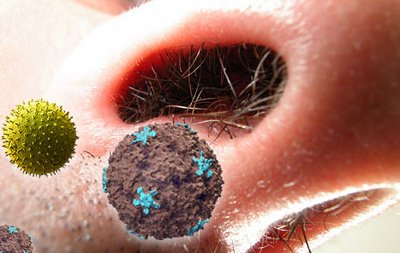
Innate immunity is the body's first line of defense, providing rapid, nonspecific protection against pathogens. It includes physical barriers, chemical defenses, and cellular responses.
Skin: Acts as a physical barrier to prevent pathogen entry.
Mucus: Traps foreign invaders and contains antimicrobial enzymes.
Lysozymes: Enzymes that break down bacterial cell walls.
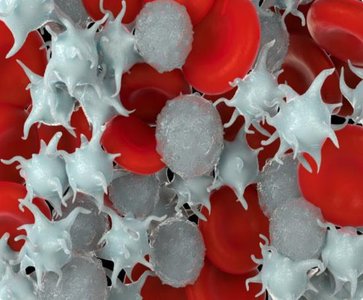
Leukocytes: White blood cells that initiate the innate immune response.
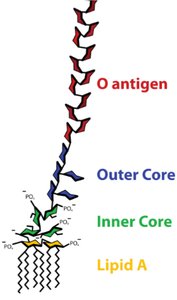
PAMPs (Pathogen-associated molecular patterns): Molecules commonly found on pathogens, recognized by immune cells.
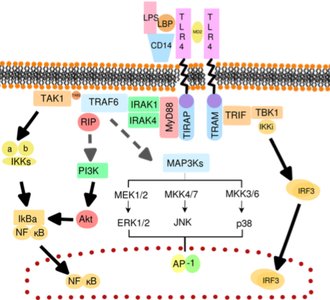
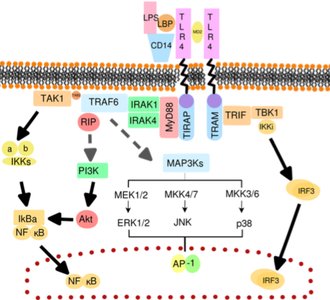
PRRs (Pattern-recognition receptors): Membrane receptors on immune cells that identify PAMPs.
Toll-like receptors (TLRs): A type of PRR that initiates signaling cascades leading to cytokine release.
TLR4: Recognizes bacterial lipopolysaccharides and triggers cytokine release.
Example: The innate immune response is triggered when leukocytes detect PAMPs via PRRs such as TLRs, leading to the release of cytokines and recruitment of additional immune cells.

Innate Immune Cells and Responses
Several types of immune cells participate in innate immunity, each with specialized functions.
Neutrophils: Circulate in the blood and are attracted to infection sites by cytokines; perform phagocytosis.
Macrophages: Reside in tissues and organs, perform phagocytosis, and stimulate adaptive immunity.
Dendritic cells: Engulf pathogens and present antigens to activate adaptive immunity.
Eosinophils: Defend against multicellular parasites.
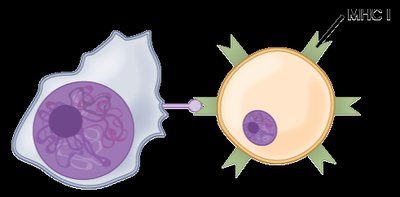
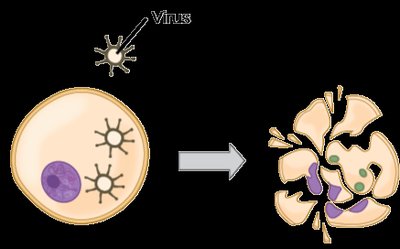
Natural killer cells: Destroy virus-infected cells by inducing apoptosis.
Interferons: Cytokines that interfere with viral replication.
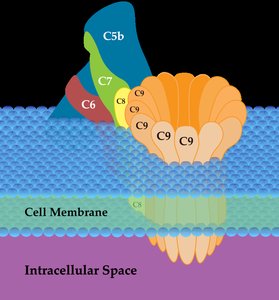
Complement system: Group of proteins that lyse pathogens by creating holes in their membranes.
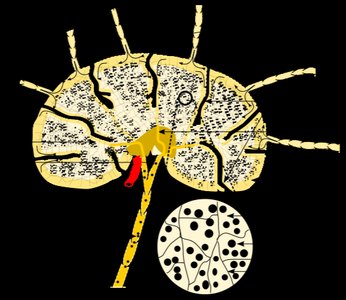
Example: Macrophages and dendritic cells are found in the lymphatic system and lymph nodes, where they encounter pathogens and initiate immune responses.
Inflammatory Response
The inflammatory response is a type of innate immune reaction that results in local swelling and redness at the site of injury or infection.
Platelets: Form clots to seal wounds and prevent blood loss.
Chemokines: Cytokines released by wounded tissues and macrophages to recruit immune cells.
Mast cells: Release histamine, which constricts blood vessels and signals peripheral vessels to dilate.
Neutrophils and macrophages: Move to the infection site and release cytokines to amplify the response.
Example: The inflammatory response is essential for containing infections and recruiting immune cells to the site of injury.
Concept: Adaptive Immunity
Adaptive immunity is a highly specific defense system that recognizes and remembers pathogens, providing long-term protection. It is mediated by lymphocytes (B and T cells) and involves antigen recognition, specificity, adaptability, memory, and self-nonself discrimination.
Antigen: Molecule that triggers an immune response.
Epitope: Specific part of an antigen recognized by antibodies and antigen receptors.
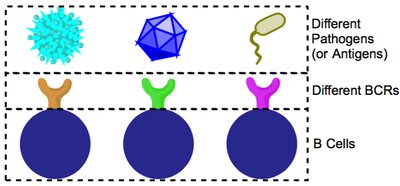
Antigen receptor: Membrane protein on B and T cells that binds antigens.
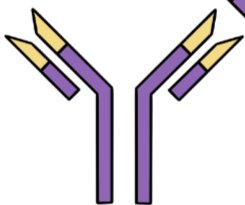
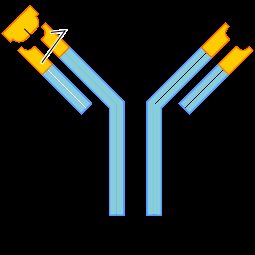
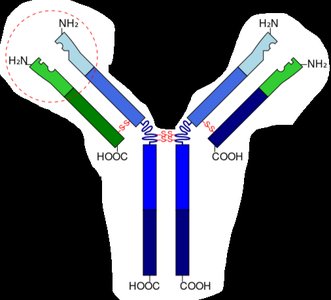
Antibody: Y-shaped protein produced by B cells that binds antigens.
Specificity: Adaptive immune components bind only to specific sites on specific antigens.
Adaptability: Can recognize an almost infinite diversity of antigens.
Memory: Can be reactivated if a pathogen from a previous infection is recognized.
Self-nonself recognition: Immune system does not attack self molecules.
Example: The adaptive immune response is activated after antigen processing and recognition, leading to a targeted defense.
Adaptive Immune Cells and Lymphatic System
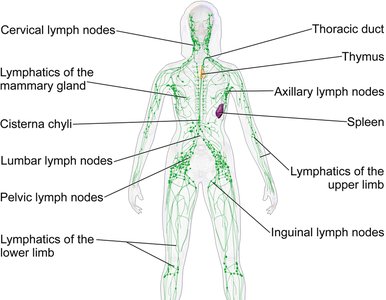
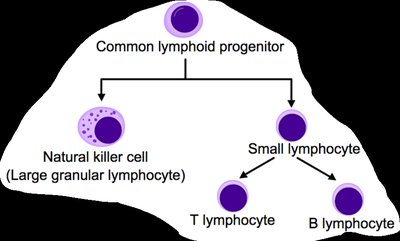
Lymphocytes are the main cells of the adaptive immune system, produced in the bone marrow and maturing in different organs. They circulate through the blood, lymphatic system, and spleen, and are activated by antigens.
Lymphocytes: Includes natural killer, T, and B cells.
T cells: Involved in cell-mediated response, destroy infected cells.
B cells: Involved in humoral response, produce antibodies.
Bone marrow: Site of lymphocyte production.
Thymus: Site of T cell maturation.
Spleen: Filters blood.
Lymph nodes: Filter lymph.
MALT: Mucosal-associated lymphoid tissue in gut and respiratory organs.
Example: Lymphocytes are activated by antigens and play a central role in adaptive immunity.
Antigen Receptors and Immunoglobulins
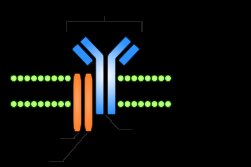
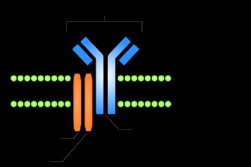
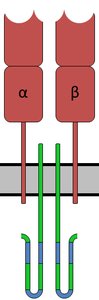
Each B and T cell has a unique antigen receptor, allowing the immune system to recognize a vast array of pathogens. Immunoglobulins (Ig) are a class of proteins that include antibodies and B-cell receptors.
Immunoglobulins (Ig): Five classes: IgG, IgD, IgE, IgA, and IgM, each with unique heavy chains and functions.
B-cell receptor (BCR): Structure similar to antibodies, composed of two heavy chains and two light chains.
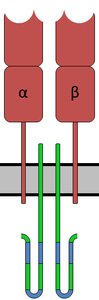
T-cell receptor (TCR): Structure similar to one arm of an Ig, composed of α and β chains.
BCR: Binds directly to antigens.
TCR: Binds to antigens presented on cell surfaces.
Example: The diversity of antigen receptors is generated by genetic recombination during lymphocyte maturation.



Genetic Basis of Antigen Receptor Diversity
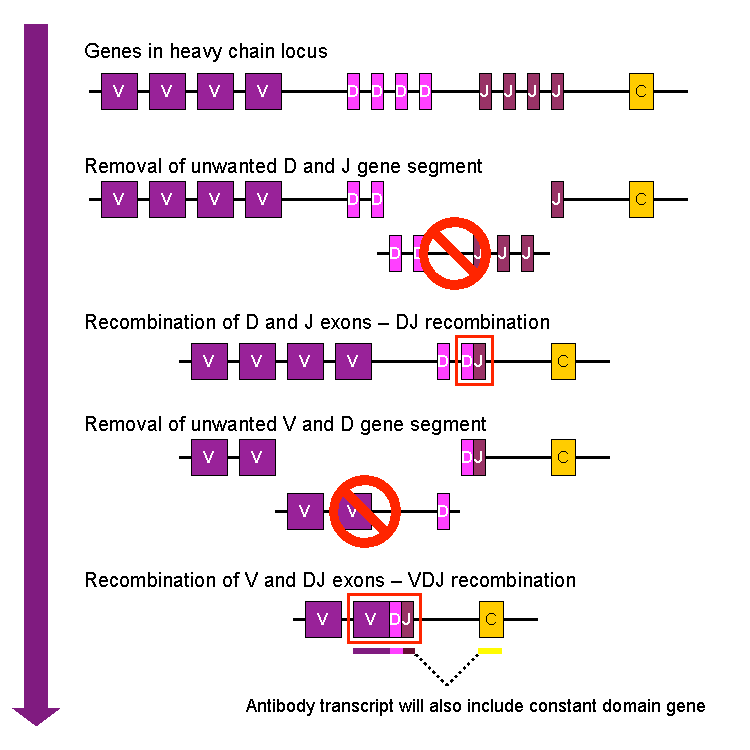
The genes encoding antigen receptors undergo recombination to produce unique structures, forming the basis of the specificity and flexibility of the adaptive immune system.
Light chain: Has 40 V regions and 5 joining segments, leading to 200 possible combinations.
Genetic recombination: Occurs as lymphocytes mature, resulting in unique antigen receptors.
Self-tolerance: Cells with receptors that bind self molecules are destroyed or deactivated.
Example: Genetic recombination is essential for the adaptive immune system's ability to recognize diverse pathogens.
Clonal Selection Theory
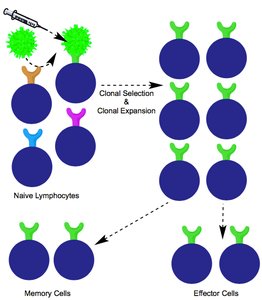
The clonal selection theory explains how antigens select lymphocytes to divide into clonal populations. Activated lymphocytes produce effector cells (immediate action) and memory cells (long-term immunity).
Naïve lymphocyte: Mature lymphocyte not yet exposed to antigen.
Effector cells: Short-lived cells that act against pathogens.
Memory cells: Long-lived cells that divide at a low rate and fight future infections.
Example: Upon antigen encounter, lymphocytes undergo clonal expansion, producing effector and memory cells.
Major Histocompatibility Complex (MHC) and Antigen Presentation
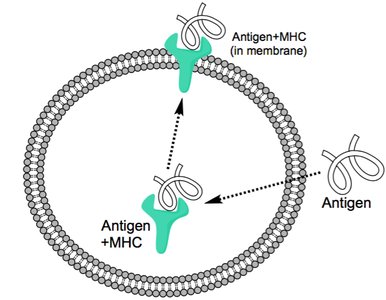
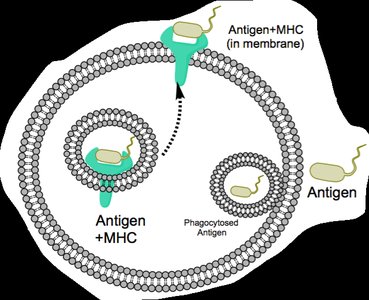
The major histocompatibility complex (MHC) consists of cell surface proteins that display antigens. MHC class I is expressed by all cells and displays internal antigens, while MHC class II is expressed by antigen-presenting cells and displays external antigens.
MHC class I: Alerts immune system to internal infections; important in organ transplant rejection.
MHC class II: Expressed by dendritic cells, macrophages, and B cells; displays external antigens.
Dendritic cells: Link innate and adaptive immunity through antigen presentation.
Example: Antigen presentation is crucial for activating adaptive immune responses.
T Cell Classification and Function
T cells are classified based on the presence of CD4 or CD8 proteins. CD4+ T cells interact with MHC class II, forming helper T cells, while CD8+ T cells interact with MHC class I, forming cytotoxic T cells.
CD4+ T cells: Interact with MHC class II; become helper T cells.
CD8+ T cells: Interact with MHC class I; become cytotoxic T cells.
Cytotoxic T cells: Kill pathogen-infected cells.
Example: Cytotoxic T cells are essential for defending against intracellular pathogens.
B Cell Activation and Antibody Production
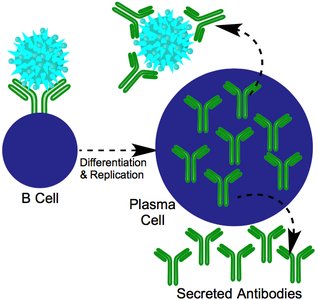
B cell activation occurs when BCRs interact with free antigens. Activated B cells replicate, undergo somatic hypermutation, and differentiate into plasma cells (antibody-secreting) and memory cells.
Plasma cells: Effector B cells that produce and secrete antibodies.
Somatic hypermutation: Fine-tunes B cell receptors for better antigen binding.
Example: B cell activation is essential for humoral immunity and antibody production.
Immune Responses and Immunity Types
The immune system employs various mechanisms to eliminate pathogens and provide immunity.
Opsonization: Pathogens coated with antibodies are more easily targeted by phagocytes.
Neutralization: Antibodies prevent pathogens from infecting host cells.
Agglutination: Antibodies cause pathogens to clump together.
Complement proteins: Create holes in pathogen membranes.
Cell-mediated response: Cytotoxic T cells destroy infected cells.
Humoral response: Antibodies released from plasma cells act in blood and lymph.
Primary immune response: First encounter with pathogen; antibodies produced.
Secondary immune response: Memory cells activated; faster and stronger antibody production.
Active immunity: Antibodies produced by the organism.
Passive immunity: Antibodies received from another individual (e.g., mother to fetus).
Example: Secondary immune responses are faster and more robust due to memory cells.
Immunization, Allergies, Autoimmunity, and HIV/AIDS
Immunization primes the immune system against pathogens. Allergies and autoimmunity are abnormal immune responses, while HIV/AIDS severely weakens the immune system.
Immunization: Gaining defense against pathogens, usually via vaccination.
Vaccination: Introduction of antigens to prime the immune system.
Vaccine types: Subunit, inactivated, and attenuated viruses.
Monoclonal antibodies: Antibodies from a single clone of B cells, specific for one epitope.
Allergies: Abnormal response to allergens.
Autoimmunity: Immune response against self molecules.
HIV: Infects and kills CD4+ T cells and macrophages.
AIDS: Severe immune deficiency caused by HIV.
Example: Vaccination is a key public health measure for preventing infectious diseases.
Innate Immunity | Adaptive Immunity |
|---|---|
Immediate, nonspecific response | Delayed, highly specific response |
Physical barriers, phagocytes, complement | B and T lymphocytes, antibodies |
No memory | Memory for faster future responses |
Recognizes PAMPs | Recognizes specific antigens/epitopes |
Additional info: The immune system is a highly integrated network, with innate and adaptive branches working together to protect the organism from a wide variety of pathogens. Understanding these mechanisms is essential for studying immunology and for applications in medicine, such as vaccine development and treatment of immune disorders.
