 Indietro
The Macromolecules of Life: Structure, Function, and Biological Importance
Guida di studio - Note intelligenti
 Appunti personalizzati basati sui tuoi materiali, ampliati con definizioni chiave, esempi e contesto.
Chapter 5: The Macromolecules of Life
Introduction to Macromolecules
Macromolecules are large, complex molecules essential for life, composed of thousands of covalently connected atoms. Within cells, small organic molecules are joined together to form these larger structures. Most macromolecules are polymers, which are long chains of repeating units called monomers.
Polymer: A long molecule consisting of many similar building blocks (monomers).
Monomer: The basic unit that repeats to form a polymer (e.g., amino acids in proteins).
Macromolecule: Large molecules such as proteins, carbohydrates, nucleic acids, and lipids.

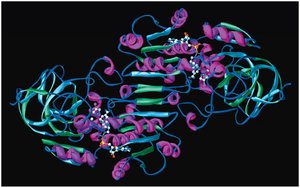
Classes of Biological Macromolecules
There are four major classes of biological macromolecules:
Carbohydrates: Polymers such as starch, used for energy and structural support.
Proteins: Polymers of amino acids, including enzymes and structural proteins.
Nucleic acids: Polymers like DNA and RNA, responsible for genetic information storage and transmission.
Lipids: Not true polymers, but large molecules (e.g., fats, phospholipids, steroids) important for energy storage and membrane structure.
Synthesis and Breakdown of Polymers
Dehydration Synthesis and Hydrolysis
Polymers are formed and broken down by specific chemical reactions:
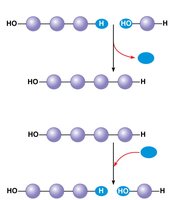
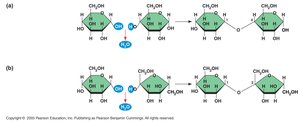
Dehydration Reaction: Joins two monomers by removing a water molecule, forming a new covalent bond.
Hydrolysis: Breaks a polymer into monomers by adding a water molecule, reversing the dehydration reaction.
Carbohydrates
Monosaccharides and Classification
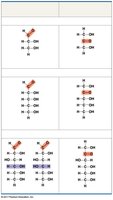
Carbohydrates serve as fuel and building material. The simplest carbohydrates are monosaccharides (single sugars), which can be classified by the location of their carbonyl group and the number of carbons in their skeleton.
Monosaccharide: Basic unit of carbohydrates, usually with a formula that is a multiple of CH2O (e.g., glucose).
Classification: Based on carbonyl group (aldose or ketose) and carbon number (triose, pentose, hexose).
Structure of Glucose and Ribose
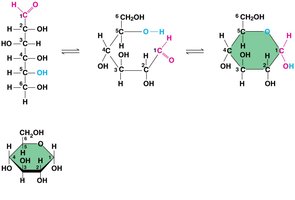
Monosaccharides like glucose and ribose can exist in linear or ring forms, especially in aqueous solutions. Correct numbering of the ring is important for understanding their chemistry.
Glucose: Most common monosaccharide, can form a ring structure via dehydration synthesis.
Ribose: A five-carbon sugar important in RNA structure.
Disaccharides and Glycosidic Linkages
Disaccharides are formed when two monosaccharides are joined by a dehydration reaction, creating a glycosidic linkage (acetal bond).
Maltose: Formed from two glucose units (alpha 1,4 linkage).
Sucrose: Formed from glucose and fructose (alpha 1,2 linkage).
Polysaccharides: Storage and Structural Roles
Polysaccharides are polymers of sugars with storage and structural functions. Their properties depend on the type of monomers and the glycosidic linkages.
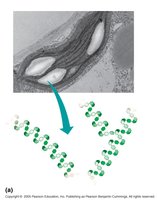
Starch: Storage polysaccharide in plants, composed of glucose monomers (amylose and amylopectin).
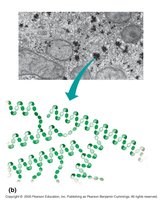
Glycogen: Storage polysaccharide in animals, stored in liver and muscle cells, more highly branched than starch.
Structural Polysaccharides: Cellulose and Chitin
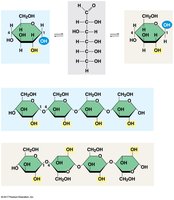
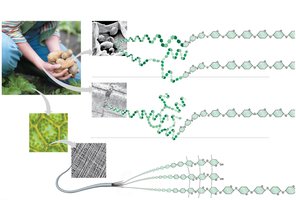
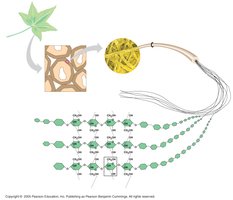
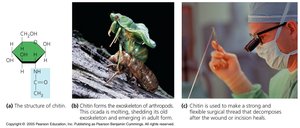
Cellulose and chitin are structural polysaccharides. Cellulose is a polymer of glucose with beta linkages, forming straight chains and microfibrils. Chitin is found in arthropod exoskeletons and fungal cell walls.
Cellulose: Beta 1,4 linkages, forms strong microfibrils in plant cell walls.
Chitin: Similar to cellulose, but with nitrogen-containing side groups; used in exoskeletons and surgical thread.
Digestibility of Polysaccharides
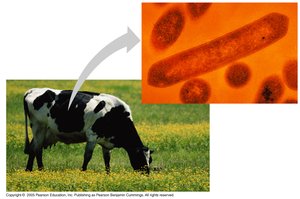
Enzymes that digest starch (alpha linkages) cannot hydrolyze beta linkages in cellulose. Cellulose acts as insoluble fiber in human diets, but some microbes and herbivores can digest it due to symbiotic relationships.
Lipids
Structure and Types of Lipids
Lipids are hydrophobic molecules, not true polymers, and include fats, phospholipids, and steroids. They are important for energy storage, membrane structure, and signaling.
Fats: Composed of glycerol and fatty acids, joined by ester linkages to form triglycerides.
Phospholipids: Two fatty acids and a phosphate group attached to glycerol; major component of cell membranes.
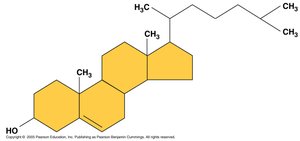
Steroids: Four fused carbon rings; cholesterol is a key example.
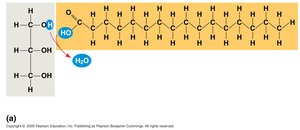
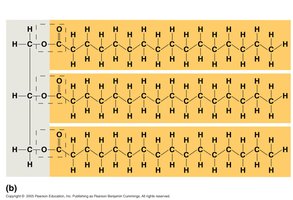
Saturated vs. Unsaturated Fats
Fatty acids can be saturated (no double bonds, solid at room temperature) or unsaturated (one or more double bonds, liquid at room temperature). Trans fats are unsaturated fats with trans double bonds, often created by hydrogenation.
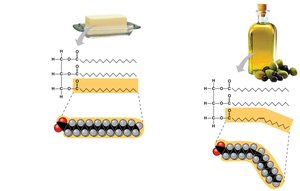
Phospholipids and Cell Membranes
Phospholipids self-assemble into bilayers in water, with hydrophobic tails inward and hydrophilic heads outward, forming the basis of cell membranes.
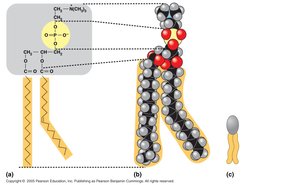
Steroids
Steroids are lipids with a characteristic four-ring structure. Cholesterol is an essential component of animal cell membranes and a precursor for other steroids.
Proteins
Functions of Proteins
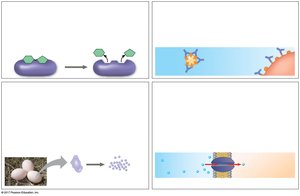
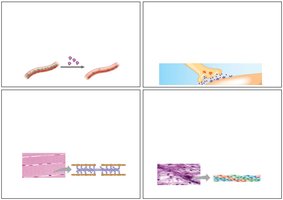
Proteins are diverse macromolecules with many functions, including catalysis, defense, storage, transport, signaling, movement, and structural support.
Enzymatic proteins: Catalyze chemical reactions (e.g., digestive enzymes).
Defensive proteins: Protect against disease (e.g., antibodies).
Storage proteins: Store amino acids (e.g., casein in milk).
Transport proteins: Move substances (e.g., hemoglobin).
Hormonal proteins: Coordinate activities (e.g., insulin).
Receptor proteins: Respond to chemical stimuli.
Contractile and motor proteins: Enable movement (e.g., actin, myosin).
Structural proteins: Provide support (e.g., collagen, keratin).
Amino Acids and Protein Structure
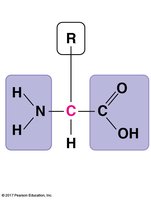
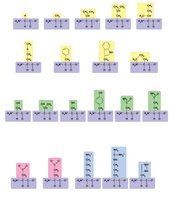
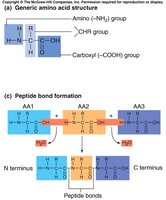
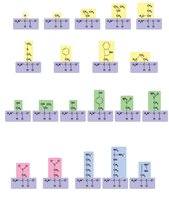
Amino acids are the monomers of proteins, each with a carboxyl group, amino group, and a unique side chain (R group). There are 20 standard amino acids, classified by their side chain properties.
Polypeptide: A polymer of amino acids linked by peptide bonds.
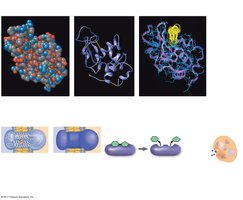
Protein: One or more polypeptides folded into a specific shape.
Peptide Bond Formation
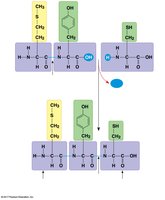
Amino acids are linked by peptide bonds, forming polypeptides with a backbone and side chains (R groups).
Protein Structure: Four Levels
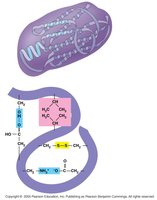
Protein structure is organized into four levels:
Primary structure: Unique sequence of amino acids.
Secondary structure: Coils and folds (alpha helices, beta sheets) stabilized by hydrogen bonds.
Tertiary structure: Three-dimensional shape determined by interactions among R groups (hydrogen bonds, ionic bonds, hydrophobic interactions, van der Waals forces, disulfide bridges).
Quaternary structure: Association of multiple polypeptide chains.
Sickle-Cell Disease: Protein Structure and Function
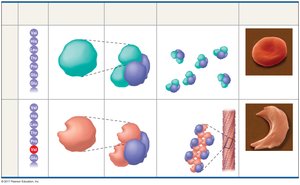
A single amino acid change in hemoglobin's primary structure can cause sickle-cell disease, affecting protein function and cell shape.
Protein Denaturation and Folding
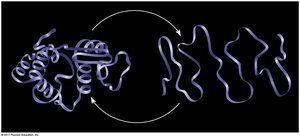
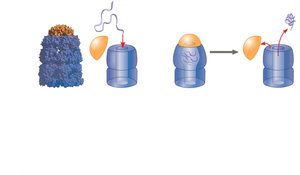
Physical and chemical conditions (pH, salt, temperature) can cause proteins to denature, losing their native structure and function. Chaperonins assist in proper protein folding, preventing misfolding-related diseases.
Determining Protein Structure
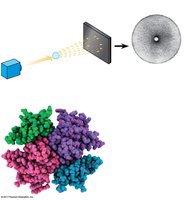
Techniques such as X-ray crystallography, NMR spectroscopy, and bioinformatics are used to determine protein conformation.
Nucleic Acids
DNA and RNA: Structure and Function
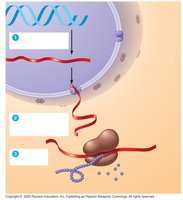
Nucleic acids store, transmit, and express hereditary information. DNA directs its own replication and protein synthesis via mRNA. Protein synthesis occurs in ribosomes.
Nucleotide Structure
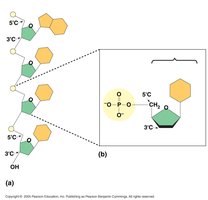
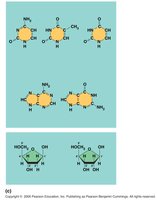
Nucleic acids are polymers of nucleotides, each consisting of a nitrogenous base, pentose sugar, and phosphate group. Nucleosides lack the phosphate group.
Nucleotide Polymerization
Nucleotides are linked by phosphodiester bonds between the 3' hydroxyl and 5' phosphate, forming a sugar-phosphate backbone.
DNA Double Helix and Base Pairing
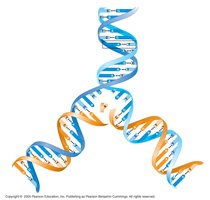
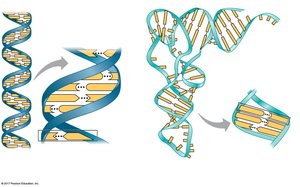
DNA consists of two antiparallel polynucleotide strands forming a double helix. Base pairing is complementary: A with T, G with C. This allows for accurate DNA replication.
RNA Structure and Function
RNA is usually single-stranded, with complementary pairing possible within or between molecules. In RNA, uracil replaces thymine.
DNA and Proteins in Evolution
The linear sequence of nucleotides in DNA is inherited and can be used to assess evolutionary relationships between species.
