Indietro
The Molecular Basis of Inheritance: DNA Structure, Function, and Replication
Guida di studio - Note intelligenti
 Appunti personalizzati basati sui tuoi materiali, ampliati con definizioni chiave, esempi e contesto.
The Molecular Basis of Inheritance
Introduction
The molecular basis of inheritance centers on the role of DNA as the genetic material, its structure, and the mechanisms by which it is replicated and packaged within cells. Understanding these concepts is fundamental to modern biology and genetics.
DNA as the Genetic Material
Historical Perspective
The identification of DNA as the genetic material was achieved through a series of landmark experiments.
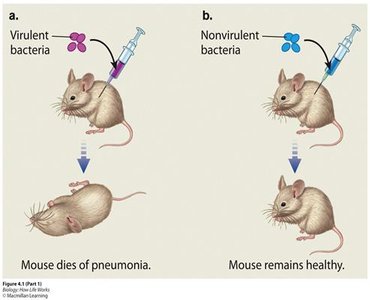
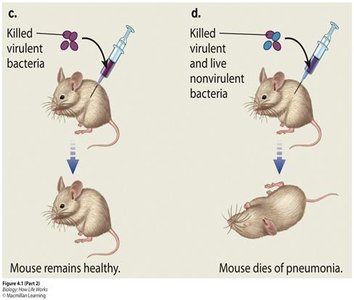
Griffith's Experiment (1928): Demonstrated bacterial transformation, showing that a 'transforming principle' could transfer genetic information between bacteria.
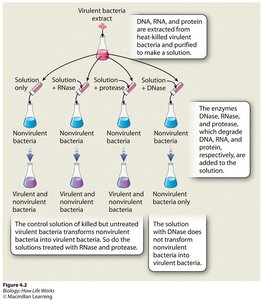
Avery, McCarty, and MacLeod (1944): Identified DNA as the transforming factor by selectively degrading DNA, RNA, and protein in bacterial extracts.
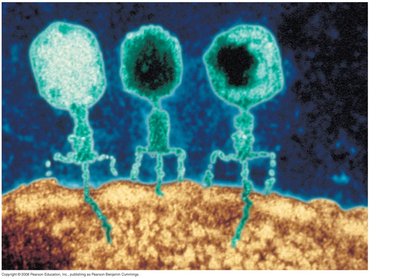
Hershey and Chase (1952): Used radioactive labeling to show that DNA, not protein, is the genetic material in bacteriophages.
Chargaff's Rules (1950): Found that DNA composition varies between species, but within a species, the amount of adenine equals thymine (A = T) and guanine equals cytosine (G = C).
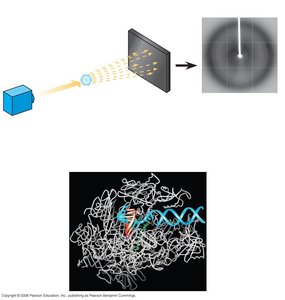
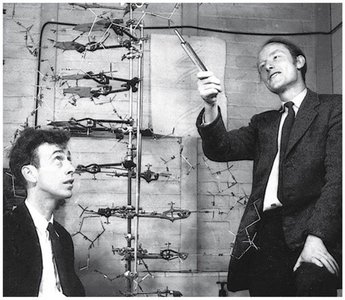
Watson, Crick, and Franklin: Determined the double helical structure of DNA using X-ray crystallography and chemical data.
Meselson and Stahl (1957-58): Demonstrated semi-conservative replication of DNA.
Structure of DNA
Nucleic Acids: Monomers and Polymers
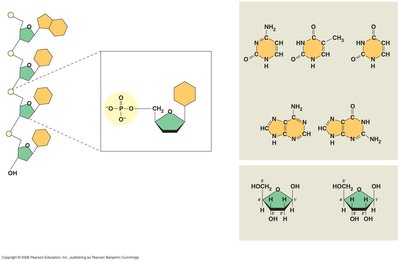
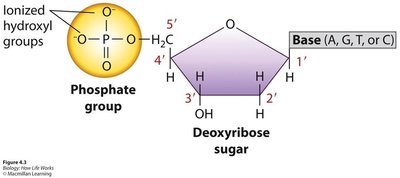
DNA and RNA are polymers made of nucleotide monomers. Each nucleotide consists of a phosphate group, a five-carbon sugar (deoxyribose in DNA, ribose in RNA), and a nitrogenous base.
Pyrimidines: Cytosine (C), Thymine (T, in DNA), Uracil (U, in RNA)
Purines: Adenine (A), Guanine (G)
DNA Double Helix
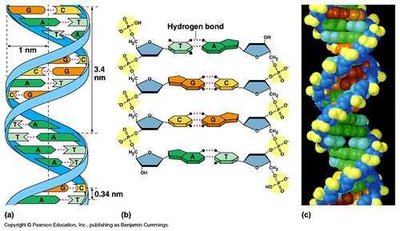
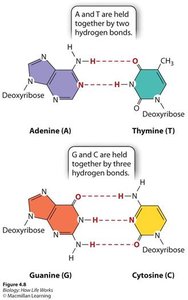
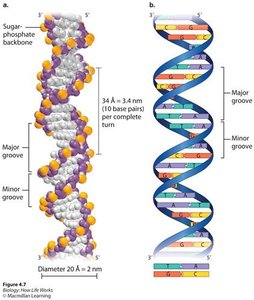
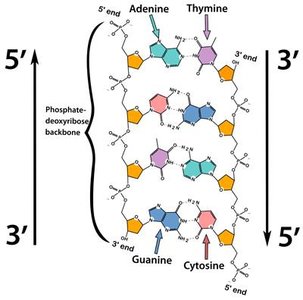
The DNA molecule is a double helix with two antiparallel strands. The sugar-phosphate backbone is on the outside, and the nitrogenous bases pair in the interior via hydrogen bonds.
Base Pairing: Adenine pairs with Thymine (A-T) via two hydrogen bonds; Guanine pairs with Cytosine (G-C) via three hydrogen bonds.
Antiparallel Strands: One strand runs 5' to 3', the other 3' to 5'.
Major and Minor Grooves: The double helix has major and minor grooves, important for protein binding.
X-ray Crystallography and DNA Structure
X-ray diffraction images, especially those produced by Franklin, were critical in deducing the helical structure of DNA. 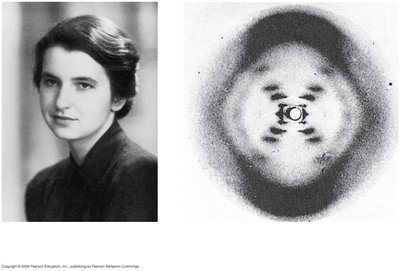
DNA Replication
Basic Principle: Base Pairing to a Template Strand
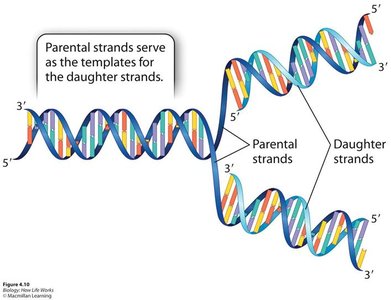
DNA replication relies on the complementarity of the two strands. Each strand serves as a template for the synthesis of a new strand, ensuring accurate transmission of genetic information.
Parental Strands: Serve as templates for daughter strands.
Base Pairing: Ensures fidelity in replication.
Models of DNA Replication
Three models were proposed: conservative, semi-conservative, and dispersive. The Meselson and Stahl experiment confirmed the semi-conservative model, where each new DNA molecule consists of one old and one new strand.
Model | Description |
|---|---|
Conservative | Parent DNA remains intact; new molecule is entirely new DNA |
Semi-conservative | Each new DNA molecule has one old strand and one new strand |
Dispersive | DNA strands are mixtures of old and new segments |
Central Dogma of Biology
Flow of Genetic Information
The central dogma describes the flow of genetic information from DNA to RNA to protein.
Transcription: DNA is transcribed into messenger RNA (mRNA).
Translation: mRNA is translated into protein by ribosomes.
Characteristics of Life
Overview
Life is characterized by cellular organization, homeostasis, metabolism, growth, response to stimuli, reproduction, and adaptation. These features are underpinned by molecular processes such as DNA replication and gene expression.
Cellular Organization: All living things are composed of cells.
Homeostasis: Maintenance of internal stability.
Metabolism: Chemical reactions that sustain life.
Growth and Reproduction: Increase in size and production of offspring.
Adaptation: Evolutionary changes in response to environment.
Summary Table: Key Experiments in DNA Discovery
Experiment | Key Finding |
|---|---|
Griffith | Bacterial transformation |
Avery, McCarty, MacLeod | DNA is the transforming factor |
Hershey and Chase | DNA is genetic material in phages |
Chargaff | A=T, G=C in DNA |
Franklin | X-ray diffraction reveals helical structure |
Watson and Crick | Double helix model |
Meselson and Stahl | Semi-conservative replication |
Key Terms and Definitions
DNA (Deoxyribonucleic Acid): The molecule that carries genetic information in cells.
Nucleotide: The monomer unit of nucleic acids, consisting of a phosphate group, a sugar, and a nitrogenous base.
Antiparallel: Refers to the opposite orientation of the two strands in the DNA double helix.
Base Pairing: Hydrogen bonding between complementary bases (A-T, G-C).
Central Dogma: The flow of genetic information from DNA to RNA to protein.
Key Equations
Chargaff's Rule:
DNA Replication: (each daughter DNA contains one parental and one new strand)
Conclusion
The discovery of DNA as the genetic material, its structure, and the mechanism of replication are foundational concepts in biology. These principles explain how genetic information is stored, transmitted, and expressed in living organisms.