 Indietro
The Molecules of Cells: Structure and Function of Biological Macromolecules
Guida di studio - Note intelligenti
 Appunti personalizzati basati sui tuoi materiali, ampliati con definizioni chiave, esempi e contesto.
Introduction to Organic Compounds
The Importance of Biological Molecules
Biological molecules are essential for the structure and function of living organisms. For example, the enzyme lactase is required to digest lactose in dairy products. Individuals lacking this enzyme are lactose intolerant, illustrating the critical role of specific molecules in metabolism and health.
Life’s Molecular Diversity Is Based on the Properties of Carbon
Carbon’s Unique Bonding Properties
Carbon atoms can form four covalent bonds, allowing for the construction of large, complex, and diverse organic molecules. The backbone of most organic molecules is a carbon chain, which can vary in length and branching. Isomers are compounds with the same molecular formula but different structures, leading to different properties. Hydrocarbons are composed solely of carbon and hydrogen.
Example: Methamphetamine exists as two isomers with drastically different biological effects—one is a drug, the other a medication.
Chemical Groups and Biological Function
Functional Groups
The properties of organic compounds depend on the size and shape of their carbon skeletons and the chemical groups attached. Functional groups such as hydroxyl, carbonyl, carboxyl, amino, phosphate, and methyl groups confer specific chemical properties and reactivity. Hydrophilic functional groups increase solubility in water.
Example: The difference between the hormones testosterone and estradiol is due to their functional groups.
Macromolecules: Polymers and Monomers
Formation and Breakdown of Polymers
Cells construct large molecules called macromolecules (or polymers) from smaller units called monomers. Monomers are joined by dehydration reactions (removal of water), and polymers are broken down by hydrolysis (addition of water). Enzymes catalyze these reactions.
Example: Proteins in cheese are digested into amino acids by hydrolysis, then rebuilt into human proteins by dehydration synthesis.
Carbohydrates
Monosaccharides, Disaccharides, and Polysaccharides
Carbohydrates include sugars and polymers of sugars. Monosaccharides are simple sugars (e.g., glucose, C6H12O6), disaccharides are two monosaccharides joined together (e.g., lactose), and polysaccharides are long chains of sugar units (e.g., starch, glycogen, cellulose, chitin).
Starch and glycogen are storage polysaccharides.
Cellulose and chitin are structural polysaccharides.
Lipids
Fats, Phospholipids, and Steroids
Lipids are hydrophobic molecules mainly composed of carbon and hydrogen. Fats (triglycerides) are energy-storage molecules made of glycerol and three fatty acids. Phospholipids are major components of cell membranes, consisting of two fatty acids, a glycerol, and a phosphate group. Steroids have a structure of four fused rings; cholesterol and hormones are examples.
Unsaturated fats have double bonds; saturated fats have no double bonds.
Trans fats are artificially hydrogenated fats associated with health risks.
Proteins
Structure and Function
Proteins are polymers of amino acids and perform a wide range of functions, including catalysis (enzymes), transport, defense, signaling, structure, and storage. The function of a protein depends on its shape, which is determined by four levels of structure: primary (amino acid sequence), secondary (coiling/folding), tertiary (3D shape), and quaternary (multiple polypeptides).
Denaturation is the loss of protein structure and function due to environmental changes.
Nucleic Acids
DNA and RNA
Nucleic acids (DNA and RNA) are polymers of nucleotides, each consisting of a sugar, phosphate group, and nitrogenous base. DNA is a double helix and stores genetic information; RNA is single-stranded and involved in protein synthesis. Complementary base pairing is essential for DNA replication and function.
Example: Mutations in DNA can lead to traits such as lactose tolerance in humans.
Big Ideas: Overview of Biological Macromolecules
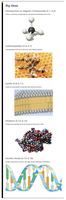
The four major classes of biological macromolecules—carbohydrates, lipids, proteins, and nucleic acids—are essential for life. Each class has unique structures and functions, but all are based on the versatile chemistry of carbon.
Summary Table: Major Classes of Biological Molecules
Class | Monomer | Polymer | Main Functions |
|---|---|---|---|
Carbohydrates | Monosaccharide | Polysaccharide | Energy storage, structure |
Lipids | Fatty acids, glycerol | Fats, phospholipids, steroids | Energy storage, membranes, signaling |
Proteins | Amino acid | Polypeptide | Catalysis, structure, transport, defense |
Nucleic Acids | Nucleotide | DNA, RNA | Genetic information, protein synthesis |
