Indietro
The Origin and Diversification of Eukaryotes
Guida di studio - Note intelligenti
 Appunti personalizzati basati sui tuoi materiali, ampliati con definizioni chiave, esempi e contesto.
The Origin and Diversification of Eukaryotes
Overview: Shape Changers
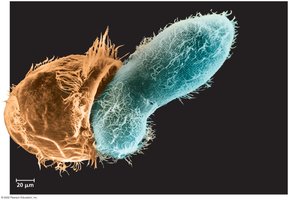
Protists are a diverse group of mostly unicellular eukaryotes, exhibiting remarkable structural complexity and adaptability. Some, such as the ciliate Didinium, can perform dramatic shape changes due to their advanced cellular structures.
Early Eukaryotes
Early eukaryotes were unicellular organisms with organelles, a nucleus, and a cytoskeleton, making them structurally more complex than prokaryotes. The cytoskeleton enabled these cells to adopt asymmetrical forms and change shape, facilitating diverse lifestyles and morphologies.
Endosymbioses and the Origin of Organelles
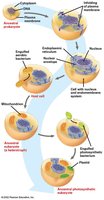
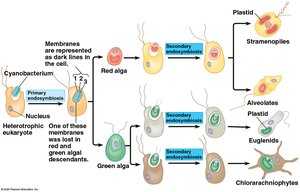
The endosymbiont theory proposes that mitochondria and plastids originated as small bacteria that began living within larger host cells. This relationship began as either undigested prey or internal parasites. The serial endosymbiosis hypothesis suggests mitochondria evolved before plastids through a sequence of endosymbiotic events. Secondary endosymbiosis occurred when eukaryotic algal cells were ingested by heterotrophic eukaryotes, leading to further diversification.
Key Evidence for Endosymbiotic Theory
Inner membranes of mitochondria and plastids resemble bacterial plasma membranes.
Replication of mitochondria and plastids is similar to bacterial cell division.
Both organelles contain circular DNA, like bacteria.
They transcribe and translate their own DNA into proteins.
Their ribosomes are more similar to bacterial than eukaryotic ribosomes.
Multicellular Colonies and the Origin of Multicellularity
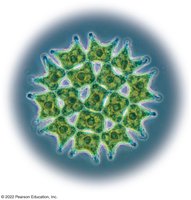
The first multicellular forms were colonies—groups of connected cells with little or no differentiation. These colonies, often seen as filaments, balls, or sheets, are common in the fossil record. Cells in colonies are attached by shared cell walls or connecting proteins.
Origin of Multicellular Animals
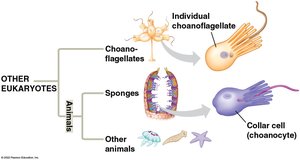
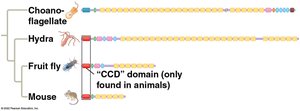
Choanoflagellates are the closest living relatives of animals. The common ancestor of choanoflagellates and animals likely resembled modern choanoflagellates, which possess collar cells similar to those found in sponges.
Major Supergroups of Eukaryotes
Four Supergroups of Eukaryotes
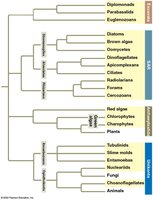
Eukaryotes are classified into four supergroups: Excavata, SAR, Archaeplastida, and Unikonta. Each group contains a wide diversity of protists and other eukaryotic lineages.
Excavata
Includes parabasalids, diplomonads, and euglenozoans.
Many are parasites, such as Giardia intestinalis.
SAR
Includes Stramenopila, Alveolata, and Rhizaria.
Stramenopiles include diatoms and brown algae.
Rhizarians include amoebas and forams.
Archaeplastida
Includes red algae, green algae, and plants.
Volvox is a multicellular green alga in this group.
Unikonta
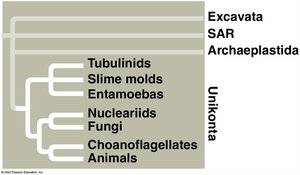
Includes amoebas with lobe- or tube-shaped pseudopodia, animals, fungi, and related protists.
Excavata Branch
Diplomonads and parabasalids lack plastids and have reduced mitochondria. Most live in anaerobic environments. Euglenozoa is a diverse clade with predatory heterotrophs, photosynthetic autotrophs, and parasites.
Parabasalids: Have hydrogenosomes, generate energy anaerobically, and include Trichomonas vaginalis.
Diplomonads: Have mitosomes, derive energy from anaerobic pathways, and are often parasites (e.g., Giardia intestinalis).
Euglenozoa: Distinguished by a rod with a spiral or crystalline structure inside their flagella; some are mixotrophic.
SAR: Stramenopiles
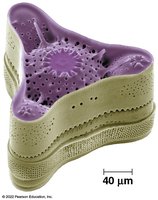
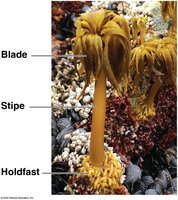
Stramenopiles are important photosynthetic organisms. Diatoms are unicellular algae with unique glass-like walls of silicon dioxide and are major contributors to global photosynthesis. Brown algae are the largest and most complex algae, all multicellular and mostly marine, with plantlike structures such as holdfasts, stipes, and blades.
Alveolates
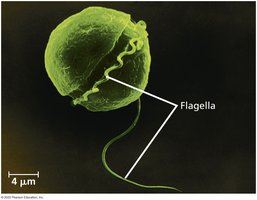
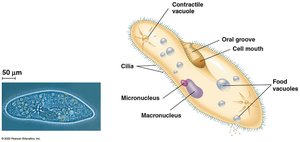
Alveolates possess membrane-enclosed sacs (alveoli) under the plasma membrane. Dinoflagellates have cellulose plates and two flagella, and are common in aquatic environments. Ciliates use cilia for movement and feeding, and are mostly predators of bacteria or small protists.
Rhizarians
Rhizarians include many amoebas, which move and feed by threadlike pseudopodia. Forams extend pseudopodia through pores in their tests for swimming, feeding, and test formation. Cercozoans are amoeboid and flagellated protists that feed with threadlike pseudopodia.
Archaeplastids
Plastids in this group arose from a heterotrophic protist acquiring a cyanobacterial endosymbiont. The descendants evolved into red algae, green algae, and plants. Archaeplastida includes all three lineages.
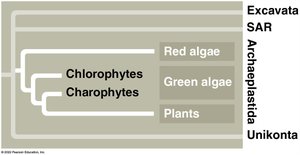
Red Algae
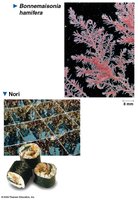
Red algae are characterized by the pigment phycoerythrin, which gives them a reddish color that varies with depth. Most are multicellular and reproduce sexually with unflagellated gametes.
Green Algae
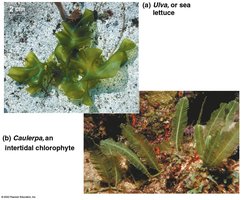
Green algae share many features with plants, including similar chloroplast structure and pigment composition. Some scientists propose including green algae in an expanded plant kingdom, Viridiplantae.
Unikonts
Unikonta includes animals, fungi, and some protists. The group is divided into amoebozoans (with lobe- or tube-shaped pseudopodia) and opisthokonts (animals, fungi, and related protists).
Amoebozoans
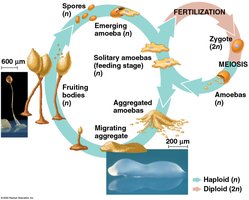
Amoebozoans have lobe- or tube-shaped pseudopodia and are mostly heterotrophs. DNA evidence suggests multicellularity evolved independently in these groups.
Structural and Functional Diversity in Protists
Protists are the most diverse eukaryotic lineage, with most being unicellular. They exhibit a wide range of structural and functional diversity, carrying out all life processes within a single cell. Protists are found in aquatic and moist terrestrial environments and display nutritional diversity, including photoautotrophy, heterotrophy, and mixotrophy.
Photosynthetic Protists
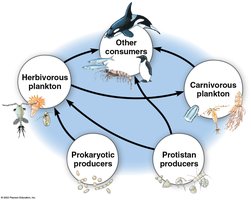
Photosynthetic protists such as diatoms, dinoflagellates, and multicellular algae contribute about 30% of global photosynthesis. Phytoplankton blooms can create ecological 'dead zones' and affect the global carbon cycle by sequestering CO2 in their bodies.
Symbiotic Protists
Many protists form symbiotic relationships. For example, photosynthetic dinoflagellates provide food for coral polyps, and wood-digesting protists help termites digest cellulose. Some protists are parasitic, causing diseases such as sudden oak death and potato late blight.
Protist Effects on Human Health
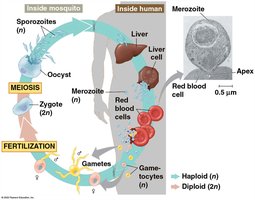
Some protists are significant human pathogens. Trypanosoma causes sleeping sickness and evades the immune system by frequently changing its surface proteins. Apicomplexans, such as Plasmodium, cause malaria and require multiple hosts to complete their life cycle.