 Indietro
The Origin and Diversification of Eukaryotes
Guida di studio - Note intelligenti
 Appunti personalizzati basati sui tuoi materiali, ampliati con definizioni chiave, esempi e contesto.
Chapter 25: The Origin and Diversification of Eukaryotes
Introduction to Eukaryotic Diversity
Eukaryotes are a diverse group of organisms whose evolutionary history is marked by the origin of complex cellular structures and the rise of multicellularity. Much of this diversity can be traced to the process of endosymbiosis, which led to the formation of key organelles and the divergence of major eukaryotic lineages.
What Gave Rise to the Great Diversity of Eukaryotes?
Endosymbiosis and the Origin of Eukaryotes
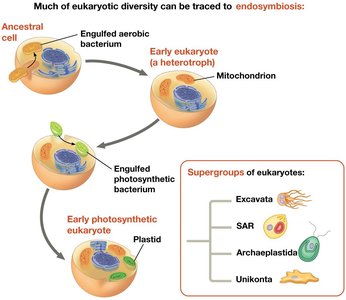
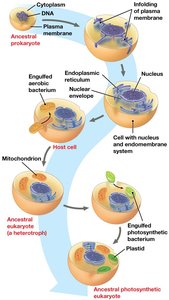
Endosymbiosis is a symbiotic relationship in which one organism lives inside the body or cell of another. The origin of eukaryotes involved the engulfment of an aerobic bacterium by an ancestral cell, resulting in the formation of mitochondria. Later, the engulfment of a photosynthetic bacterium led to the origin of plastids (e.g., chloroplasts). These events gave rise to heterotrophic and photosynthetic eukaryotes, respectively.
Mitochondria originated first, followed by plastids in certain lineages.
Four major supergroups evolved: Excavata, SAR, Archaeplastida, and Unikonta.
Fossil Record of Early Eukaryotes
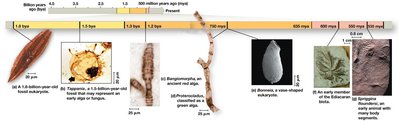
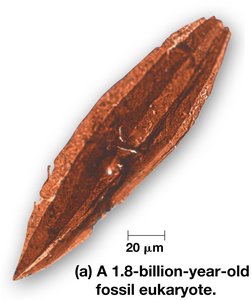
Chemical evidence for eukaryotes dates back to 2.7 billion years ago, with the oldest widely accepted fossils at 1.8 billion years. Early eukaryotes were unicellular, structurally complex, and possessed membrane-bound organelles and a cytoskeleton.
Protists are a diverse group of mostly unicellular eukaryotes.
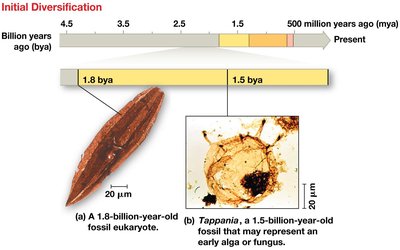
Initial diversification occurred by 1.8 billion years ago.
Initial Diversification
Early eukaryotes had a nucleus, membrane, and cytoskeleton.
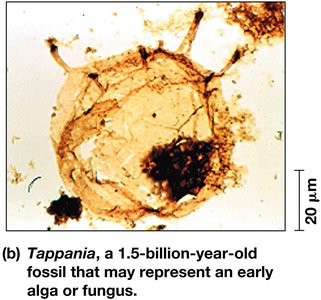
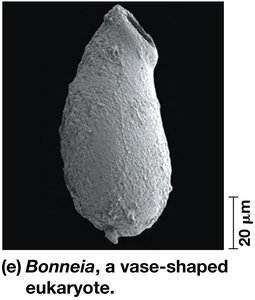
Fossils such as Tappania (1.5 billion years ago) may represent early algae or fungi.
Appearance of Novel Features
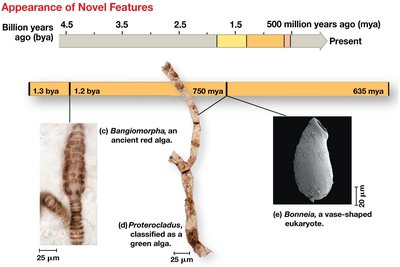
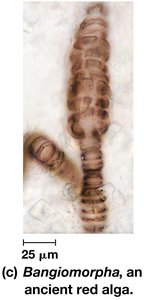
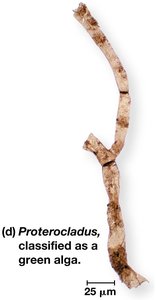
Oldest taxonomically resolved eukaryote fossils: red algae (1.2 billion years ago).
Other fossils include green algae, amoebas, and multicellular protists.
Evolution of complex multicellularity, sexual life cycles, and photosynthesis.
Rise of Large Eukaryotes
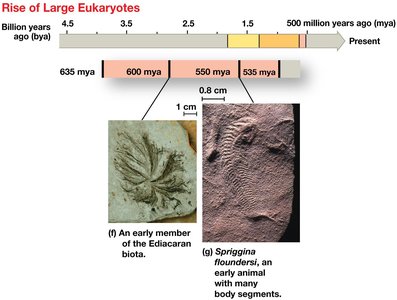
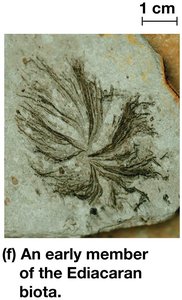
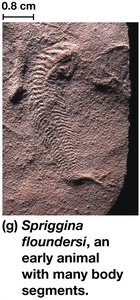
Large multicellular eukaryotes appear in the Ediacaran period (635–541 million years ago).
Rapid increase in body size, diversity, and morphological variation.
Decline of Ediacaran biota with the Cambrian explosion (~535 million years ago).
Endosymbiosis in Eukaryotic Evolution
Genetic Evidence and Mixed Features
DNA sequence data show that eukaryotes are "combination" organisms, with genes and cell characteristics derived from both archaea and bacteria. Endosymbiosis explains these mixed features.
Feature | Original Source |
|---|---|
DNA replication enzymes | Archaeal |
Transcription enzymes | Archaeal |
Translation enzymes | Mostly archaeal |
Cell division apparatus | Mostly archaeal |
Endoplasmic reticulum | Archaeal and bacterial |
Mitochondrion | Bacterial |
Metabolic genes | Mostly bacterial |
Origin of Mitochondria and Plastids
Endosymbiont theory: Mitochondria and plastids evolved from bacteria living within larger cells.
Symbiosis became beneficial as oxygen increased in the atmosphere.
Serial endosymbiosis hypothesis: mitochondria arose first, plastids later in certain lineages.
Mitochondria and plastids share similarities with bacteria (e.g., circular DNA, ribosome structure, replication process).
DNA evidence: mitochondria from alpha proteobacteria; plastids from cyanobacteria.
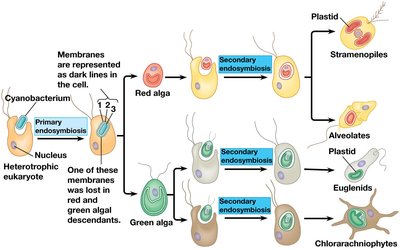
Plastid Evolution: Primary and Secondary Endosymbiosis
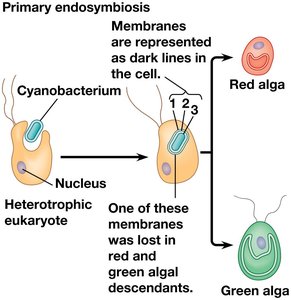
Mitochondria arose from engulfed bacteria; plastids from engulfed cyanobacteria.
Red and green algae have plastids with two membranes, homologous to cyanobacteria.
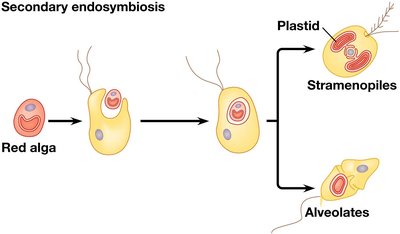
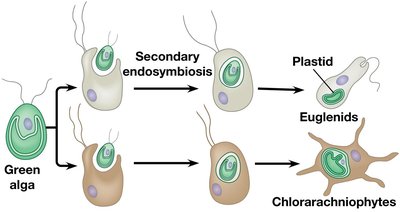
Secondary endosymbiosis: eukaryotic algal cells ingested by other eukaryotes, leading to further diversification.
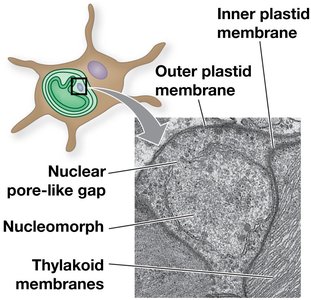
Chlorarachniophytes have plastids with a vestigial nucleus (nucleomorph).
Multicellularity in Eukaryotes
Origin and Evolution of Multicellularity
The evolution of eukaryotic cells enabled a greater range of unicellular forms and, later, the rise of multicellularity. The first multicellular forms were colonies of connected cells with little differentiation. Complex multicellularity evolved independently in red, green, and brown algae, plants, fungi, and animals.
Volvox (multicellular green alga) and Chlamydomonas (unicellular) are closely related.
Transition to multicellularity often involves changes in gene regulation rather than new genes.
Choanoflagellates are the closest living relatives of animals; similarities in cell adhesion and signaling proteins support this relationship.
Four Supergroups of Eukaryotes
Overview of Supergroups
Eukaryotes are divided into four supergroups based on morphological and molecular data:
Excavata: Includes parabasalids, diplomonads, and euglenozoans; some have an "excavated" feeding groove.
SAR: Includes Stramenopila (e.g., diatoms, brown algae), Alveolata (e.g., dinoflagellates, ciliates), and Rhizaria (e.g., forams, cercozoans).
Archaeplastida: Includes red algae, green algae, and plants.
Unikonta: Includes amoebozoans (e.g., slime molds, tubulinids) and opisthokonts (animals, fungi, and related protists).
Key Roles of Single-Celled Eukaryotes
Ecological and Health Impacts
Protists are structurally and functionally diverse, with most being unicellular.
Photosynthetic protists are major producers in aquatic ecosystems, performing about 30% of global photosynthesis.
Protist blooms can affect carbon cycling and ecosystem health.
Symbiotic protists can benefit or harm their hosts (e.g., coral symbionts, disease-causing parasites).
Some protists cause human diseases, such as Trypanosoma (sleeping sickness) and Plasmodium (malaria).
Summary Table: Inferred Origins of Key Eukaryotic Features
Feature | Original Source |
|---|---|
DNA replication enzymes | Archaeal |
Transcription enzymes | Archaeal |
Translation enzymes | Mostly archaeal |
Cell division apparatus | Mostly archaeal |
Endoplasmic reticulum | Archaeal and bacterial |
Mitochondrion | Bacterial |
Metabolic genes | Mostly bacterial |
Additional info: The study of eukaryotic origins integrates fossil evidence, molecular biology, and comparative genomics to reconstruct the evolutionary history of complex life. Understanding endosymbiosis and multicellularity is fundamental to grasping the diversity and ecological roles of modern eukaryotes.
