 Indietro
The Origin of Species: Mechanisms and Patterns of Speciation
Guida di studio - Note intelligenti
 Appunti personalizzati basati sui tuoi materiali, ampliati con definizioni chiave, esempi e contesto.
The Origin of Species
Introduction to Speciation
Speciation is the evolutionary process by which new biological species arise from existing populations. This process is fundamental to understanding biodiversity and the mechanisms that drive evolutionary change. Speciation connects microevolution (changes in allele frequencies within populations) and macroevolution (broad patterns of evolutionary change above the species level).
Gene flow: The exchange of alleles between populations, which maintains genetic similarity.
Reproductive isolation: The cessation of gene flow, leading to genetic divergence and the formation of new species.
Speciation: The splitting of one species into two, increasing biological diversity.
Microevolution vs. Macroevolution: Microevolution involves small-scale changes within populations, while macroevolution refers to large-scale evolutionary changes, such as speciation events.
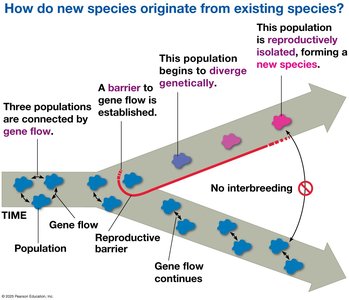
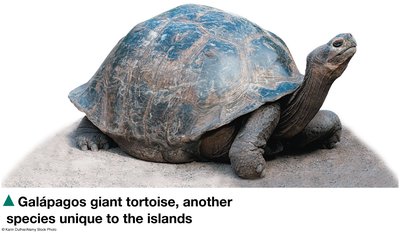
Example: The Galápagos Islands are home to unique species, such as the Galápagos giant tortoise, which evolved through speciation events following geographic isolation.
Biological Species Concept
The biological species concept defines a species as a group of populations whose members can interbreed naturally and produce viable, fertile offspring. Members of a species are reproductively isolated from other species, preventing gene flow and maintaining distinctiveness.
Viable, fertile offspring: Offspring that can survive and reproduce.
Gene flow: Maintains genetic similarity within a species, but its absence allows for speciation.
Reproductive isolation: Prevents interbreeding between different species.
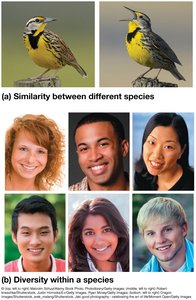
Example: Members of a species resemble each other more than they resemble members of other species, as shown by diversity within humans and similarity between different bird species.
Reproductive Isolation
Types of Reproductive Barriers
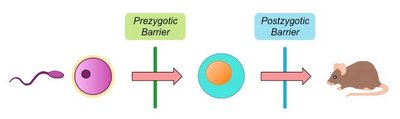
Reproductive isolation is achieved through biological barriers that prevent members of different species from interbreeding. These barriers are classified as prezygotic (before fertilization) or postzygotic (after fertilization).
Prezygotic barriers: Prevent fertilization through mechanisms such as habitat, temporal, behavioral, mechanical, and gametic isolation.
Postzygotic barriers: Affect the viability or fertility of hybrid offspring.
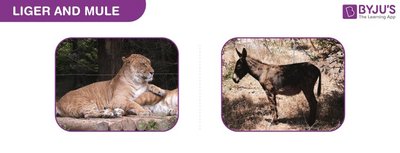
Example: Most hybrids, such as ligers and mules, are sterile and represent a "dead end" in reproduction.
Prezygotic Barriers
Habitat Isolation: Species occupy different habitats and rarely encounter each other, preventing mating.
Temporal Isolation: Species breed at different times (day, season, or year), preventing interbreeding.
Behavioral Isolation: Unique courtship rituals or behaviors prevent mating between species.
Mechanical Isolation: Physical differences prevent successful mating attempts.
Gametic Isolation: Sperm of one species cannot fertilize the eggs of another due to biochemical incompatibility.
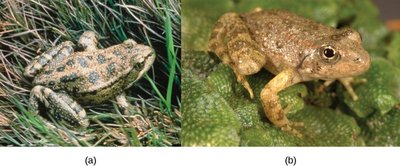

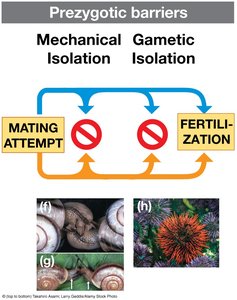
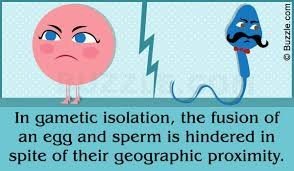
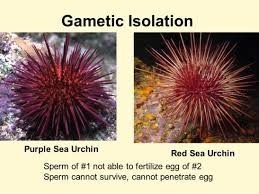
Example: Frog species that breed at different times of the year are temporally isolated, while sea urchins exhibit gametic isolation due to sperm-egg incompatibility.
Postzygotic Barriers
Reduced Hybrid Viability: Hybrids have impaired development or survival.
Reduced Hybrid Fertility: Hybrids are sterile due to chromosomal differences.
Hybrid Breakdown: First-generation hybrids are viable and fertile, but their offspring are feeble or sterile.
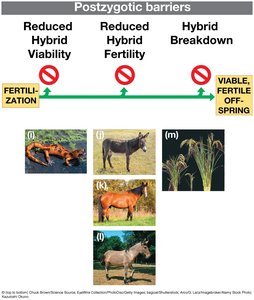
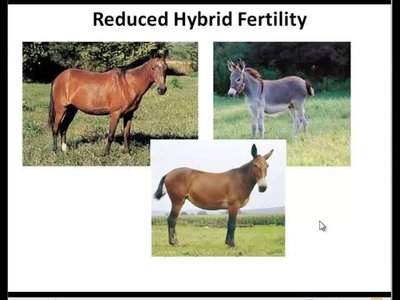
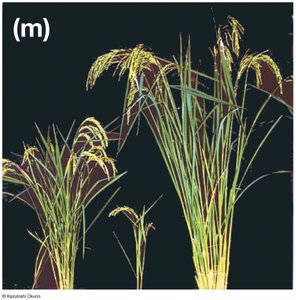
Example: Mules, the offspring of horses and donkeys, are sterile due to reduced hybrid fertility.
Limitations of the Biological Species Concept
The biological species concept cannot be applied to fossils or asexual organisms, and gene flow sometimes occurs between distinct species. Hybridization, such as between grizzly bears and polar bears, demonstrates that reproductive isolation is not always absolute.
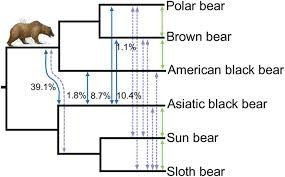
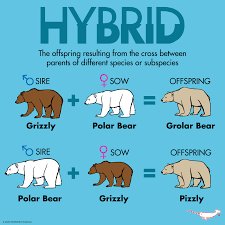
Example: "Grolar bears" are hybrids resulting from interbreeding between grizzly bears and polar bears.
Speciation With or Without Geographic Separation
Allopatric vs. Sympatric Speciation
Speciation can occur with (allopatric) or without (sympatric) geographic separation. Allopatric speciation involves physical barriers, while sympatric speciation occurs within the same geographic area due to factors such as polyploidy, habitat differentiation, or sexual selection.
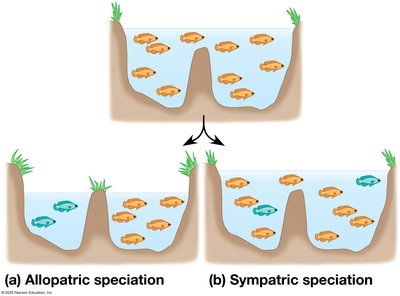
Allopatric Speciation
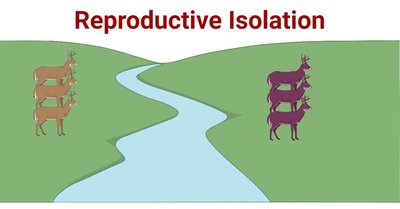
Allopatric speciation occurs when populations are geographically isolated, interrupting gene flow. Genetic divergence arises through mutation, natural selection, and genetic drift, leading to reproductive isolation.
Geographic barriers: Rivers, lakes, or canyons can isolate populations.
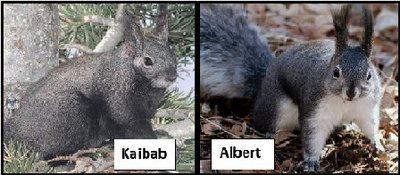
Example: The Grand Canyon and Colorado River isolated squirrel populations, resulting in distinct traits.
Experimental evidence shows that reproductive barriers can evolve in lab populations exposed to different environmental conditions.
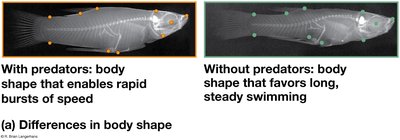
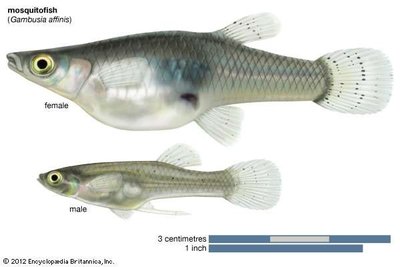
Example: Mosquitofish populations evolved different body shapes and behavioral isolation based on the presence or absence of predators.
Sympatric Speciation
Sympatric speciation occurs in populations that share the same geographic area. It is driven by polyploidy, habitat differentiation, and sexual selection.
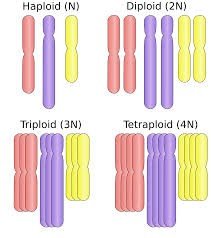
Polyploidy: The presence of extra sets of chromosomes, common in plants.
Habitat differentiation: Subsets of populations exploit new habitats or resources.
Sexual selection: Traits evolve to attract mates, leading to reproductive isolation.
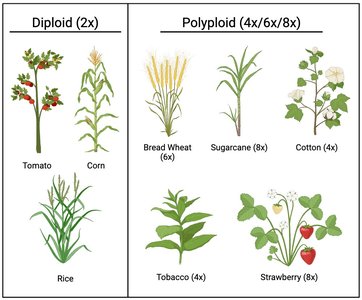
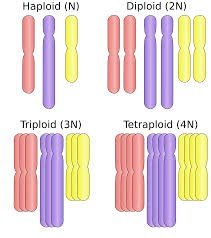
Autopolyploid: An individual with more than two chromosome sets derived from one species. Allopolyploid: A species with chromosome sets derived from different species.
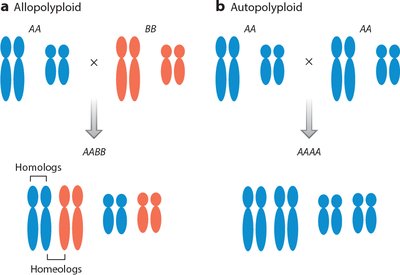
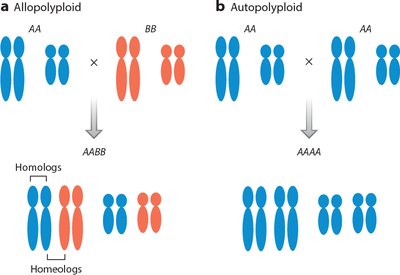
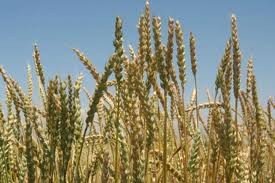
Example: Bread wheat (Triticum aestivum) is an allohexaploid (6n), produced by polyploid speciation.
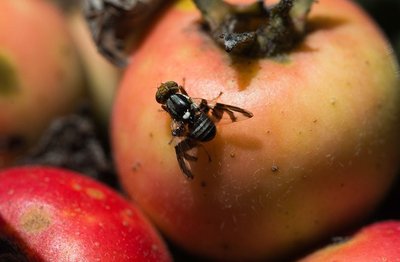
Example: Apple maggot flies switched host plants, leading to temporal and postzygotic reproductive barriers.
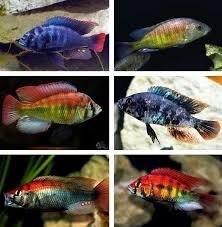
Example: Female cichlids in Lake Victoria choose mates based on breeding coloration, contributing to reproductive isolation.
Hybrid Zones and Reproductive Isolation
Hybrid Zones
A hybrid zone is a region where members of different species meet and mate, producing hybrid offspring. These zones reveal factors that cause reproductive isolation and can be narrow or discontinuous.
Reduced hybrid fitness: Prevents alleles from accumulating in the gene pool of the other species.
Environmental change: Can shift hybrid zones or create new ones.
Example: The hybrid zone between yellow-bellied and fire-bellied toads is narrow and long, with hybrids having poor survival rates.
Outcomes of Hybrid Zones
Reinforcement: Natural selection strengthens reproductive barriers, reducing hybridization.
Fusion: Gene flow weakens barriers, causing species to merge.
Stability: Hybrids continue to be produced if they have better fitness in certain habitats.
Example: Pollution in Lake Victoria reduced female cichlid's ability to differentiate mates, increasing hybridization and causing fusion of gene pools.
Speciation Rates and Patterns
Patterns in the Fossil Record
Speciation can occur rapidly or slowly, as observed in the fossil record. Some species appear suddenly and persist unchanged, while others change gradually.
Punctuated equilibria: Periods of stasis punctuated by rapid change.
Gradualism: Slow, continuous change over time.
Example: The hybrid sunflower Helianthus anomalus rapidly became reproductively isolated from its parent species.
Speciation Intervals
Speciation intervals range from 4,000 to 40 million years, averaging 6.5 million years.
Recent studies suggest speciation can happen rapidly under certain conditions.
Key Equation: Speciation rate is not fixed and depends on genetic, environmental, and ecological factors.
