Indietro
The Plasma Membrane: Structure, Function, and Transport Mechanisms
Guida di studio - Note intelligenti
 Appunti personalizzati basati sui tuoi materiali, ampliati con definizioni chiave, esempi e contesto.
The Plasma Membrane
Overview of Plasma Membrane Functions
The plasma membrane is a dynamic boundary that defines the outer border of all cells and many organelles. It plays a critical role in maintaining cellular integrity and mediating interactions with the environment.
Defines cell boundaries: Separates the internal contents from the external environment.
Regulates transport: Controls what enters and exits the cell, maintaining homeostasis.
Signal reception: Receives external signals and initiates cellular responses.
Cell adhesion: Facilitates attachment to neighboring cells and the extracellular matrix.
Fluid Mosaic Model
The fluid mosaic model describes the structure of the plasma membrane as a mosaic of diverse components—phospholipids, cholesterol, proteins, and carbohydrates—that move fluidly within the layer. This model was proposed by S.J. Singer and G.L. Nicolson in 1972.
Fluidity: Components are not static; they move laterally within the layer.
Mosaic: The membrane is composed of various molecules, each with specific functions.
Phospholipids and Membrane Structure
Phospholipid Structure
Phospholipids are amphiphilic molecules that form the main fabric of the membrane. Each molecule consists of:
Two fatty acid chains (hydrophobic, nonpolar tails)
A glycerol backbone
A phosphate group (hydrophilic, polar head)
Fatty acids can be saturated (all single C–C bonds) or unsaturated (at least one double C=C bond), affecting membrane fluidity.
Phospholipid Bilayer
Phospholipids spontaneously arrange into a bilayer in aqueous environments:
Hydrophilic heads face outward toward water.
Hydrophobic tails face inward, shielded from water.
Membrane Components
Proteins
Proteins are the second major component of membranes, serving as transporters, receptors, enzymes, or adhesion molecules.
Integral proteins: Span the bilayer, with hydrophobic and hydrophilic regions.
Peripheral proteins: Attached to the membrane surface.
Carbohydrates
Carbohydrates are found on the exterior surface, bound to proteins (glycoproteins) or lipids (glycolipids). They function in cell-cell recognition and attachment.
Membrane Fluidity and Asymmetry
Factors Affecting Membrane Fluidity
Phospholipid type: Saturated fatty acids increase rigidity; unsaturated increase fluidity.
Temperature: Cold compresses molecules, making membranes more rigid.
Cholesterol: Acts as a buffer, maintaining fluidity across temperature changes.
Membrane Asymmetry
The plasma membrane is asymmetric; the inner and outer surfaces have different compositions and functions.
Interior proteins anchor cytoskeleton fibers.
Exterior proteins interact with the extracellular matrix and signaling molecules.
Membrane Transport Mechanisms
Selective Permeability
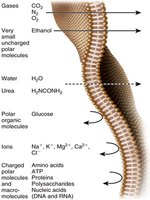
The plasma membrane is selectively permeable, allowing some molecules to pass while restricting others. This property enables cells to maintain distinct internal environments.
Example: Sodium and potassium ion gradients are maintained across the membrane.
Passive Transport
Passive transport does not require energy. Substances move down their concentration gradients.
Diffusion: Movement of small, nonpolar molecules (e.g., O2, CO2) through the lipid bilayer.
Facilitated diffusion: Movement of ions and small polar molecules via channel or carrier proteins.
Factors Affecting Diffusion Rates
Concentration gradient
Molecule mass
Temperature
Solvent density
Solubility
Surface area
Distance
Pressure
Facilitated Passive Transport
Facilitated diffusion uses transmembrane proteins to move substances down their gradients.
Channel proteins: Hydrophilic channels for ions and water (e.g., aquaporins).
Carrier proteins: Bind specific molecules, change shape, and transport them across the membrane (e.g., glucose transporters).
Osmosis and Tonicity
Osmosis is the diffusion of water across a selectively permeable membrane. Water moves from areas of higher to lower water concentration (or lower to higher solute concentration).
Tonicity: Describes how extracellular solutions affect cell volume via osmosis.
Hypertonic: Higher solute concentration outside; water leaves the cell.
Isotonic: Equal solute concentrations; no net water movement.
Hypotonic: Lower solute concentration outside; water enters the cell.
Osmoregulation
Cells and organisms regulate water balance to prevent excessive swelling or shrinking. Plant cells rely on turgor pressure, while animals and protists use mechanisms like contractile vacuoles or kidney function.
Active Transport
Overview of Active Transport
Active transport moves substances against their concentration or electrochemical gradients, requiring energy (usually ATP).
Primary active transport: Direct use of ATP (e.g., Na+/K+ pump).
Secondary active transport: Uses gradients established by primary transport to move other substances.
Types of Carrier Proteins in Active Transport
Uniporter: Transports one molecule or ion.
Symporter: Transports two substances in the same direction.
Antiporter: Transports two substances in opposite directions.
Example: Sodium-Potassium Pump
The Na+/K+ pump moves three sodium ions out and two potassium ions into the cell, using one ATP molecule. This is an example of an antiporter and is electrogenic, creating a charge difference across the membrane.
Bulk Transport
Endocytosis and Exocytosis
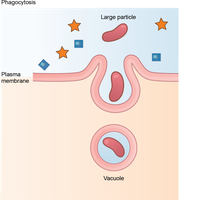
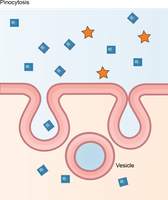
Bulk transport moves large particles or volumes across the membrane via vesicles, requiring energy.
Endocytosis: Importing substances into the cell.
Exocytosis: Exporting substances out of the cell.
Types of Endocytosis
Phagocytosis: "Cell eating"—engulfing large particles or cells.
Pinocytosis: "Cell drinking"—engulfing extracellular fluid and dissolved solutes.
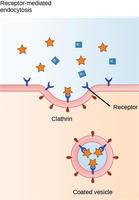
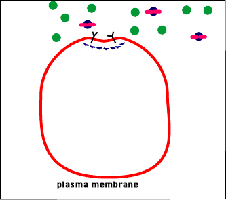
Receptor-mediated endocytosis: Specific uptake of molecules via receptor binding.
Diseases Associated with Membrane Transport Proteins
Cystic Fibrosis
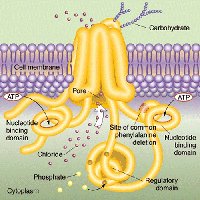
Cystic fibrosis (CF) is an inherited disease caused by mutations in a membrane transport protein (CFTR). This leads to thick, sticky mucus in the lungs and digestive tract, increasing the risk of infections and respiratory complications.
Mucus and Neutrophils in CF
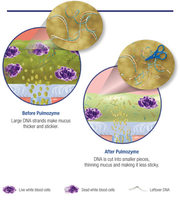
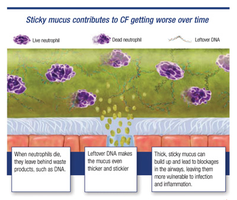
In CF, thick mucus traps bacteria, leading to infection. Neutrophils invade to fight infection, but when they die, their DNA makes the mucus even thicker and stickier, worsening the condition.
Pulmozyme Treatment
Pulmozyme is a medication that breaks down DNA in mucus, making it less sticky and easier to clear from the lungs. This helps reduce blockages and infection risk in CF patients.