Indietro
The Scientific Method and Experimental Design in Biology MIDTERM
Guida di studio - Note intelligenti
 Appunti personalizzati basati sui tuoi materiali, ampliati con definizioni chiave, esempi e contesto.
Scientific Method
Overview of the Scientific Method
The scientific method is a systematic approach used by scientists to explore observations, answer questions, and test hypotheses. It ensures that scientific inquiry is objective, repeatable, and based on evidence. The process involves several well-defined steps that guide researchers from initial observation to the communication of results.
Observation: Noticing and describing phenomena in a careful, orderly way.
Question: Formulating a question based on the observation.
Hypothesis: Proposing a tentative explanation or prediction that can be tested.
Experiment: Designing and conducting an experiment to test the hypothesis.
Conclusion: Analyzing data to determine whether the hypothesis is supported or not.
Communication of Results: Sharing findings with the scientific community, often through lab reports or publications.
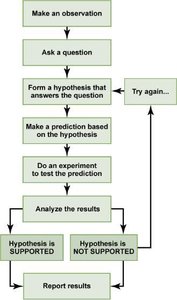
Steps of the Scientific Method
Each step in the scientific method builds upon the previous one, creating a logical flow from observation to conclusion. If the hypothesis is not supported, the process may begin again with a new hypothesis.
Observation: Gather information using the senses or scientific tools.
Question: Ask a specific, testable question about the observation.
Hypothesis: Develop a statement that predicts an outcome based on prior knowledge or research.
Experiment: Test the hypothesis through controlled investigation.
Conclusion: Interpret the results to accept, reject, or modify the hypothesis.
Communication: Present results in a clear and organized manner, such as a lab report.
Experimental Design and Variables
Types of Variables
Understanding variables is essential for designing effective experiments. Variables are factors that can change in an experiment and are classified as independent, dependent, or constant.
Independent Variable: The factor that is intentionally changed or manipulated by the experimenter. It is considered the cause in the experiment.
Dependent Variable: The factor that is measured or observed. It is affected by changes in the independent variable and represents the effect.
Constant Variables (Controls): Factors that are kept the same throughout the experiment to ensure that any observed effect is due to the independent variable alone.
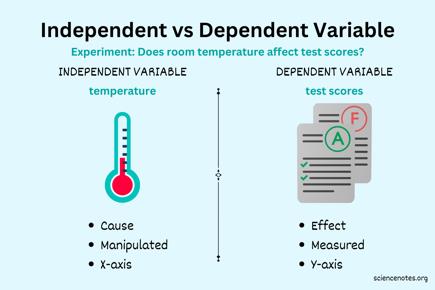
Examples of Variables in Experiments
To clarify the roles of variables, consider the following example:
Experiment: Does room temperature affect test scores?
Independent Variable: Room temperature (manipulated by the experimenter)
Dependent Variable: Test scores (measured outcome)
Constant Variables: Type of test, time allowed, participant age, etc.
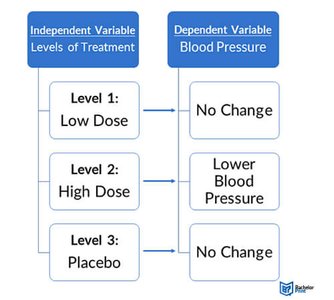
Study Species Example: Porcellio laevis
Objective Animal Behavior Studies
Porcellio laevis is a terrestrial crustacean often used in behavioral experiments. When studying animal behavior, it is important to remain objective and avoid anthropomorphism (attributing human traits to animals). Observations should be recorded systematically and without bias.
Lab Report Structure
Sections of a Lab Report
A well-organized lab report communicates the process and findings of an experiment. The main sections include:
Introduction: Provides background information, states the research question, and presents the hypothesis.
Materials and Methods: Describes the experimental design, materials used, and procedures followed.
Results: Presents the data collected, often using tables, graphs, or figures.
Discussion: Interprets the results, explains their significance, and suggests future research directions.
References: Lists sources cited in the report, often in the form of an annotated bibliography.
Additional Info: Quantitative vs. Qualitative Data
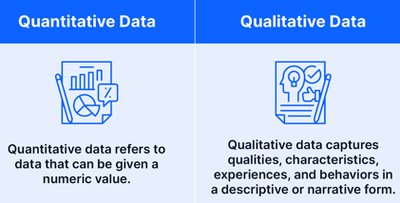
In experiments, data can be classified as quantitative or qualitative:
Quantitative Data: Numerical data that can be measured and analyzed statistically (e.g., height, weight, temperature).
Qualitative Data: Descriptive data that characterizes qualities or categories (e.g., color, behavior, texture).