 Indietro
The Structure and Function of Large Biological Molecules
Guida di studio - Note intelligenti
 Appunti personalizzati basati sui tuoi materiali, ampliati con definizioni chiave, esempi e contesto.
The Structure and Function of Large Biological Molecules
Macromolecules: Overview
Large biological molecules, or macromolecules, are essential for life and include carbohydrates, lipids, proteins, and nucleic acids. Their unique properties arise from the specific arrangement of their atoms.
Macromolecules are typically polymers, constructed from repeating units called monomers.
Carbohydrates, proteins, and nucleic acids are true polymers; lipids are not.
Enzymes catalyze the synthesis and breakdown of these polymers.
Synthesis and Breakdown of Polymers
Polymers are formed and broken down by specific chemical reactions involving water.
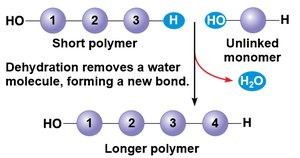
Dehydration reaction: Joins two monomers by removing a water molecule, forming a new bond.
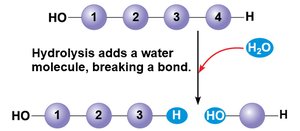
Hydrolysis: Breaks a polymer into monomers by adding a water molecule, breaking a bond.
Carbohydrates
Classification and Structure
Carbohydrates serve as fuel and building material. They are classified as monosaccharides, disaccharides, and polysaccharides.
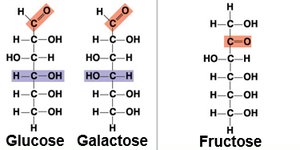
Monosaccharides: Simple sugars, usually with formulas that are multiples of CH2O.
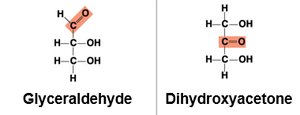
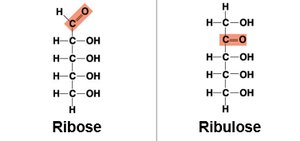
Classified by the location of the carbonyl group (aldose or ketose) and the number of carbons.
Type | Example | Structure |
|---|---|---|
Triose | Glyceraldehyde (aldose), Dihydroxyacetone (ketose) |
|
Pentose | Ribose (aldose), Ribulose (ketose) |
|
Hexose | Glucose, Galactose (aldose), Fructose (ketose) |
|
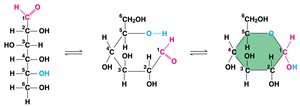
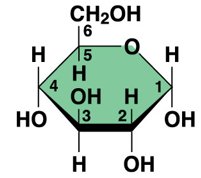
Monosaccharide Structure: Linear and Ring Forms
Monosaccharides often form ring structures in aqueous solutions, which are energetically favorable.
Glucose is the most common monosaccharide.
Ring formation is typical in biological systems.
Disaccharides
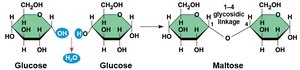
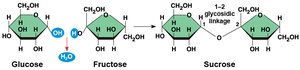
Disaccharides are formed by joining two monosaccharides via a dehydration reaction, resulting in a glycosidic linkage.
Maltose: Glucose + Glucose
Sucrose: Glucose + Fructose
Polysaccharides
Polysaccharides are polymers of sugars and serve storage and structural roles.
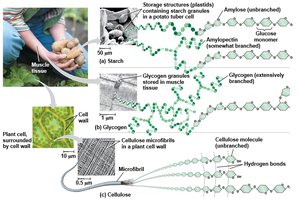
Starch: Storage polysaccharide in plants, composed of glucose monomers.
Glycogen: Storage polysaccharide in animals, stored in liver and muscle cells.
Cellulose: Structural polysaccharide in plant cell walls; differs from starch in glycosidic linkage.
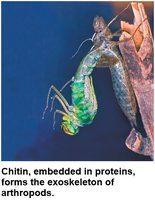
Chitin: Structural polysaccharide in arthropod exoskeletons and fungal cell walls.
Structural Differences: Starch vs. Cellulose
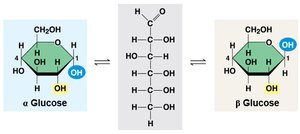
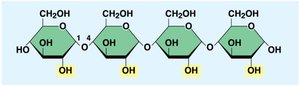
The architecture and function of polysaccharides depend on the type of glucose ring (alpha or beta) and the position of glycosidic linkages.
Starch: 1–4 linkage of α glucose monomers
Cellulose: 1–4 linkage of β glucose monomers
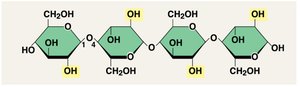
Chitin
Chitin is a structural polysaccharide found in the exoskeletons of arthropods and cell walls of fungi.
Lipids
General Properties
Lipids are hydrophobic molecules that do not form true polymers. They include fats, phospholipids, and steroids.
Consist mostly of hydrocarbon regions.
Mix poorly with water.
Fats
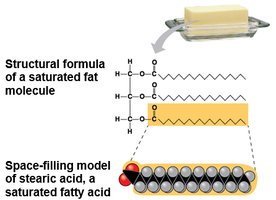
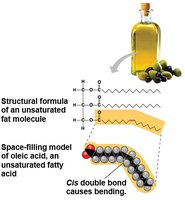
Fats are constructed from glycerol and fatty acids. They serve as energy storage, insulation, and protection.
Saturated fatty acids: No double bonds, solid at room temperature.
Unsaturated fatty acids: One or more double bonds, liquid at room temperature.
Phospholipids
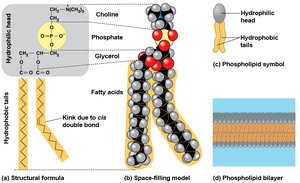
Phospholipids are major components of cell membranes, consisting of two fatty acids and a phosphate group attached to glycerol.
Hydrophobic tails and hydrophilic head.
Form bilayers in aqueous environments.
Steroids
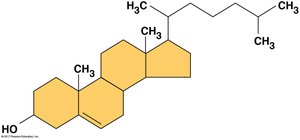
Steroids are lipids with a carbon skeleton of four fused rings. Cholesterol is a key steroid in animal cell membranes.
Proteins
Functions and Structure
Proteins are diverse in structure and function, accounting for more than 50% of the dry mass of most cells.
Functions: Enzymatic, defense, storage, transport, communication, movement, structural support.
Constructed from 20 amino acids.
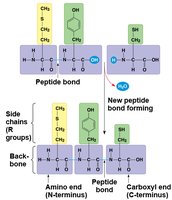
Polypeptides are polymers of amino acids.
Amino Acids and Peptide Bonds
Amino acids have amino and carboxyl groups and differ by their side chains (R groups). Peptide bonds link amino acids in polypeptides.
Levels of Protein Structure
Protein structure is hierarchical, with four levels:
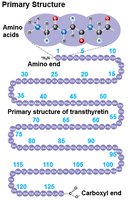
Primary structure: Unique sequence of amino acids.
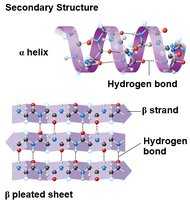
Secondary structure: Coils (α helix) and folds (β pleated sheet) stabilized by hydrogen bonds.
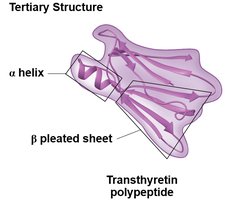
Tertiary structure: Overall 3D shape due to interactions among R groups.
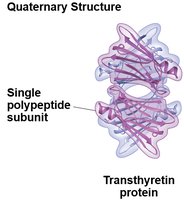
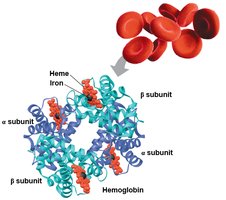
Quaternary structure: Association of multiple polypeptide chains.
Protein Denaturation and Folding
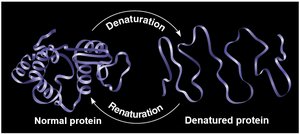
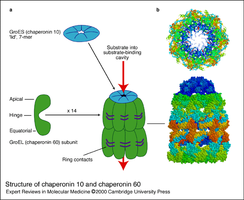
Protein function depends on proper folding. Denaturation disrupts structure and function, sometimes reversible. Chaperonins assist folding.
Nucleic Acids
Structure and Function
Nucleic acids store, transmit, and help express hereditary information. DNA and RNA are the two types.
DNA: Deoxyribonucleic acid, stores genetic information.
RNA: Ribonucleic acid, involved in protein synthesis.
Monomers: Nucleotides (nitrogenous base, pentose sugar, phosphate group).
Nucleotide Structure
Nucleotides consist of a nitrogenous base (purine or pyrimidine), a pentose sugar (ribose or deoxyribose), and a phosphate group.
Pyrimidines: Cytosine, thymine, uracil (single ring).
Purines: Adenine, guanine (double ring).
DNA Double Helix and Base Pairing
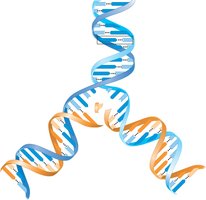
DNA forms a double helix with complementary base pairing: Adenine pairs with Thymine, Cytosine pairs with Guanine.
Gene Expression
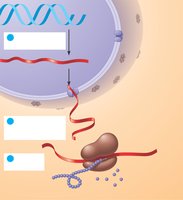
DNA directs RNA synthesis, which in turn directs protein synthesis. This process is called gene expression.
Genomics and Proteomics
Bioinformatics
Bioinformatics uses computational tools to analyze large sets of genetic and protein data. Genomics compares whole genomes, while proteomics analyzes protein sequences and functions.
Summary Table: Major Biological Macromolecules
Macromolecule | Monomer | Polymer | Main Function |
|---|---|---|---|
Carbohydrate | Monosaccharide | Polysaccharide | Energy, structure |
Lipid | Fatty acid, glycerol | Triglyceride, phospholipid, steroid | Energy storage, membranes, signaling |
Protein | Amino acid | Polypeptide | Catalysis, structure, transport, signaling |
Nucleic Acid | Nucleotide | DNA, RNA | Information storage and transfer |
Additional info: The notes above expand on brief points from the original slides, providing definitions, examples, and academic context for each major macromolecule. All included images directly reinforce the explanations adjacent to them.
