 Indietro
The Structure and Function of Large Biological Molecules: Carbon and Macromolecules
Guida di studio - Note intelligenti
 Appunti personalizzati basati sui tuoi materiali, ampliati con definizioni chiave, esempi e contesto.
Biological Macromolecules and the Importance of Carbon
Introduction to Biological Macromolecules
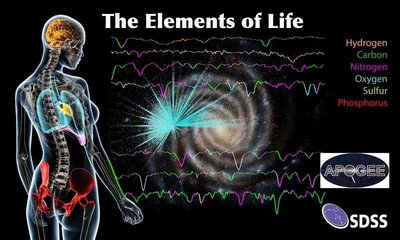
Biological macromolecules are large, complex molecules essential for life. They include carbohydrates, lipids, proteins, and nucleic acids. These molecules are primarily composed of carbon, hydrogen, oxygen, nitrogen, and sometimes sulfur and phosphorus. Their structure and function are foundational to all living organisms.
Macromolecules are polymers, built from repeating units called monomers.
Three of the four classes (carbohydrates, proteins, nucleic acids) are true polymers; lipids are not.
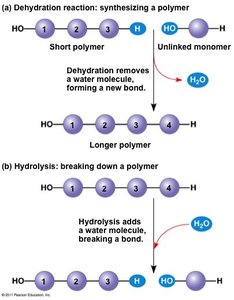
Understanding the synthesis (dehydration) and breakdown (hydrolysis) of polymers is key to understanding biological processes.
The Central Role of Carbon in Biology
Carbon: The Backbone of Life
Carbon is unparalleled in its ability to form large, complex, and diverse molecules. Its unique bonding properties allow it to serve as the backbone for macromolecules such as proteins, DNA, carbohydrates, and lipids.
Carbon can form four covalent bonds, allowing for a variety of stable structures (chains, rings, branches).
Organic chemistry is the study of carbon-containing compounds, which range from simple molecules to complex macromolecules.
Properties of Carbon
Each carbon atom has four electrons in its outer shell, forming four covalent bonds to achieve the octet rule.
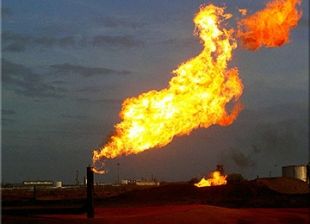
Carbon forms the backbone of hydrocarbons (molecules of only carbon and hydrogen), which store energy in their covalent bonds.

Bonding and Molecular Geometry
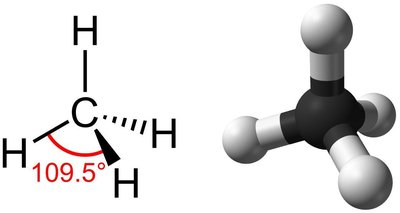
Methane (CH4) is a classic example, with a tetrahedral geometry (bond angles of 109.5°).
When carbon forms double bonds, the geometry becomes planar (flat), as seen in ethene (C2H4).
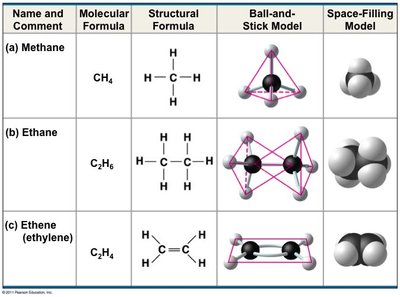
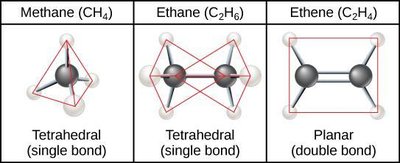
Molecular Diversity from Carbon Skeleton Variation
Carbon chains can vary in length, branching, double bond position, and ring formation, leading to immense molecular diversity.
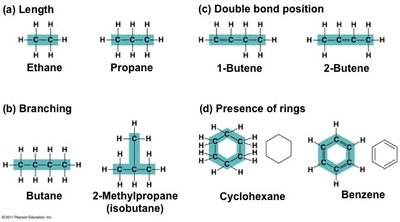
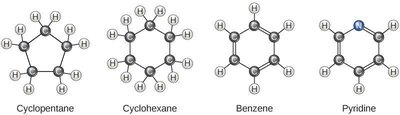
Isomers: Structural Diversity in Organic Molecules
Types of Isomers
Structural isomers: Differ in covalent arrangement of atoms.
Geometric (cis-trans) isomers: Differ in spatial arrangement around double bonds.
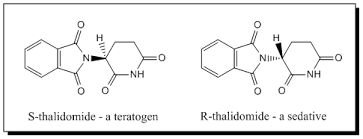
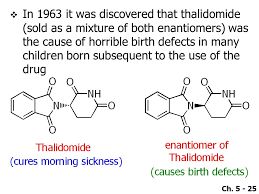
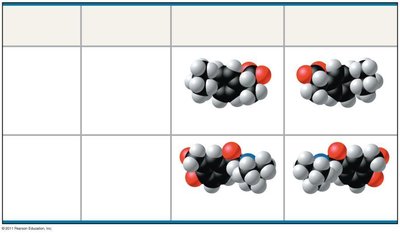
Enantiomers: Mirror images, non-superimposable; important in biology and pharmaceuticals.
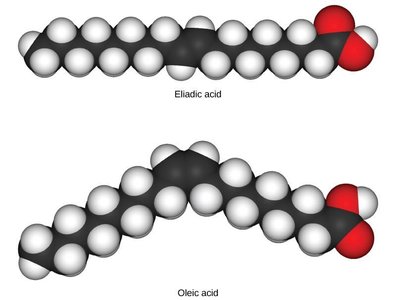
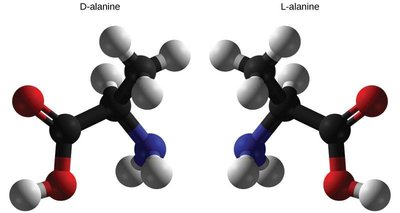
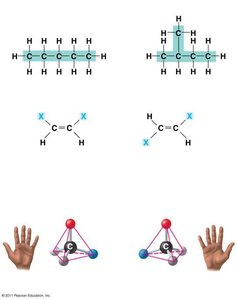
Biological Importance of Isomers
Enantiomers can have drastically different biological effects (e.g., thalidomide, ibuprofen).
Organisms are sensitive to even subtle variations in molecular structure.
Functional Groups in Biological Molecules
Definition and Importance
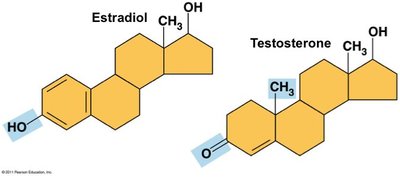
Functional groups are specific groups of atoms within molecules that confer characteristic chemical properties and reactivity. They are critical in the structure and function of macromolecules.
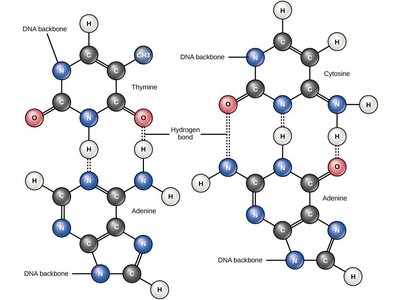
Functional groups often participate in hydrogen bonding, stabilizing biological molecules.
The arrangement and number of functional groups determine molecular properties.
Major Functional Groups in Biology
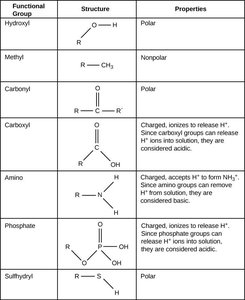
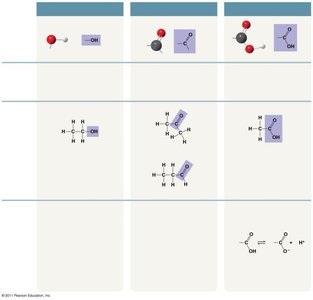
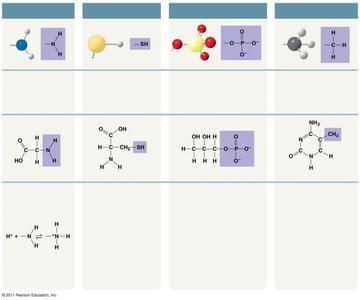
Functional Group | Structure | Properties |
|---|---|---|
Hydroxyl | –OH | Polar, forms hydrogen bonds |
Methyl | –CH3 | Nonpolar, affects gene expression |
Carbonyl | –C=O | Polar, found in sugars |
Carboxyl | –COOH | Acidic, donates H+ |
Amino | –NH2 | Basic, accepts H+ |
Phosphate | –PO4 | Negative charge, energy transfer |
Sulfhydryl | –SH | Forms disulfide bonds |
The Four Major Classes of Biological Macromolecules
Overview
All living things are composed of four classes of large biological molecules: carbohydrates, lipids, proteins, and nucleic acids. These macromolecules are essential for structure, function, and regulation of the body's tissues and organs.

Monomers and Polymers
Monomer: A small molecule that can join with others to form a polymer.
Polymer: A long molecule consisting of many similar or identical monomers linked together.
Carbohydrates, proteins, and nucleic acids are polymers; lipids are not true polymers.
Polymer Synthesis and Breakdown
Dehydration (Condensation) Reaction: Joins two monomers by removing a water molecule.
Hydrolysis Reaction: Breaks a polymer into monomers by adding a water molecule.
Carbohydrates
Structure and Function
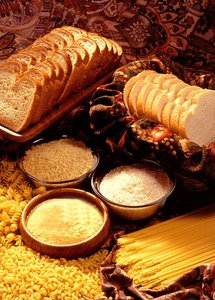
Carbohydrates are found in grains, fruits, and vegetables, and provide energy in the form of glucose. They have the general formula (CH2O)n and a 1:2:1 ratio of carbon, hydrogen, and oxygen.
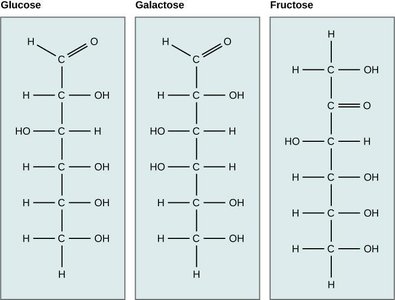
Three main subtypes: monosaccharides, disaccharides, polysaccharides.
Disaccharides and Glycosidic Linkages
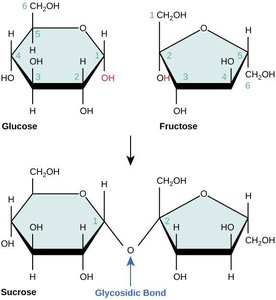
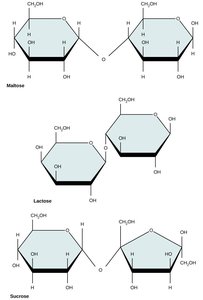
Disaccharides form when two monosaccharides are joined by a dehydration reaction, creating a glycosidic bond.
Examples: Glucose + Fructose = Sucrose; Glucose + Glucose = Maltose; Glucose + Galactose = Lactose.
Polysaccharides
Polysaccharides are long chains of monosaccharides joined by glycosidic linkages.
They can be branched or unbranched and serve as energy storage (starch, glycogen) or structural components (cellulose, chitin).
Summary Table: Key Features of DNA and RNA
Feature | DNA | RNA |
|---|---|---|
Function | Carries genetic information | Involved in protein synthesis |
Location | Remains in the nucleus | Leaves the nucleus |
Structure | Double helix | Usually single-stranded |
Sugar | Deoxyribose | Ribose |
Pyrimidines | Cytosine, thymine | Cytosine, uracil |
Purines | Adenine, guanine | Adenine, guanine |
Additional info: This summary covers the chemical context of life, the molecular diversity of carbon, the structure and function of large biological molecules, and the importance of functional groups, as outlined in General Biology chapters 2, 4, and 5.
