 Indietro
The Structure and Function of Large Biological Molecules
Guida di studio - Note intelligenti
 Appunti personalizzati basati sui tuoi materiali, ampliati con definizioni chiave, esempi e contesto.
The Structure and Function of Large Biological Molecules
Introduction to Biological Macromolecules
All living organisms are composed of four major classes of large biological molecules: carbohydrates, lipids, proteins, and nucleic acids. These macromolecules are essential for life, serving as structural components, energy sources, and information carriers. Most macromolecules are polymers, long chains built from repeating units called monomers.
Polymer: A long molecule consisting of many similar or identical building blocks linked by covalent bonds.
Monomer: The repeating unit that serves as the building block of a polymer.
Three of the four classes (carbohydrates, proteins, nucleic acids) are true polymers; lipids are not polymers.
Synthesis and Breakdown of Polymers
Polymers are synthesized and broken down by specific chemical reactions:
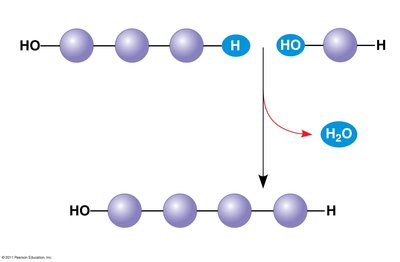
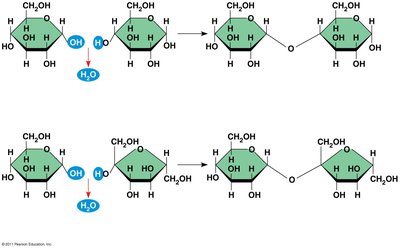
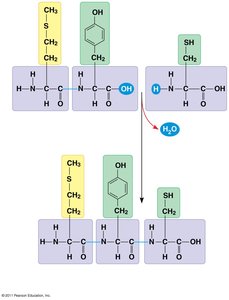
Dehydration Reaction: Monomers are joined by covalent bonds through the removal of a water molecule.
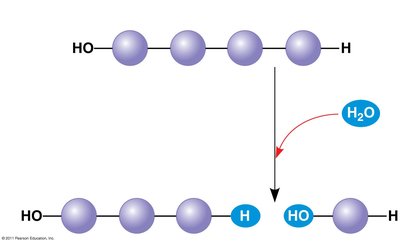
Hydrolysis: Polymers are disassembled into monomers by the addition of a water molecule, breaking the covalent bond.
Carbohydrates
Monosaccharides: Simple Sugars
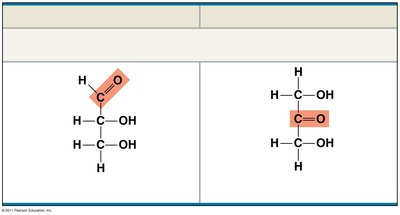
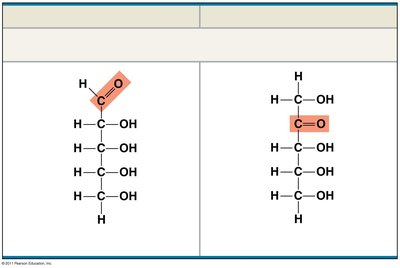
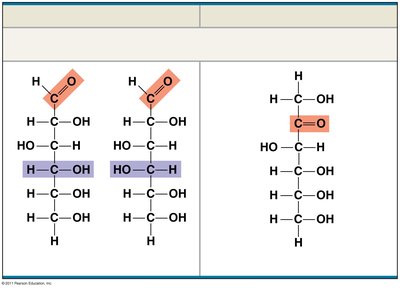
Carbohydrates serve as fuel and building material. The simplest carbohydrates are monosaccharides, or single sugars. They are classified by the location of their carbonyl group (as aldose or ketose) and the number of carbons in their skeleton.
Glucose (C6H12O6): The most common monosaccharide.
Aldose: Carbonyl group at the end of the carbon skeleton.
Ketose: Carbonyl group within the carbon skeleton.
Ring Structures of Sugars
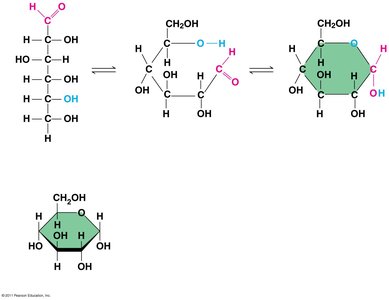
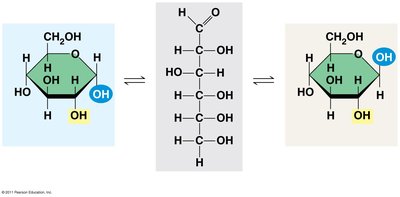
Although often drawn as linear skeletons, many sugars form rings in aqueous solutions. This ring formation is crucial for their biological function.
Disaccharides and Glycosidic Linkages
A disaccharide is formed when a dehydration reaction joins two monosaccharides. The covalent bond formed is called a glycosidic linkage.
Polysaccharides: Storage and Structural Roles
Polysaccharides are polymers of sugars and serve storage or structural functions. The two main types are:
Storage polysaccharides: Starch (in plants) and glycogen (in animals).
Structural polysaccharides: Cellulose (in plant cell walls) and chitin (in arthropod exoskeletons and fungal cell walls).
Storage Polysaccharides
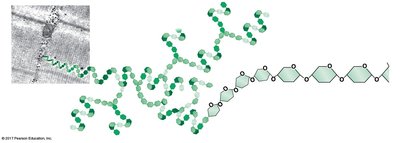
Starch: Consists entirely of glucose monomers; amylose (unbranched) and amylopectin (branched).
Glycogen: Extensively branched glucose polymer stored in animal liver and muscle cells.
Structural Polysaccharides
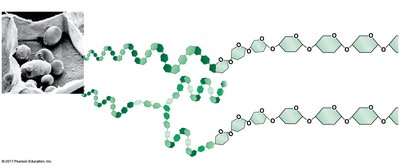
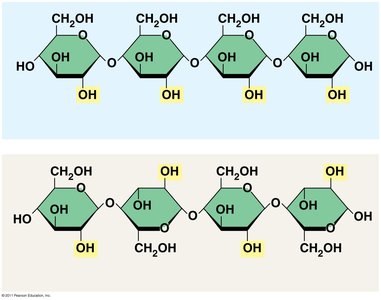
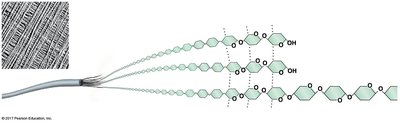
Cellulose: Major component of plant cell walls; differs from starch in glycosidic linkage (β vs. α).
Enzymes that digest starch (α linkages) cannot digest cellulose (β linkages), making cellulose an insoluble fiber in the human diet.
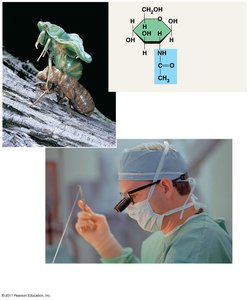
Chitin: Structural polysaccharide found in arthropod exoskeletons and fungal cell walls; polymer of N-acetylglucosamine.
Lipids
Characteristics and Types of Lipids
Lipids are a diverse group of hydrophobic molecules that do not form true polymers. They are mainly composed of hydrocarbons and are insoluble in water. The most important lipids are fats, phospholipids, and steroids.
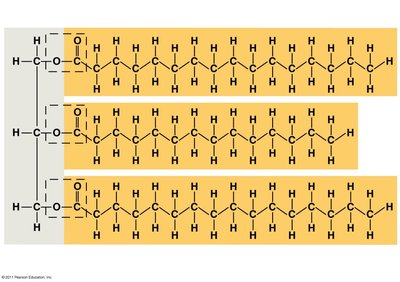
Fats (Triglycerides): Composed of glycerol and three fatty acids joined by ester linkages.
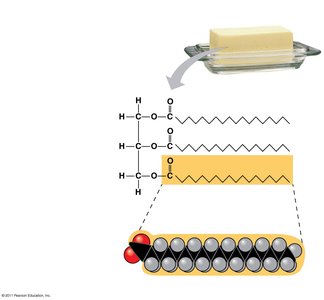
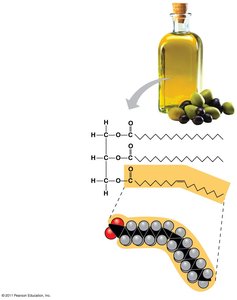
Fatty acids: Vary in length and in the number and location of double bonds.
Saturated fatty acids: No double bonds; solid at room temperature.
Unsaturated fatty acids: One or more double bonds; liquid at room temperature.
Phospholipids
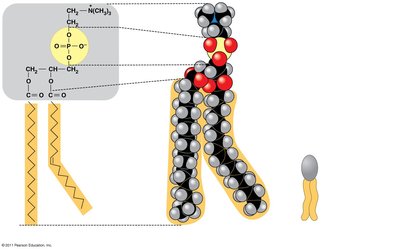
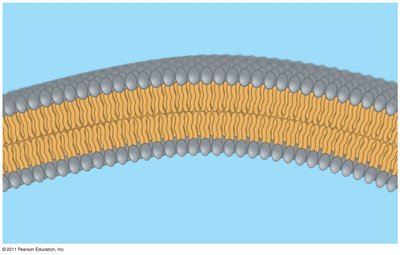
Phospholipids consist of two fatty acids and a phosphate group attached to glycerol. The fatty acid tails are hydrophobic, while the phosphate group forms a hydrophilic head. In water, phospholipids self-assemble into bilayers, forming the basis of all cell membranes.
Steroids
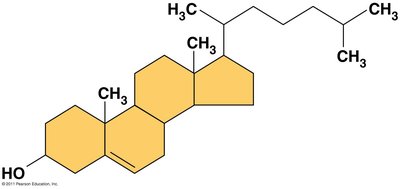
Steroids are lipids with a carbon skeleton consisting of four fused rings. Cholesterol is an important steroid, serving as a component of animal cell membranes and a precursor for other steroids.
Proteins
Functions and Structure of Proteins
Proteins are the most structurally sophisticated molecules, accounting for more than 50% of the dry mass of most cells. They perform a wide range of functions, including catalysis (enzymes), defense, storage, transport, structure, movement, signaling, and regulation.
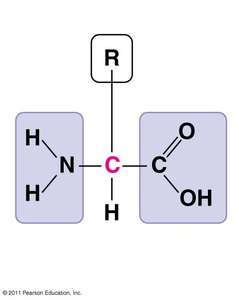
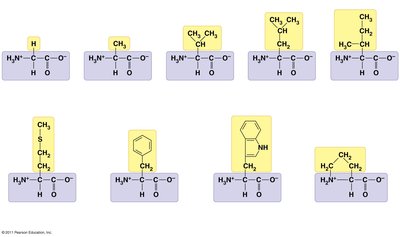
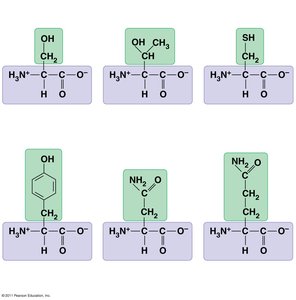
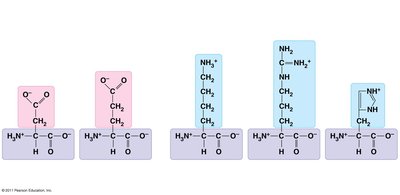
Amino acids: Monomers of proteins, each with a central carbon, amino group, carboxyl group, hydrogen atom, and variable R group (side chain).
Classification of Amino Acids
Non-polar (hydrophobic)
Polar (hydrophilic)
Electrically charged (acidic or basic, hydrophilic)
Polypeptides and Protein Structure
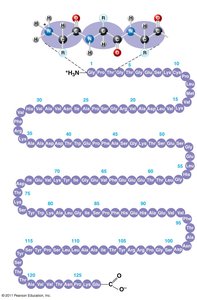
Amino acids are linked by peptide bonds to form polypeptides. Each polypeptide has a unique linear sequence with an amino end (N-terminus) and a carboxyl end (C-terminus).
Levels of Protein Structure
Primary structure: Sequence of amino acids.
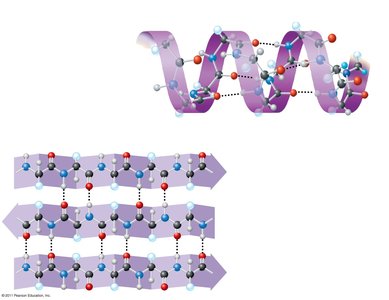
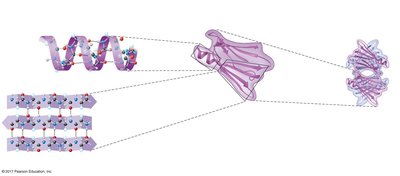
Secondary structure: Coils and folds (α helix, β pleated sheet) stabilized by hydrogen bonds.
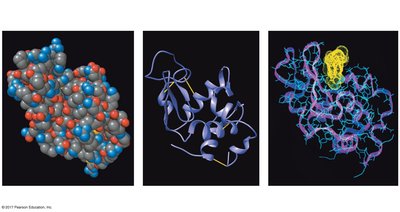
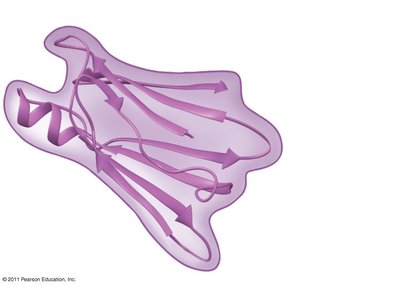
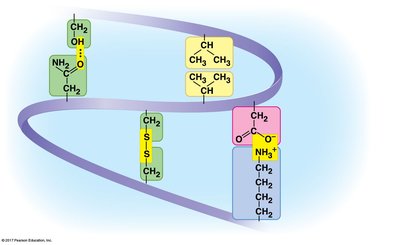
Tertiary structure: Overall 3D shape stabilized by interactions between R groups (hydrophobic interactions, hydrogen bonds, ionic bonds, disulfide bridges).
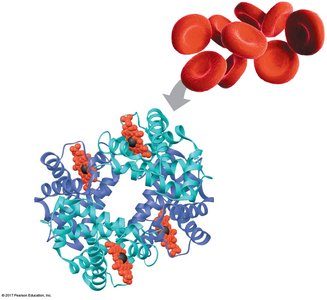
Quaternary structure: Association of two or more polypeptide chains.

Protein Folding and Denaturation
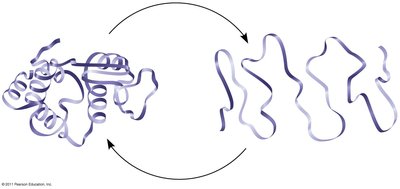
Protein function depends on correct folding. Denaturation (loss of structure) can be caused by changes in pH, temperature, or other environmental factors. Some proteins can refold (renature) if conditions return to normal.
Determining Protein Structure
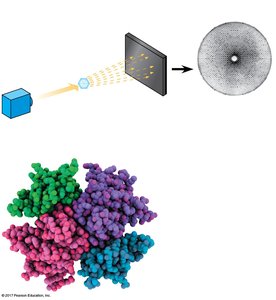
Techniques such as X-ray crystallography are used to determine protein structures at atomic resolution.
Nucleic Acids
DNA and RNA: The Central Dogma
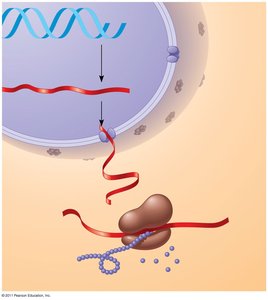
Nucleic acids store and transmit hereditary information. The two types are deoxyribonucleic acid (DNA) and ribonucleic acid (RNA). The central dogma of molecular biology is: DNA makes RNA, which makes protein.
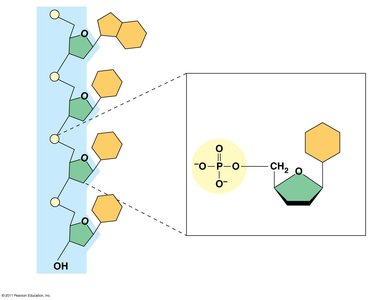
Nucleotides: Monomers of nucleic acids, each consisting of a nitrogenous base, a pentose sugar, and a phosphate group.
Nucleoside: A nucleotide without the phosphate group.
Nitrogenous Bases and Base Pairing
Pyrimidines: Cytosine (C), Thymine (T, in DNA), Uracil (U, in RNA)
Purines: Adenine (A), Guanine (G)
In DNA, A pairs with T and G pairs with C via hydrogen bonds. In RNA, A pairs with U.
Structure of DNA and RNA
DNA forms a double helix with antiparallel sugar-phosphate backbones.
RNA is usually single-stranded but can form complex structures by base pairing within or between molecules.
Summary Table: Major Classes of Biological Macromolecules
Class | Monomer | Polymer | Bond Type | Function |
|---|---|---|---|---|
Carbohydrates | Monosaccharide | Polysaccharide | Glycosidic linkage | Energy storage, structure |
Lipids | Fatty acids, glycerol | Not true polymers | Ester linkage | Energy storage, membranes, signaling |
Proteins | Amino acid | Polypeptide | Peptide bond | Catalysis, structure, transport, etc. |
Nucleic Acids | Nucleotide | Polynucleotide | Phosphodiester bond | Information storage, transmission |
