 Indietro
The Structure and Function of Large Biological Molecules
Guida di studio - Note intelligenti
 Appunti personalizzati basati sui tuoi materiali, ampliati con definizioni chiave, esempi e contesto.
Biological Molecules: Structure and Function
Overview of Biological Macromolecules
Large biological molecules, or macromolecules, are essential for life and are primarily composed of carbon, hydrogen, oxygen, nitrogen, and sometimes phosphorus and sulfur. Their diversity and complexity arise from the unique bonding properties of carbon, which can form four covalent bonds, allowing for a wide variety of molecular structures.
Macromolecules are typically polymers, except for lipids.
They are constructed from smaller units called monomers.
Major classes: Carbohydrates, Lipids, Proteins, Nucleic Acids.
Example: The same set of monomers can be arranged in different ways to create a vast array of polymers, contributing to the diversity of life.
Monomers and Polymers
Most biological macromolecules are formed by linking monomers into polymers through specific chemical reactions.
Monomer: A single, small building-block molecule.
Polymer: A long chain of monomers linked together.
Dehydration Synthesis: The process of joining monomers by removing a water molecule.
Hydrolysis: The process of breaking polymers into monomers by adding water.
Lipids are not true polymers but are assembled by similar condensation and hydrolysis reactions.

Carbohydrates
Structure and Function
Carbohydrates are organic molecules composed of carbon, hydrogen, and oxygen, typically in a 1:2:1 ratio (CH2O)n. They serve as quick energy sources, energy storage, and structural support in plants and some animals.
Monosaccharides
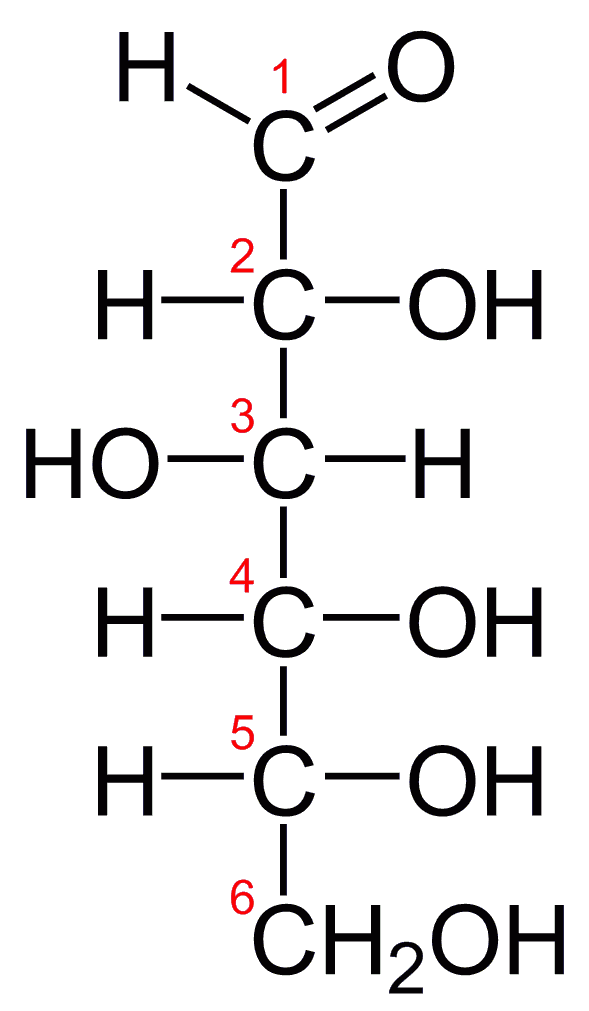
Monosaccharides are the simplest carbohydrates and are classified by the number of carbons they contain.
Named with the suffix -ose (e.g., glucose, fructose).
Hexose: Six carbons (e.g., glucose).
Pentose: Five carbons (e.g., ribose).
Disaccharides
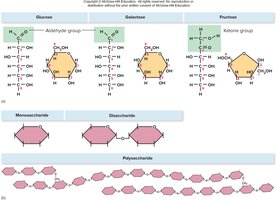
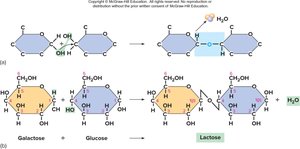
Disaccharides are formed by joining two monosaccharides through dehydration synthesis, resulting in a glycosidic linkage.
Glycosidic linkage: A covalent bond formed between two monosaccharides by a condensation reaction (loss of water).
Polysaccharides
Polysaccharides are long chains of monosaccharides and serve as energy storage or structural molecules.
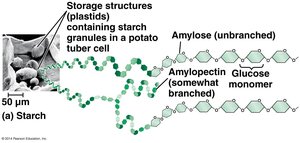
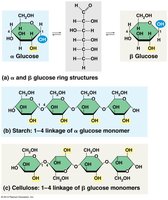
Starch: Energy storage in plants; composed of amylose (unbranched) and amylopectin (branched).
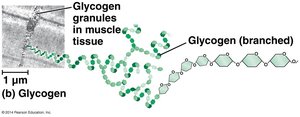
Glycogen: Energy storage in animals; highly branched structure.
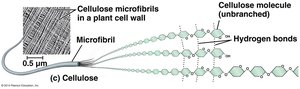
Cellulose: Structural component of plant cell walls; unbranched chains with hydrogen bonds for strength.
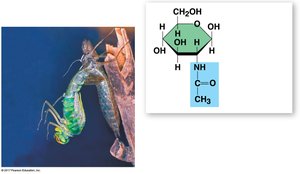
Chitin: Structural polysaccharide in arthropod exoskeletons and fungal cell walls.
Starch vs. Cellulose
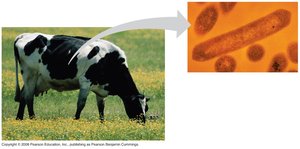
The difference in glycosidic linkage orientation between starch and cellulose determines their digestibility and function. Most animals cannot digest cellulose due to the lack of appropriate enzymes, but some herbivores rely on symbiotic microbes for cellulose digestion.
Chitin
Chitin is a structural polysaccharide found in the exoskeletons of arthropods and the cell walls of fungi.
Lipids
Structure and Types
Lipids are hydrophobic molecules, not true polymers, and are mainly composed of non-polar hydrocarbons. They serve as energy stores, form biological membranes, and act as signaling molecules. The three major groups are fats, phospholipids, and steroids.
Fats (Triglycerides)
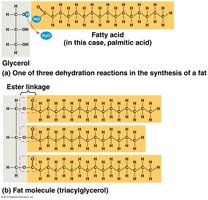
Fats are constructed from glycerol and fatty acids. Glycerol is a three-carbon alcohol, and fatty acids are long hydrocarbon chains with a carboxyl group.
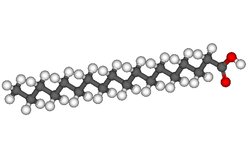
Saturated fats: No carbon-carbon double bonds; solid at room temperature; mostly animal fats.
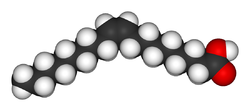
Unsaturated fats: One or more carbon-carbon double bonds (cis configuration); liquid at room temperature; found in fish and plant oils.
Health Note: Diets high in saturated fats may contribute to cardiovascular disease. Hydrogenation converts unsaturated fats to saturated fats, producing trans fats, which are also unhealthy.
Phospholipids
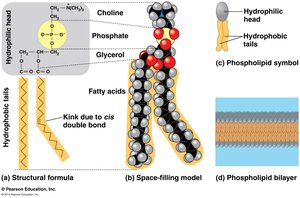
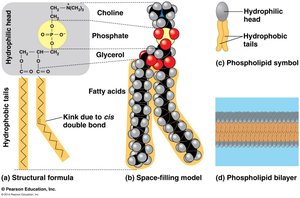
Phospholipids are diglycerides with a phosphate group attached to the glycerol backbone. They have hydrophilic heads and hydrophobic tails, forming the basis of biological membranes.
Steroids
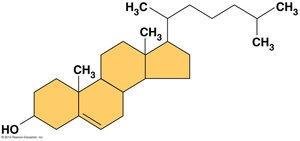
Steroids are lipids with a backbone of four fused carbon rings. Cholesterol is a key steroid in animal cell membranes and is a precursor for sex hormones.
Proteins
Functions and Structure
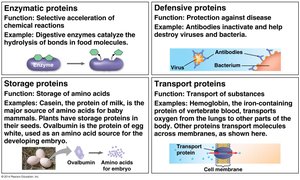
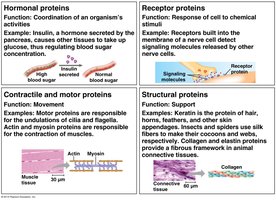
Proteins are the most diverse macromolecules, accounting for over 50% of the dry mass of most cells. They serve structural, contractile, storage, defense, transport, signaling, and catalytic roles.
Amino Acids and Peptide Bonds
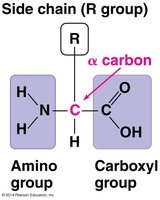
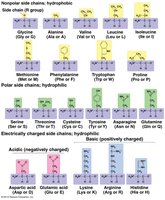
Proteins are polymers of amino acids. Each amino acid has a central carbon (α-carbon), an amino group, a carboxyl group, a hydrogen atom, and a variable R group (side chain) that determines its properties.
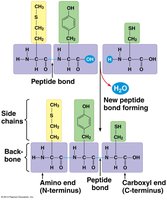
Amino acids are linked by peptide bonds formed through condensation reactions, creating polypeptide chains.
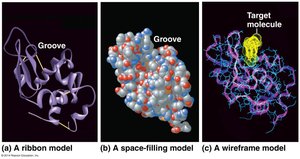
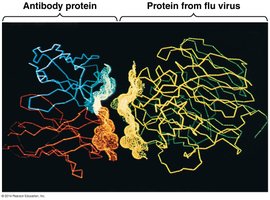
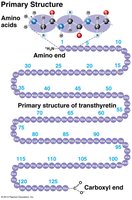
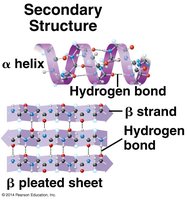
Levels of Protein Structure
Primary structure: Sequence of amino acids.
Secondary structure: Local folding (α-helix, β-pleated sheet) stabilized by hydrogen bonds.
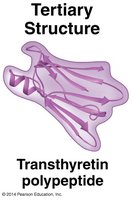
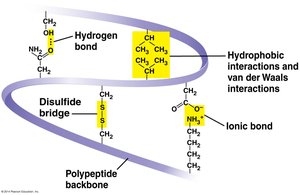
Tertiary structure: Overall 3D shape formed by interactions among R groups.
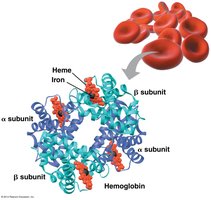
Quaternary structure: Association of multiple polypeptide chains.
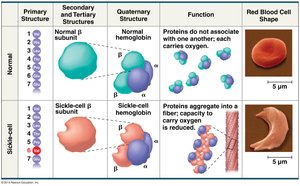
Sickle-Cell Disease: A Change in Primary Structure
A single amino acid substitution in hemoglobin leads to sickle-cell disease, demonstrating the importance of primary structure in protein function.
Protein Denaturation
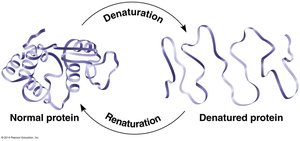
Protein function depends on its specific 3D shape. Denaturation is the loss of this structure due to heat, pH changes, salt concentration, or chemicals. Some proteins can refold if denaturing conditions are reversed.
Nucleic Acids
Structure and Function
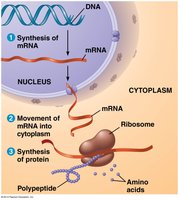
Nucleic acids store and transmit hereditary information. The two main types are DNA (deoxyribonucleic acid) and RNA (ribonucleic acid). DNA encodes genetic information, which is transcribed into RNA and then translated into proteins.
Nucleotide Structure
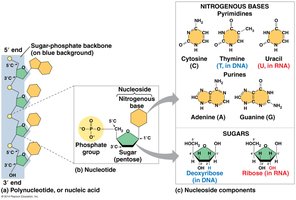
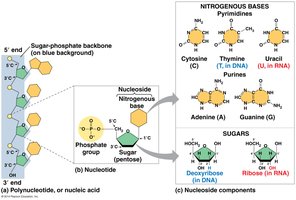
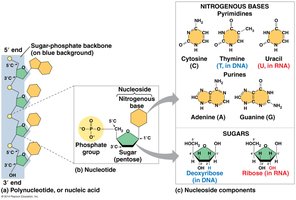
Nucleotides, the monomers of nucleic acids, consist of a phosphate group, a five-carbon sugar (ribose in RNA, deoxyribose in DNA), and a nitrogenous base (A, T, G, C in DNA; A, U, G, C in RNA).
Nucleic Acid Polymers
Nucleotides are linked by phosphodiester bonds between the 3' hydroxyl of one nucleotide and the 5' phosphate of the next. The sequence of nucleotides encodes genetic information.
DNA and RNA Structure
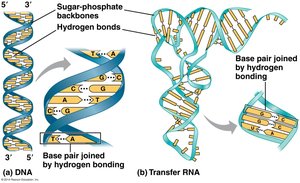
DNA: Double helix, antiparallel strands, base pairing (A-T, G-C).
RNA: Single-stranded, uracil replaces thymine, can form complex structures by internal base pairing.
Other Important Nucleotides
ATP, ADP, AMP: Energy carriers and chemical messengers.
NAD+/NADH, NADP+/NADPH: Coenzymes involved in electron and hydrogen transfer during cellular respiration and photosynthesis.
Bioinformatics, Genomics, and Proteomics
The study of biological information at the molecular level includes bioinformatics (computational analysis of biological data), genomics (study of genomes), and proteomics (study of protein sets).
Key Takeaways
All four macromolecule classes are built by condensation (dehydration synthesis) and broken down by hydrolysis.
Carbohydrates and lipids are both composed of C, H, and O, but differ in linkage types and functions.
Protein function depends on precise 3D structure, which is determined by amino acid sequence and environmental conditions.
Nucleic acids store and transmit genetic information, linking DNA, RNA, and protein synthesis.
