 Indietro
The Structure and Function of the Cell Membrane and Cell Wall
Guida di studio - Note intelligenti
 Appunti personalizzati basati sui tuoi materiali, ampliati con definizioni chiave, esempi e contesto.
Cell Membrane Structure and Function
Introduction to the Cell Membrane
The cell membrane, also known as the plasma membrane, is a fundamental structure that separates the internal environment of the cell from the external environment. Its unique structure allows it to regulate the movement of substances in and out of the cell, maintaining homeostasis.
Phospholipid Bilayer
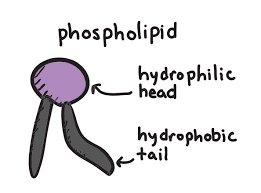
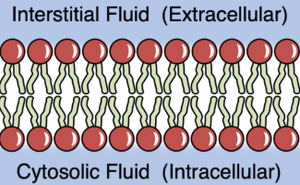
The primary component of the cell membrane is the phospholipid bilayer. Phospholipids are amphipathic molecules, meaning they have both hydrophilic (water-loving) heads and hydrophobic (water-fearing) tails. This property drives the formation of a bilayer, with hydrophilic heads facing outward toward aqueous environments and hydrophobic tails facing inward, away from water.
Hydrophilic heads: Oriented toward the extracellular and intracellular fluids.
Hydrophobic tails: Face each other, forming the interior of the membrane.
Selective Permeability
The cell membrane exhibits selective permeability, meaning it regulates which substances can pass through. Small, nonpolar molecules can diffuse freely, while ions and large polar molecules require specialized transport proteins.
Selective permeability: Essential for maintaining cellular homeostasis.
Orientation: Hydrophilic heads interact with water; hydrophobic tails form a barrier to most water-soluble substances.
Fluid Mosaic Model
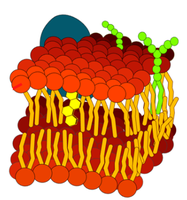
The fluid mosaic model describes the dynamic and complex structure of the cell membrane. The membrane is 'fluid' because its components can move laterally within the layer, and it is a 'mosaic' because it is composed of various biomolecules, including proteins, carbohydrates, and cholesterol.
Fluidity: Maintained by weak hydrophobic interactions among phospholipids.
Temperature effects: Higher temperatures increase fluidity; lower temperatures decrease it.
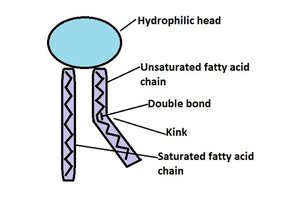
Unsaturated fatty acids: Kinked tails prevent tight packing, enhancing fluidity at low temperatures.
Mosaic Components of the Membrane
Proteins: Integral (transmembrane) and peripheral proteins serve as channels, carriers, receptors, and enzymes.
Carbohydrates: Attached to proteins (glycoproteins) or lipids (glycolipids), important for cell recognition.
Cholesterol: Modulates membrane fluidity and stability.
Membrane Proteins
There are two main types of membrane proteins:
Integral proteins: Embedded within the lipid bilayer, often span the membrane (transmembrane); amphipathic.
Peripheral proteins: Loosely attached to the membrane surface; not embedded in the hydrophobic core.
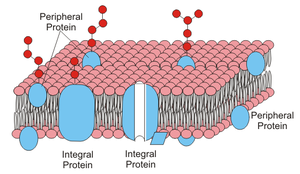
Membrane Carbohydrates
Membrane carbohydrates play a crucial role in cell-to-cell recognition. They are found as:
Glycolipids: Carbohydrates attached to lipids.
Glycoproteins: Carbohydrates attached to proteins.
This recognition is vital for immune responses and cellular communication.
Cholesterol in the Membrane
Cholesterol is interspersed within the phospholipid bilayer and helps maintain membrane fluidity:
At high temperatures: Reduces membrane fluidity by restraining phospholipid movement.
At low temperatures: Prevents tight packing of phospholipids, maintaining fluidity.
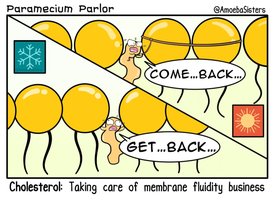
Cell Wall
Structure and Function of the Cell Wall
The cell wall is an extracellular structure found outside the cell membrane in many organisms, but not in animal cells. Its composition varies by organism:
Bacteria: Peptidoglycan
Plants: Cellulose
Fungi: Chitin
The cell wall provides structural support, protection, and helps maintain cell shape. It facilitates the movement of substances but does not regulate their passage as selectively as the plasma membrane.
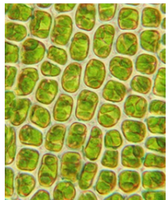
Summary Table: Key Components of the Plasma Membrane
Component | Structure | Function |
|---|---|---|
Phospholipids | Bilayer with hydrophilic heads and hydrophobic tails | Forms the basic structure; barrier to most water-soluble substances |
Proteins (Integral & Peripheral) | Embedded or attached to the bilayer | Transport, signaling, enzymatic activity, cell recognition |
Carbohydrates | Attached to proteins or lipids | Cell-to-cell recognition, immune response |
Cholesterol | Interspersed within the bilayer | Regulates membrane fluidity and stability |
Additional info: The cell membrane's dynamic nature allows cells to adapt to changing environments, communicate with other cells, and maintain internal balance. The cell wall, while not present in animal cells, is essential for the structure and function of plant, fungal, and bacterial cells.
