 Indietro
The Working Cell: Membrane Structure, Function, and Cellular Energy
Guida di studio - Note intelligenti
 Appunti personalizzati basati sui tuoi materiali, ampliati con definizioni chiave, esempi e contesto.
Membrane Structure and Function
Introduction to the Plasma Membrane
The plasma membrane is a dynamic boundary that separates the living cell from its surroundings and regulates the movement of substances in and out of the cell. It is essential for cell survival and function, acting as a selective barrier and communication interface.
1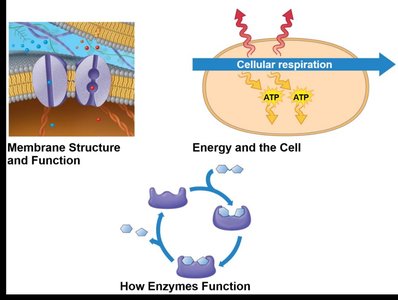
Origin and Evolution of Membranes
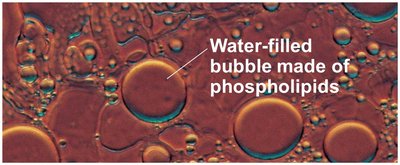
The spontaneous formation of membrane-enclosed collections of molecules was a critical step in the origin of life. Early membranes allowed for the compartmentalization necessary for cellular processes.
Fluid Mosaic Model
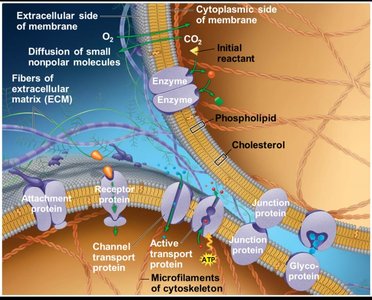
The plasma membrane is described by the fluid mosaic model, which depicts the membrane as a flexible layer made of lipid molecules interspersed with proteins. This structure allows for selective permeability and a variety of cellular functions.
Passive Transport: Diffusion and Osmosis
Diffusion
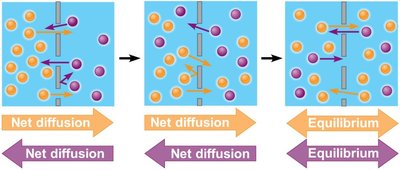
Diffusion is the movement of particles from an area of higher concentration to an area of lower concentration, driven by the random motion of molecules. This process does not require energy input from the cell.
Equilibrium is reached when the concentration of particles is uniform throughout the system.
Osmosis
Osmosis is the diffusion of water across a selectively permeable membrane. The presence of solutes that cannot cross the membrane affects the movement of water, which moves toward the side with higher solute concentration.
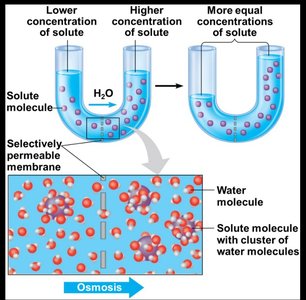
Free Water and Tonicity
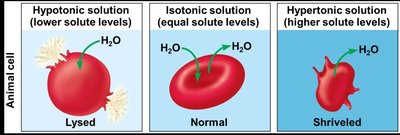
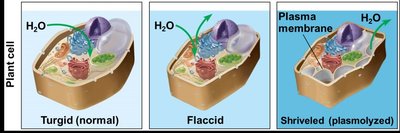
Only "free" water molecules (not bound to solutes) contribute to net movement during osmosis. Tonicity refers to the ability of a surrounding solution to cause a cell to gain or lose water, depending on the relative concentrations of solutes inside and outside the cell.
Hypotonic solution: Lower solute concentration outside; water enters the cell.
Isotonic solution: Equal solute concentrations; no net water movement.
Hypertonic solution: Higher solute concentration outside; water leaves the cell.
Facilitated and Active Transport
Facilitated Diffusion
Facilitated diffusion is the process by which polar or charged substances move across the membrane with the help of transport proteins, without energy input. The movement is still down the concentration gradient.
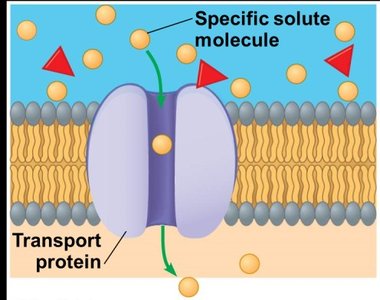
Aquaporins
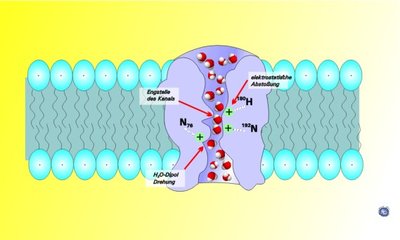
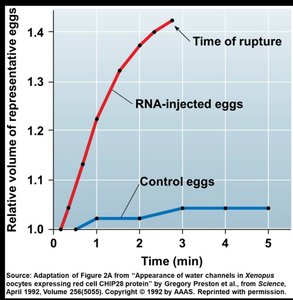
Aquaporins are specialized channel proteins that facilitate the rapid transport of water across the cell membrane. Their discovery highlighted the importance of protein channels in cellular water balance.
Active Transport
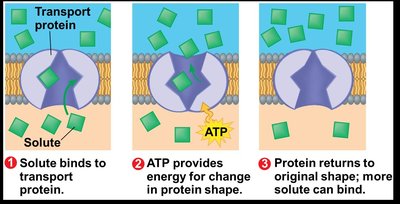
Active transport requires energy (usually from ATP) to move substances against their concentration gradient, from areas of lower to higher concentration. This process is essential for maintaining cellular homeostasis.
Bulk Transport: Exocytosis and Endocytosis
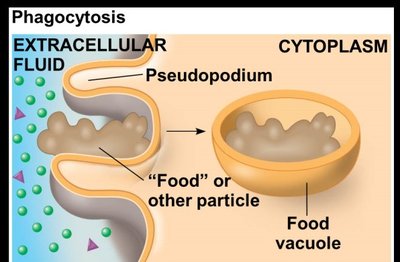
Large molecules and particles are transported across membranes via exocytosis (export out of the cell) and endocytosis (import into the cell). These processes involve significant changes to the cell membrane and cytoskeleton.
Energy and the Cell
Thermodynamics and Biological Systems
Thermodynamics is the study of energy transformations. In biological systems, energy is required for cellular work and is governed by two main laws:
First Law of Thermodynamics (Law of Conservation of Energy): Energy can be transformed but not created or destroyed.
Second Law of Thermodynamics: Every energy transfer increases the entropy (disorder) of the universe.

Kinetic and Potential Energy
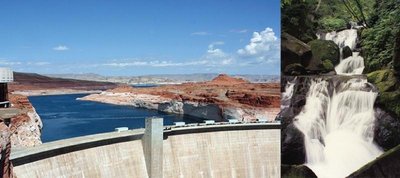
Kinetic energy is the energy of motion, while potential energy is stored energy due to position or structure, such as chemical energy in bonds.
Metabolism and ATP
Exergonic and Endergonic Reactions
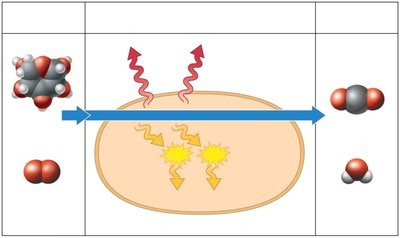
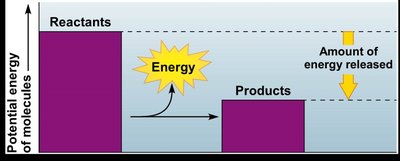
Exergonic reactions release energy (e.g., cellular respiration), while endergonic reactions require energy input (e.g., synthesis of macromolecules). Metabolism is the sum of all chemical reactions in a cell.
ATP: The Energy Currency of the Cell
ATP (adenosine triphosphate) powers cellular work by coupling exergonic and endergonic reactions. The hydrolysis of ATP releases energy that can be used for chemical, transport, and mechanical work.
ATP Cycle: Energy from exergonic reactions is used to regenerate ATP from ADP and phosphate.
How Enzymes Function
Enzyme Structure and Function
Enzymes are biological catalysts that speed up chemical reactions by lowering the activation energy required. Each enzyme is specific to its substrate, binding at the active site to form an enzyme-substrate complex.
Enzyme Inhibition and Regulation
Enzyme activity can be regulated by inhibitors:
Competitive inhibitors bind to the active site, blocking substrate access.
Noncompetitive inhibitors bind elsewhere, changing the enzyme's shape and function.
Feedback inhibition occurs when the end product of a pathway inhibits an earlier step, maintaining metabolic balance.
Enzyme Inhibitors in Medicine and Industry
Many drugs, pesticides, and poisons act as enzyme inhibitors. For example:
Ibuprofen blocks enzymes involved in inflammation.
Penicillin inhibits enzymes needed for bacterial cell wall synthesis.
Cancer drugs like vincristine and vinblastine block cell division.
