 Indietro
Tracing Evolutionary History: Origin of Life and Macroevolution
Guida di studio - Note intelligenti
 Appunti personalizzati basati sui tuoi materiali, ampliati con definizioni chiave, esempi e contesto.
Origin of Life on Earth
Conditions on Early Earth
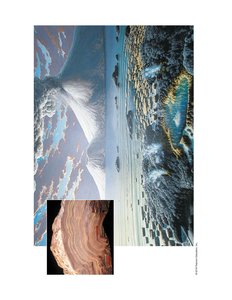
The formation of Earth about 4.6 billion years ago set the stage for the origin of life. Early Earth was characterized by intense heat from meteorite impacts, thick water vapor, and volcanic eruptions releasing gases such as nitrogen, carbon dioxide, and hydrogen. The atmosphere was likely reducing, which favored the formation of chemical bonds necessary for life.
Reducing Atmosphere: An environment lacking oxygen, which would have disrupted chemical bond formation.
Ancient Rocks: Constructed by prokaryotic cells, these rocks are referred to as stromatolites and date back 3.5 billion years.
Earliest Life: Evidence suggests simple, non-photosynthetic cells may have existed as early as 3.9 billion years ago.
Abiotic Synthesis of Organic Molecules
Miller-Urey Experiment
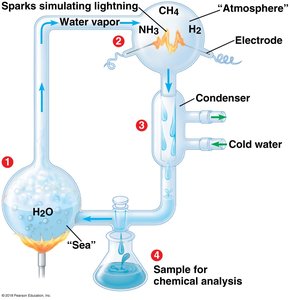
Experiments by Stanley Miller and Harold Urey in 1953 tested the hypothesis that organic molecules could form under early Earth conditions. Their apparatus simulated the atmosphere and energy sources, demonstrating that amino acids and other organic molecules could be synthesized abiotically.
Oparin-Haldane Hypothesis: Proposed that a reducing atmosphere could generate organic molecules from inorganic precursors.
Miller-Urey Experiment: Simulated early Earth conditions and produced amino acids, supporting the hypothesis that life could originate from natural chemical reactions.
Stages in the Origin of the First Cells
Four Key Stages
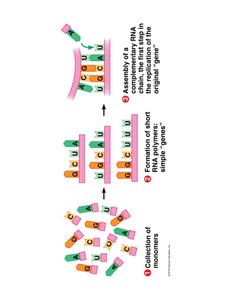
The origin of life likely proceeded through four main stages:
Abiotic Synthesis: Formation of small organic molecules such as amino acids and nitrogenous bases.
Polymerization: Joining of small molecules into polymers like proteins and nucleic acids.
Protocell Formation: Packaging of molecules into membrane-bound structures capable of maintaining an internal environment.
Self-Replicating Molecules: Emergence of molecules (e.g., RNA) capable of replication, enabling inheritance.
Replication was likely aided by ribozymes, and natural selection could act on protocells containing self-replicating molecules.
History of Life and the Geologic Record
Major Events in Life's History
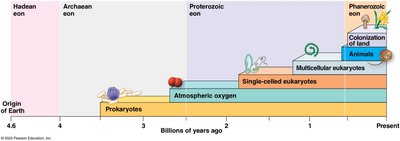
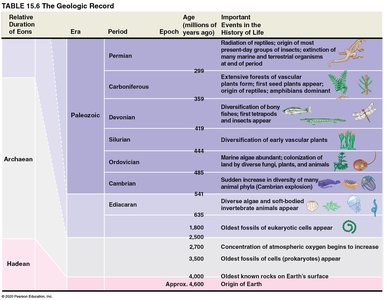
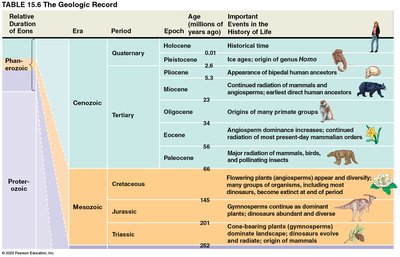
Earth's history is divided into four eons: Hadean, Archaean, Proterozoic, and Phanerozoic. The fossil record documents the sequence of life forms and major transitions, often marked by extinctions and diversification events.
Appearance of Prokaryotes: Earliest life forms.
Photosynthesis and Oxygen Accumulation: Led to atmospheric changes.
Single-celled and Multicellular Eukaryotes: Emerged later.
Colonization of Land: Plants, fungi, and animals moved onto land.
The Geologic Record
The geologic record is organized into eras and periods, each marked by significant evolutionary events.
Era | Period | Epoch | Age (millions of years ago) | Important Events |
|---|---|---|---|---|
Paleozoic | Permian | 299 | Radiation of reptiles; origin of most present-day insects; extinction of many marine and terrestrial organisms | |
Paleozoic | Carboniferous | 359 | Extensive forests of vascular plants; first seed plants appear; amphibians dominant | |
Paleozoic | Devonian | 419 | Diversification of bony fishes; first tetrapods | |
Archaean | Ediacaran | 541 | Diverse algae and soft-bodied invertebrates | |
Hadean | Approx. 4,600 | Origin of Earth |
Mechanisms of Macroevolution
Plate Tectonics and Continental Drift
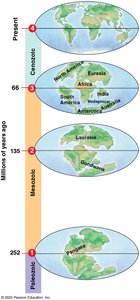
Macroevolution encompasses the origin of new groups of organisms and the impact of mass extinctions. Plate tectonics, the movement of Earth's crustal plates, has played a major role in shaping the distribution and diversification of life.
Pangaea: Supercontinent formed about 250 million years ago, later split into modern continents.
Impact: Continental drift affected the distribution and evolution of organisms.
Biogeography and Adaptive Radiations
Marsupials and Continental Distribution
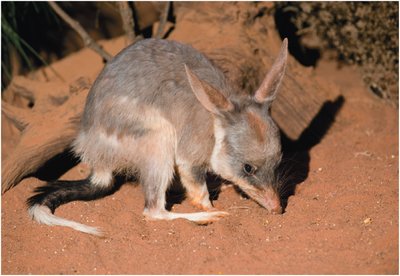
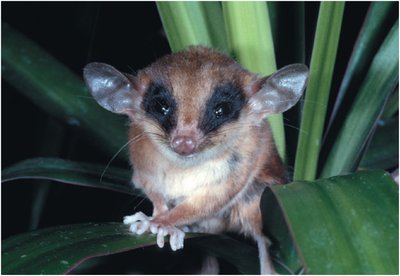
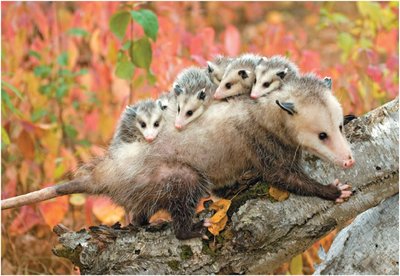
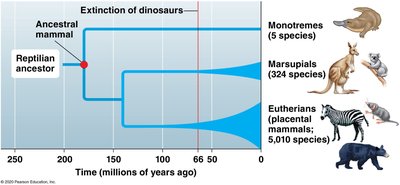
Biogeography is the study of the distribution of organisms. Marsupials, mammals whose young develop in a pouch, are found primarily in Australia and the Americas. Their distribution is explained by continental drift and adaptive radiation.
Adaptive Radiation: Periods of evolutionary change in which many new species evolve from a common ancestor, often following mass extinctions or colonization of new habitats.
Example: Marsupials diversified in Australia after eutherians became extinct, filling ecological roles.
Evolutionary Trends and Goal Direction
Evolution of the Modern Horse
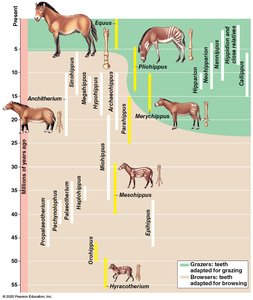
Evolutionary trends, such as the evolution of the modern horse, are not goal-directed but result from speciation episodes and environmental interactions. Unequal survival and generation of new species influence macroevolutionary trends.
Example: Fossil record shows trends in body size and limb structure in horses.
Key Point: Evolution is shaped by current environmental conditions and may change if conditions change.
Taxonomy and Classification
Binomial Nomenclature and Hierarchical Classification
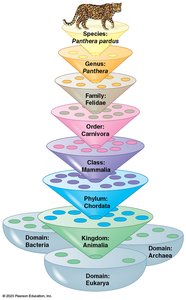
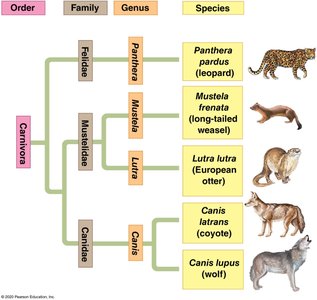
Taxonomy is the branch of biology concerned with identifying, naming, and classifying species. Each species is assigned a two-part scientific name (binomial), consisting of the genus and specific epithet. Genera are grouped into broader categories.
Hierarchy: Domain, Kingdom, Phylum, Class, Order, Family, Genus, Species.
Example: Panthera pardus (leopard).
Phylogeny and Systematics
Phylogenetic Trees and Homologies
Phylogeny is the evolutionary history of a species or group. Systematics includes taxonomy and focuses on classifying organisms and determining their evolutionary relationships. Phylogenetic trees are hypotheses of these relationships, based on evidence from homologous structures and molecular sequences.
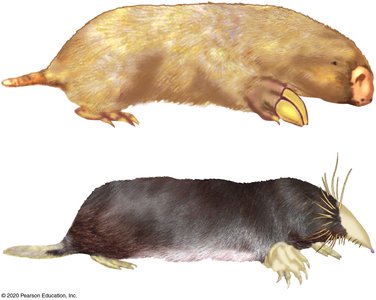
Homologous Structures: Indicate common ancestry.
Analogous Structures: Result from convergent evolution, not common ancestry.
Cladistics and Constructing Phylogenetic Trees
Shared Characters and Monophyletic Groups
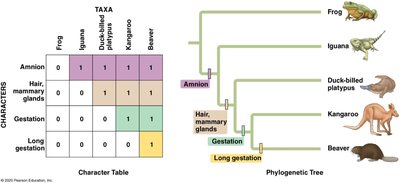
Cladistics groups organisms by common ancestry. Each clade is a monophyletic group, consisting of an ancestral species and all its descendants. Shared ancestral and derived characters are used to construct phylogenetic trees.
Shared Ancestral Character: Originated in an ancestor not a member of the clade.
Shared Derived Character: Unique to members of the clade.

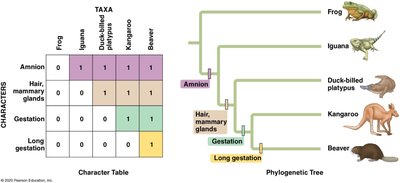
Principle of Parsimony
Parsimony is the adoption of the simplest explanation for observed phenomena. Systematists use parsimony to construct phylogenetic trees that require the smallest number of evolutionary changes. As new data accumulate, hypotheses are revised and new trees drawn.
Key Terms and Definitions
Clade: A group of organisms consisting of an ancestor and all its descendants.
Monophyletic Group: A clade that includes an ancestor and all its descendants.
Shared Derived Character: A trait unique to a clade.
Shared Ancestral Character: A trait present in the ancestor of a clade.
Ingroup: The group of taxa being studied.
Outgroup: A taxon outside the ingroup, used for comparison.
Phylogenetic Tree: A diagram showing evolutionary relationships.
Parsimony: Principle favoring the simplest explanation.
