 Indietro
Transcription and Translation: From DNA to Protein
Guida di studio - Note intelligenti
 Appunti personalizzati basati sui tuoi materiali, ampliati con definizioni chiave, esempi e contesto.
Transcription and Translation: From DNA to Protein
Overview of the Central Dogma
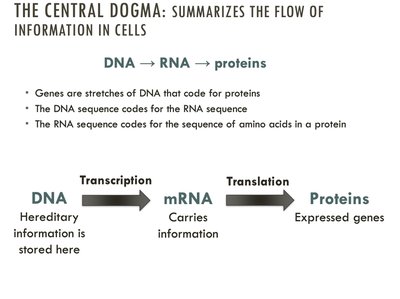
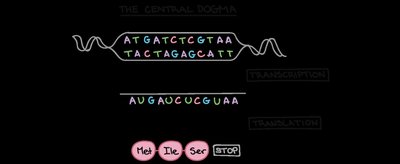
The Central Dogma of Molecular Biology describes the flow of genetic information within a biological system. It explains how genetic information stored in DNA is transcribed into RNA and then translated into proteins, which perform essential cellular functions.
DNA stores hereditary information.
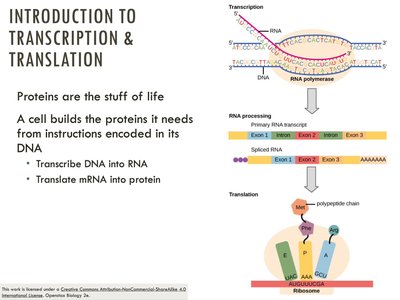
Transcription is the process of copying DNA into messenger RNA (mRNA).
Translation is the process by which ribosomes use mRNA to synthesize proteins.
DNA vs. RNA
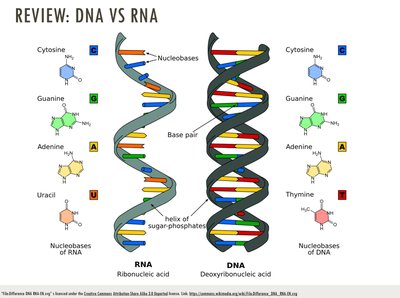
DNA and RNA are nucleic acids that differ in structure and function:
DNA (Deoxyribonucleic Acid): Double-stranded, contains deoxyribose sugar, uses thymine (T) as a base.
RNA (Ribonucleic Acid): Single-stranded, contains ribose sugar, uses uracil (U) instead of thymine.
Transcription: DNA to RNA
Initiation
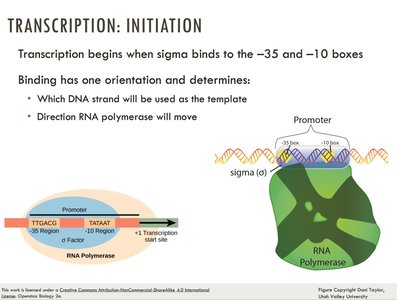
Transcription begins when RNA polymerase binds to a specific DNA sequence called the promoter. In bacteria, the sigma factor helps RNA polymerase recognize the promoter regions (-35 and -10 boxes).
Determines which DNA strand is the template.
Establishes the direction of transcription.
Elongation
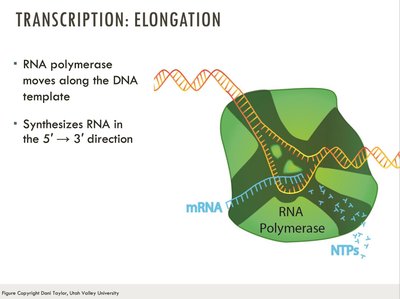
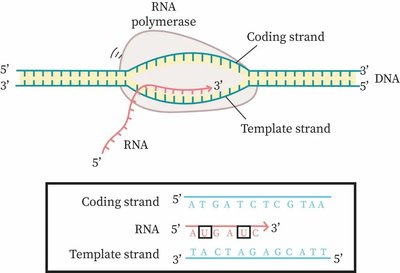
During elongation, RNA polymerase moves along the DNA template strand (3' to 5'), synthesizing a complementary RNA strand in the 5' to 3' direction. Nucleoside triphosphates (NTPs) are added to the growing RNA chain.
RNA is synthesized using base pairing rules: A-U, T-A, G-C, C-G.
Termination
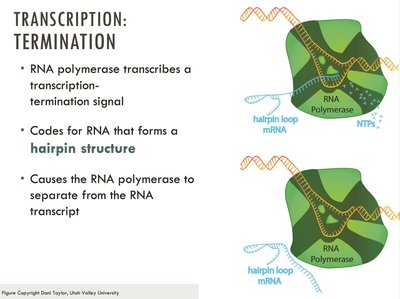
Transcription ends when RNA polymerase encounters a termination signal in the DNA. This signal codes for an RNA sequence that forms a hairpin structure, causing the polymerase to detach from the DNA and release the RNA transcript.
Directionality and Strands
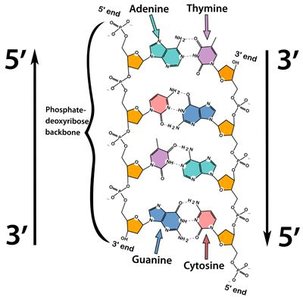
RNA polymerase reads the template strand of DNA in the 3' to 5' direction and synthesizes RNA in the 5' to 3' direction. The coding strand of DNA has the same sequence as the RNA (except T is replaced by U).
RNA Processing in Eukaryotes
Primary Transcript Processing
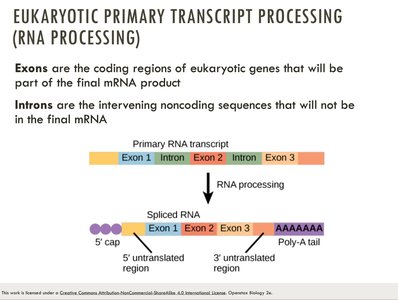
In eukaryotes, the initial RNA transcript (pre-mRNA) undergoes several modifications before becoming mature mRNA:
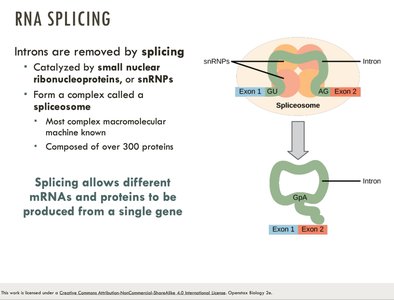
Splicing: Removal of non-coding sequences (introns); coding sequences (exons) are joined together.
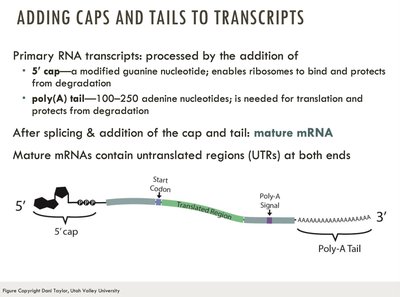
5' Cap: Addition of a modified guanine nucleotide to the 5' end for stability and ribosome binding.
Poly-A Tail: Addition of 100–250 adenine nucleotides to the 3' end for stability and export from the nucleus.
Translation: mRNA to Protein
Overview
Translation is the process by which ribosomes synthesize proteins using the sequence of codons in mRNA. Each codon (three nucleotides) specifies an amino acid.
Start codon (AUG): Signals the beginning of translation and codes for methionine.
Stop codons (UAA, UAG, UGA): Signal the end of translation.
tRNA: Transfers specific amino acids to the ribosome, matching codons with anticodons.
The Genetic Code
The genetic code is redundant (more than one codon can code for the same amino acid) but not ambiguous (each codon codes for only one amino acid). This redundancy helps protect against mutations.
Practice: Transcription and Translation Example
Given a DNA coding strand: 5'-ATG TTT GTT TTT CTT GTT TTA TTG CCA CTA-3'
Template strand: 3'-TAC AAA CAA AAA GAA CAA AAT AAC GGA GAT-5'
mRNA: 5'-AUG UUU GUU UUU CUU GUU UUA UUG CCA CUA-3'
Amino acid sequence: Met-Phe-Val-Phe-Leu-Val-Leu-Leu-Pro-Leu
Mutations and Their Effects
Mutations are changes in the DNA sequence that can affect the resulting protein. Types include:
Silent mutation: No change in amino acid sequence.
Missense mutation: Changes one amino acid.
Nonsense mutation: Introduces a premature stop codon.
Frameshift mutation: Insertion or deletion shifts the reading frame.
Applications: Viruses, Vaccines, and Genetic Engineering
Understanding transcription and translation is essential for biotechnology, vaccine development, and studying viral evolution. For example, flu vaccines must be updated yearly due to mutations in viral genes that alter protein structure.

Summary Table: Key Steps in Gene Expression
Step | Location | Main Enzyme/Structure | Product |
|---|---|---|---|
Transcription | Nucleus (eukaryotes) | RNA Polymerase | Pre-mRNA |
RNA Processing | Nucleus (eukaryotes) | Spliceosome, enzymes | Mature mRNA |
Translation | Cytoplasm | Ribosome, tRNA | Polypeptide (protein) |
Key Equations and Concepts
Base pairing in transcription:
Directionality:
Additional info: The redundancy of the genetic code (multiple codons for one amino acid) provides a buffer against some mutations, as changes in the third base of a codon often do not alter the amino acid specified.
