 Indietro
Translation and mRNA Structure: From Gene to Protein
Guida di studio - Note intelligenti
 Appunti personalizzati basati sui tuoi materiali, ampliati con definizioni chiave, esempi e contesto.
Gene Structure and mRNA Regions
Overview of Gene Organization
Genes are organized into specific regions that play distinct roles in transcription and translation. Understanding these regions is essential for grasping how genetic information is expressed as protein.
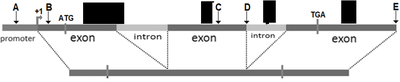
Promoter: A DNA sequence upstream of the gene that serves as the binding site for RNA polymerase to initiate transcription.
Transcription Start Site (+1): The location where RNA polymerase begins synthesizing RNA.
Transcription Stop Site: The point where RNA polymerase ceases RNA synthesis.
Translation Start Site (AUG): The first codon of the open reading frame (ORF), usually encoding methionine.
Translation Stop Site (UGA/UAA/UAG): The codon signaling the end of translation.

Untranslated Regions (UTRs)
UTRs are non-coding sections of mRNA that play regulatory roles in gene expression.
5' UTR: Located upstream of the start codon; contains regulatory sequences that help ribosomes bind and initiate translation. In eukaryotes, it includes the 5' methylguanine cap.
3' UTR: Located downstream of the stop codon; may contain regulatory elements and, in eukaryotes, includes the poly-A tail.
Translation: The Process of Protein Synthesis
Translation Initiation
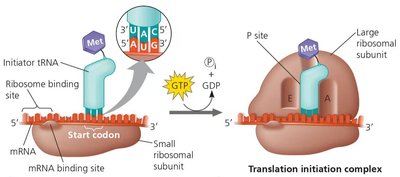
Translation is the process by which ribosomes synthesize proteins using mRNA as a template. Initiation involves the assembly of the ribosome on the mRNA and the recognition of the start codon.
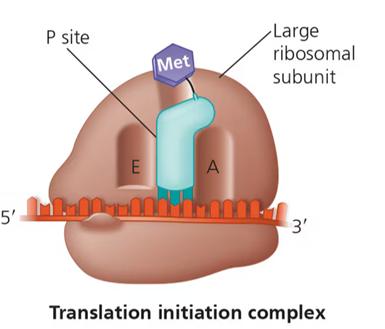
Ribosome Binding Site (Bacteria): A sequence in the 5' UTR that aligns the start codon with the ribosome's P site.
Start Codon (AUG): Specifies the first amino acid (methionine) in the polypeptide chain.
Initiator tRNA: Carries methionine and pairs with the start codon.
GTP and Initiation Factors: Required for the assembly of the translation initiation complex.
Polycistronic mRNA and Operons (Prokaryotes)
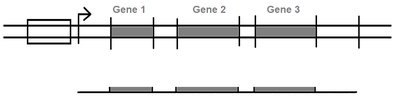
In bacteria, operons allow multiple genes to be transcribed as a single mRNA, each with its own ribosome binding site.
Operon: A cluster of genes under the control of a single promoter, transcribed as one mRNA.
Ribosome Binding Sites: Each gene in the operon has its own site, allowing independent translation.
Eukaryotic Gene Structure and mRNA Processing
Exons, Introns, and mRNA Maturation
Eukaryotic genes often contain introns (non-coding regions) and exons (coding and non-coding regions). During mRNA processing, introns are removed, and exons are joined to form mature mRNA.
Exons: Sequences that remain in the mature mRNA; not all exons are protein-coding.
Introns: Non-coding sequences removed during RNA splicing.
5' Cap and Poly-A Tail: Modifications added to eukaryotic mRNA for stability and translation efficiency.
Mutations and Their Effects on Gene Expression
Mutations in different regions of a gene can have diverse effects on mRNA and protein products.
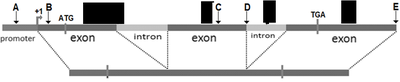
Missense Mutation: Alters the amino acid sequence of the protein.
Nonsense Mutation: Introduces a premature stop codon, truncating the protein.
Frameshift Mutation: Insertions or deletions that shift the reading frame, often resulting in nonfunctional proteins.
Mutations in UTRs: Can affect mRNA stability or translation efficiency without altering the protein sequence.
Translation Mechanism: Steps and Regulation
Ribosome Structure and Function
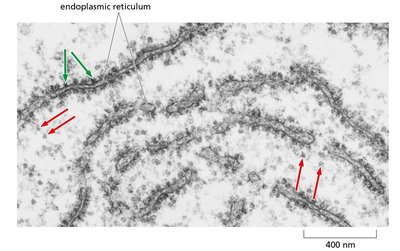
Ribosomes are complex molecular machines composed of rRNA and proteins. They can be free in the cytosol or bound to the endoplasmic reticulum (ER).
Free Ribosomes: Synthesize proteins that function in the cytosol.
Bound Ribosomes: Synthesize proteins destined for secretion or membrane localization.
Signal Sequence: Directs ribosomes to the ER for membrane or secretory proteins.
Translation Initiation: Bacteria vs. Eukaryotes
While the core process of translation is conserved, there are key differences between bacteria and eukaryotes in how initiation occurs.
Bacteria: Use a ribosome binding site (Shine-Dalgarno sequence) to position the start codon.
Eukaryotes: The ribosome scans from the 5' cap to find the start codon (AUG).
Both: Require GTP and initiation factors for assembly, and the ribosome reads mRNA 5' to 3'.
Translation Elongation
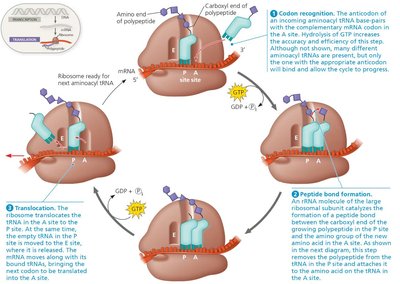
Elongation is the stage where amino acids are sequentially added to the growing polypeptide chain.
Codon Recognition: tRNA with the correct anticodon binds to the mRNA codon in the A site.
Peptide Bond Formation: Catalyzed by rRNA in the large ribosomal subunit; energy comes from the charged tRNA.
Translocation: The ribosome moves along the mRNA, shifting tRNAs from the A to P to E sites.
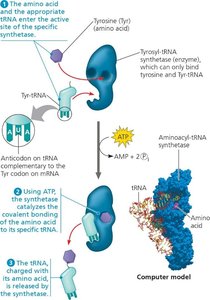
Elongation Factors: Use GTP hydrolysis to power steps 1 and 3; step 2 uses energy from the aminoacyl-tRNA bond (charged by ATP during tRNA charging).
Transcription-Translation Coupling (Prokaryotes)
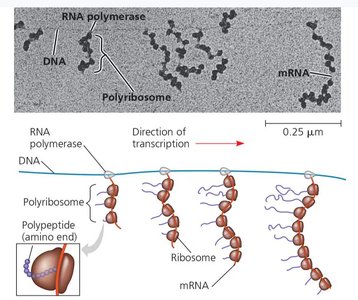
In prokaryotes, transcription and translation are coupled, meaning translation can begin on an mRNA while it is still being transcribed.
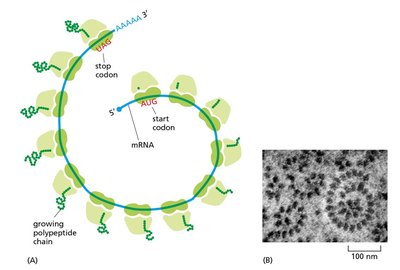
Polyribosomes (Polysomes): Multiple ribosomes translating a single mRNA simultaneously.
Directionality: Both processes proceed 5' to 3'.
Translation in Eukaryotes: Spatial Separation
In eukaryotes, transcription occurs in the nucleus, while translation occurs in the cytoplasm, preventing coupling.
Translation Termination
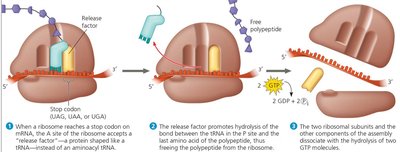
Termination occurs when a stop codon is reached. Release factors recognize stop codons and promote the release of the polypeptide chain.
Release Factor: A protein that binds to the stop codon in the A site, triggering hydrolysis of the bond between the polypeptide and tRNA.
Disassembly: The ribosomal subunits and other components dissociate, ready for another round of translation.
Translation Inhibitors and Toxins
Antibiotics Targeting Translation
Certain antibiotics inhibit translation by targeting bacterial ribosomes, making them effective against bacterial infections.
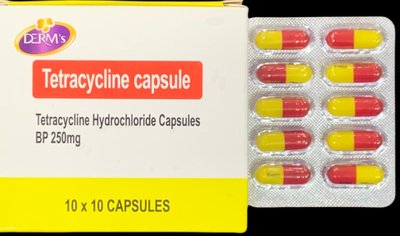
Tetracycline: Blocks the A site of bacterial ribosomes, preventing tRNA entry and thus elongation (and sometimes initiation).
Ribosome-Targeting Toxins
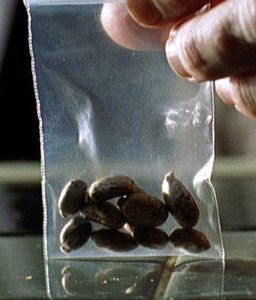
Some toxins, such as ricin, are highly potent because they inactivate ribosomes, halting protein synthesis and leading to cell death.
Ricin: Removes a specific adenine from rRNA in the large subunit, preventing protein synthesis.
Experimental Use of Ribosome Poisons
Ribosome inhibitors can be used experimentally to study protein half-life by blocking new protein synthesis and measuring the degradation of existing proteins.
Western Blot/ELISA: Techniques used to quantify protein abundance over time after translation is halted.
Summary Table: Key Features of mRNA and Translation
Feature | Prokaryotes | Eukaryotes |
|---|---|---|
5' Cap | No | Yes |
Poly-A Tail | No | Yes |
Ribosome Binding Site | Shine-Dalgarno sequence | Kozak sequence/5' cap scanning |
Transcription-Translation Coupling | Yes | No |
Introns | Rare | Common |
Key Terms and Concepts
Open Reading Frame (ORF): The part of mRNA that is translated into protein.
UTR (Untranslated Region): Non-coding regions at the 5' and 3' ends of mRNA.
Polyribosome (Polysome): A complex of multiple ribosomes translating a single mRNA.
Release Factor: Protein that terminates translation at stop codons.
Frameshift Mutation: Mutation that shifts the reading frame, altering downstream amino acid sequence.
