 Indietro
Translation: Decoding mRNA into Protein
Guida di studio - Note intelligenti
 Appunti personalizzati basati sui tuoi materiali, ampliati con definizioni chiave, esempi e contesto.
Translation: mRNA to Protein
Overview of Translation
Translation is the process by which messenger RNA (mRNA) is decoded by ribosomes to synthesize proteins. This process is fundamental to gene expression and involves converting the nucleotide sequence of mRNA into the amino acid sequence of a polypeptide.
Key Point 1: Translation occurs in the cytoplasm and involves ribosomes, tRNAs, and various protein factors.
Key Point 2: The mRNA is read in the 5' to 3' direction, and the polypeptide is synthesized from the N-terminus to the C-terminus.
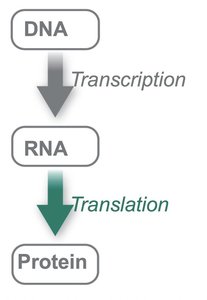
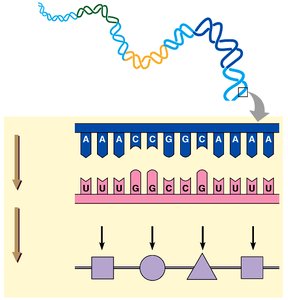
Example: The genetic code is translated from nucleic acids to proteins, as shown in the central dogma of molecular biology.
Genetic Code and Codons
Structure of Codons
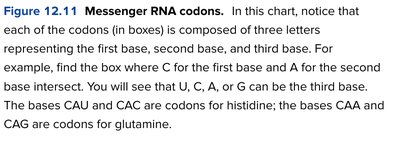
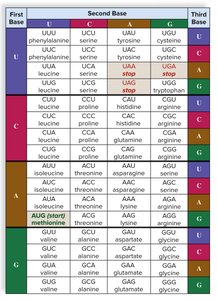
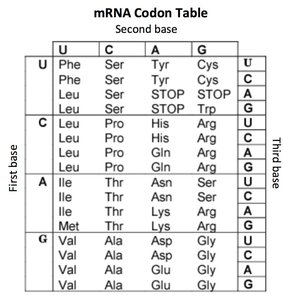
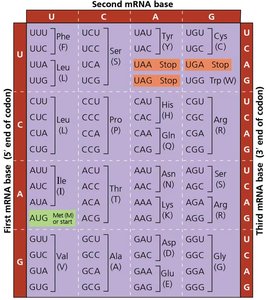
The genetic code consists of triplet codons, each made up of three nucleotides. Each codon specifies a particular amino acid or a stop signal. The code is redundant, meaning multiple codons can code for the same amino acid.
Key Point 1: There are 64 possible codons (43), but only 20 amino acids.
Key Point 2: Start codon (AUG) codes for methionine and signals the beginning of translation. Stop codons (UAA, UAG, UGA) signal termination.
Example: Codons CAU and CAC code for histidine; CAA and CAG code for glutamine.
Transcription and Translation Relationship
From DNA to Protein
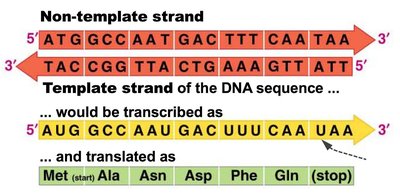
Transcription is the process of copying a DNA sequence into mRNA, which is then translated into protein. The non-template strand of DNA is used to determine the mRNA sequence, which is then read by the ribosome.
Key Point 1: The template strand of DNA is transcribed into mRNA.
Key Point 2: The mRNA sequence is translated into a sequence of amino acids.
Example: DNA sequence 5'-ATG GCC AAT GAC TTT CAA TAA-3' is transcribed to mRNA 5'-AUG GCC AAU GAC UUU CAA UAA-3' and translated to Met-Ala-Asn-Asp-Phe-Gln-(stop).
Components of Translation
Key Molecules Involved
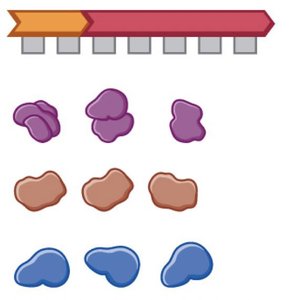
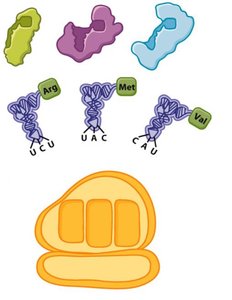
Translation requires several molecular components, including mRNA, ribosomes, tRNAs, and various protein factors. Each plays a specific role in decoding the genetic message.
Key Point 1: mRNA provides the template for translation.
Key Point 2: Ribosomes are the molecular machines that catalyze protein synthesis.
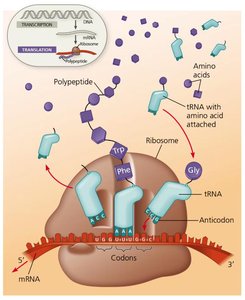
Key Point 3: tRNAs bring amino acids to the ribosome and match them to the mRNA codons via their anticodon.
Key Point 4: Aminoacyl tRNA synthetases charge tRNAs with their corresponding amino acids.
Translation Initiation
Formation of the Initiation Complex
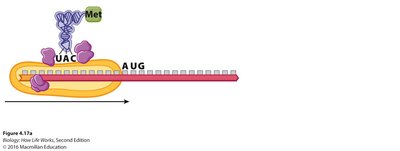
Translation begins with the assembly of the initiation complex, which includes the small ribosomal subunit, initiation factors, and the initiator tRNA (carrying methionine). The complex scans the mRNA for the start codon (AUG).
Key Point 1: The small ribosomal subunit binds to the mRNA and locates the start codon.
Key Point 2: The initiator tRNA pairs with the start codon, and the large ribosomal subunit joins to complete the complex.
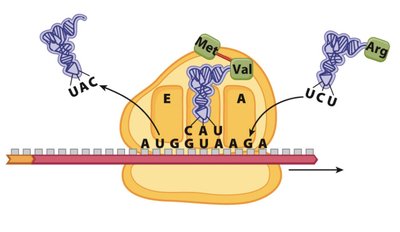
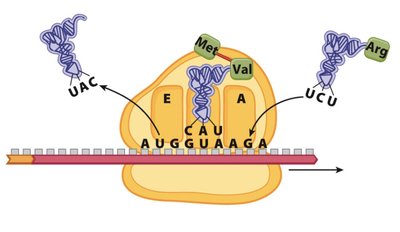
Example: The initiator tRNA with anticodon UAC pairs with AUG on mRNA, bringing methionine.
Translation Elongation
Polypeptide Chain Growth
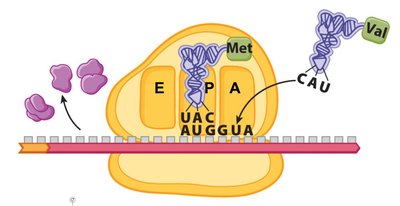
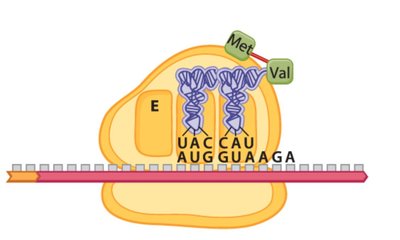
During elongation, the ribosome moves along the mRNA, matching tRNA anticodons to mRNA codons and catalyzing peptide bond formation between amino acids. The ribosome has three binding sites for tRNA: E (exit), P (peptidyl), and A (aminoacyl).
Key Point 1: The ribosome shifts one codon at a time, moving tRNAs through the E, P, and A sites.
Key Point 2: Peptide bonds are formed between the amino acids carried by tRNAs in the P and A sites.
Example: The growing polypeptide chain is transferred from the tRNA in the P site to the tRNA in the A site.
Translation Termination
Ending Protein Synthesis
Translation ends when a stop codon enters the A site of the ribosome. Release factors bind to the stop codon, causing the polypeptide to be released from the tRNA and the ribosome to disassemble.
Key Point 1: Stop codons (UAA, UAG, UGA) do not code for amino acids but signal termination.
Key Point 2: Release factors facilitate the release of the completed polypeptide.
Example: The polypeptide is released and can undergo further processing or folding.
Polyribosomes and Protein Synthesis Locations
Multiple Ribosomes and Cellular Localization
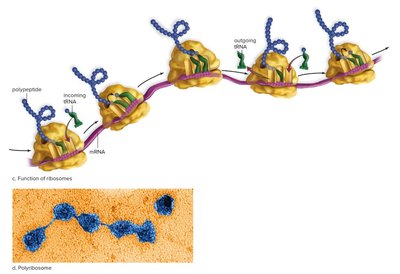
Polyribosomes (polysomes) are groups of ribosomes simultaneously translating a single mRNA molecule, increasing the efficiency of protein synthesis. Proteins can be synthesized in the cytoplasm or on the rough endoplasmic reticulum (RER), depending on their destination.
Key Point 1: Polyribosomes allow for rapid and simultaneous translation of multiple copies of a protein.
Key Point 2: Proteins destined for secretion or membrane insertion are synthesized on ribosomes bound to the RER.
Example: Cytoplasmic proteins are synthesized on free ribosomes, while membrane and secreted proteins are synthesized on RER-bound ribosomes.
Summary Table: Codons and Amino Acids
Codon-to-Amino Acid Mapping
The following table summarizes the relationship between mRNA codons and their corresponding amino acids, including start and stop signals.
First Base | Second Base | Third Base | Amino Acid |
|---|---|---|---|
A | U | G | Methionine (Start) |
U | A | A | Stop |
C | A | U | Histidine |
C | A | A | Glutamine |
G | G | C | Glycine |
U | U | U | Phenylalanine |
U | G | G | Tryptophan |
U | A | G | Stop |
G | A | A | Glutamic acid |
A | A | C | Asparagine |
C | C | G | Proline |
G | C | A | Alanine |
A | G | G | Arginine |
U | C | U | Serine |
U | G | A | Stop |
G | A | G | Glycine |
A | U | U | Isoleucine |
C | G | C | Arginine |
Key Equations and Concepts
Peptide Bond Formation
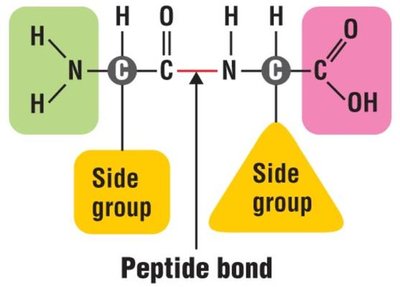
Peptide bonds are formed between the carboxyl group of one amino acid and the amino group of another, releasing water in a condensation reaction.
Key Point 1: The reaction is catalyzed by the ribosome.
Key Point 2: The direction of synthesis is N-terminus to C-terminus.
Additional info: The ribosome acts as a ribozyme, catalyzing peptide bond formation via its rRNA component.
Summary
Translation Decodes mRNA
Translation is the process by which the triplet code of mRNA is decoded into a sequence of amino acids, forming a polypeptide. This process is essential for gene expression and the functioning of all living cells.
