 Indietro
Translation: From mRNA to Protein – Mechanisms and Molecular Components
Guida di studio - Note intelligenti
 Appunti personalizzati basati sui tuoi materiali, ampliati con definizioni chiave, esempi e contesto.
Translation: mRNA to Protein
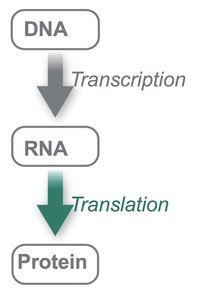
Overview of Translation
Translation is the process by which the genetic code carried by messenger RNA (mRNA) is decoded to produce a specific sequence of amino acids, resulting in the synthesis of a polypeptide (protein). This process occurs in the cytoplasm and is catalyzed by ribosomes.
Translation converts the nucleotide sequence of mRNA into the amino acid sequence of a protein.
It proceeds in the 5' to 3' direction along the mRNA, synthesizing the protein from the N-terminus to the C-terminus.
Each group of three nucleotides (codon) in mRNA specifies one amino acid or a stop signal.
The Genetic Code and Codons
Codons and the mRNA Codon Table
The genetic code is composed of triplet codons, each consisting of three nucleotides. There are 64 possible codons (43), which code for 20 amino acids and three stop signals. The code is redundant, meaning that most amino acids are specified by more than one codon.
Start codon: AUG (codes for methionine, Met) signals the beginning of translation.
Stop codons: UAA, UAG, and UGA signal the end of translation.
Codons are read in the 5' to 3' direction on the mRNA.
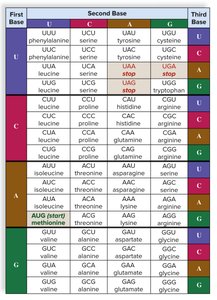
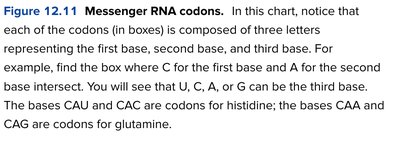
Example: The codon CAA codes for glutamine, while UGA is a stop codon.
Key Components of Translation
Types of RNA Involved
mRNA (messenger RNA): Carries the genetic code from DNA to the ribosome.
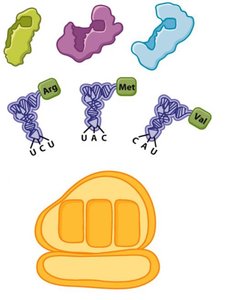
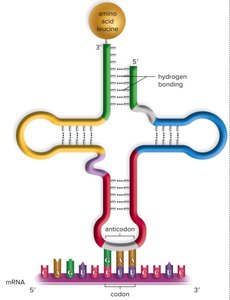
tRNA (transfer RNA): Brings the correct amino acid to the ribosome by matching its anticodon to the mRNA codon.
rRNA (ribosomal RNA): Structural and catalytic component of ribosomes.
Ribosome Structure and Function
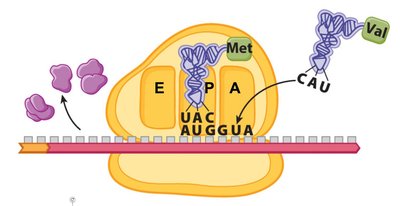
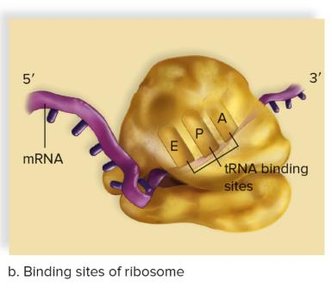
Ribosomes are composed of a large and a small subunit, each made of rRNA and proteins. They have three binding sites for tRNA:
A site (Aminoacyl site): Holds the tRNA carrying the next amino acid to be added.
P site (Peptidyl site): Holds the tRNA with the growing polypeptide chain.
E site (Exit site): Where discharged tRNAs leave the ribosome.
Mechanism of Translation
1. Initiation
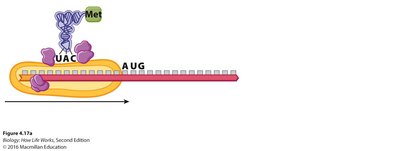
Initiation brings together the mRNA, a tRNA with the first amino acid (methionine), and the two ribosomal subunits.
The small ribosomal subunit binds to the mRNA near the 5' cap and scans for the start codon (AUG).
The initiator tRNA (carrying methionine) pairs with the start codon.
The large ribosomal subunit joins to form the complete initiation complex.
2. Elongation
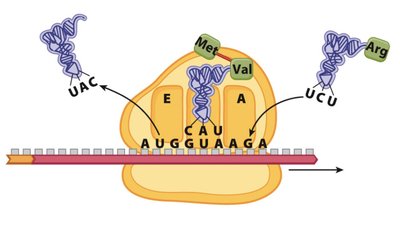
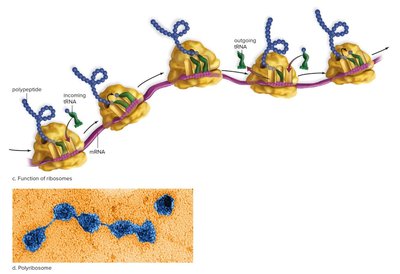
During elongation, amino acids are added one by one to the growing polypeptide chain.
A charged tRNA enters the A site, matching its anticodon to the mRNA codon.
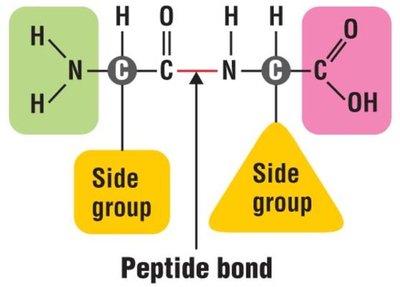
A peptide bond forms between the amino acid in the A site and the polypeptide in the P site.
The ribosome shifts (translocates) one codon along the mRNA, moving the tRNA with the growing chain to the P site and the empty tRNA to the E site.
3. Termination
Termination occurs when a stop codon enters the A site. A release factor binds, causing the polypeptide to be released from the tRNA and the ribosome to dissociate.
Stop codons: UAA, UAG, UGA
No tRNA matches stop codons; instead, release factors recognize them.
tRNA Structure and Function
tRNAs are adaptor molecules that match amino acids to codons in the mRNA. Each tRNA has:
An anticodon region that base-pairs with the mRNA codon (antiparallel orientation).
An amino acid attachment site at the 3' end.
Each amino acid is attached to its correct tRNA by a specific aminoacyl-tRNA synthetase enzyme.
Decoding the Genetic Code: Example
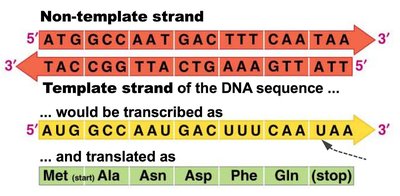
To translate a DNA sequence into a protein, follow these steps:
Identify the template strand of DNA.
Transcribe the template strand into mRNA (replace T with U).
Divide the mRNA into codons (groups of three nucleotides).
Use the codon table to determine the amino acid sequence.
Polyribosomes (Polysomes)
Multiple ribosomes can simultaneously translate a single mRNA molecule, forming a structure called a polyribosome or polysome. This increases the efficiency of protein synthesis.
Summary Table: Key Features of Translation
Feature | Description |
|---|---|
Start Codon | AUG (Methionine) |
Stop Codons | UAA, UAG, UGA |
Direction of mRNA Reading | 5' to 3' |
Direction of Protein Synthesis | N-terminus to C-terminus |
Key Enzymes | Aminoacyl-tRNA synthetases, ribosome (rRNA + proteins) |
Major Steps | Initiation, Elongation, Termination |
Peptide Bond Formation
During elongation, peptide bonds form between the carboxyl group of one amino acid and the amino group of the next. This reaction is catalyzed by the ribosome's rRNA (a ribozyme).
Peptide bond formation equation:
Summary
Translation decodes mRNA's triplet code (codons) to amino acids, producing proteins essential for cellular function.
It involves coordinated action of mRNA, tRNA, ribosomes, and various protein factors.
The process is highly regulated and fundamental to gene expression.
