 Indietro
Transport Across Biological Membranes: Diffusion, Permeability, and Ion Gradients
Guida di studio - Note intelligenti
 Appunti personalizzati basati sui tuoi materiali, ampliati con definizioni chiave, esempi e contesto.
Transport Across Biological Membranes
Force of Chemical Diffusion
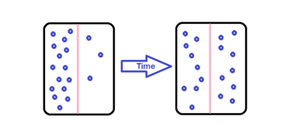
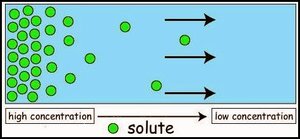
Chemical diffusion is a fundamental process in biology, describing the passive movement of solutes from regions of higher concentration to regions of lower concentration. This movement is driven by the thermal motion of molecules and does not require cellular energy.
Diffusion Gradient: The difference in concentration across a space creates a gradient, which acts as the driving force for diffusion.
Passive Process: Diffusion occurs spontaneously and is essential for the distribution of nutrients and waste products in cells.
Example: Oxygen and carbon dioxide diffuse across cell membranes following their concentration gradients.
Rate of Diffusion
The rate at which diffusion occurs depends on several factors, including the concentration gradient, diffusion coefficient, temperature, and pressure. The diffusion coefficient is specific to each molecule and the medium in which diffusion occurs.
Concentration Gradient: Greater differences in concentration increase the rate of diffusion.
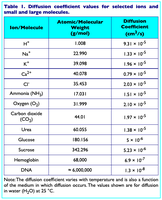
Diffusion Coefficient: Indicates how easily a molecule moves through a medium.
Temperature and Pressure: Higher temperatures and pressures generally increase diffusion rates.
Ion/Molecule | Atomic/Molecular Weight (g/mol) | Diffusion Coefficient (cm2/s) |
|---|---|---|
H+ | 1.008 | 9.31 × 10⁻⁵ |
Na+ | 22.990 | 1.33 × 10⁻⁵ |
K+ | 39.098 | 1.96 × 10⁻⁵ |
Ca2+ | 40.078 | 0.79 × 10⁻⁵ |
Cl- | 35.453 | 2.03 × 10⁻⁵ |
Ammonia (NH3) | 17.031 | 2.19 × 10⁻⁵ |
Oxygen (O2) | 31.999 | 2.19 × 10⁻⁵ |
Carbon dioxide (CO2) | 44.011 | 1.91 × 10⁻⁵ |
Glucose | 180.156 | 5.2 × 10⁻⁶ |
Serum | 68,000 | 5.29 × 10⁻⁷ |
Hemoglobin | 64,000 | 6.3 × 10⁻⁷ |
DNA | 4,400,000 | 1.8 × 10⁻⁸ |
Lipid Bilayer and Membrane Permeability
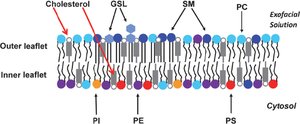
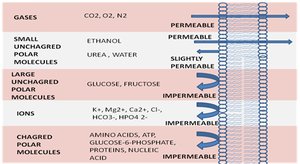
The cell membrane is composed of a lipid bilayer, which acts as a selective barrier to the diffusion of molecules. Hydrophobic molecules can diffuse directly across the bilayer, while hydrophilic molecules require specialized transport mechanisms.
Hydrophobic Molecules: Such as O2, CO2, and steroids, can pass freely through the membrane.
Hydrophilic Molecules: Including amino acids, sugars, and proteins, cannot diffuse directly and require transport proteins.
Selective Permeability: The membrane allows certain molecules to pass while restricting others, maintaining cellular homeostasis.
Transport Proteins and Selective Permeability
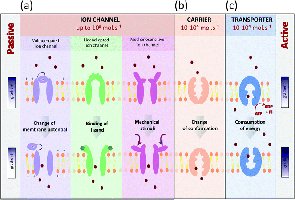
Biological membranes contain transmembrane proteins, such as channels, carriers, and transporters, which facilitate the movement of hydrophilic molecules across the membrane. These proteins contribute to the selective permeability of the membrane.
Channels: Allow ions and water to pass through the membrane.
Carriers: Bind specific molecules and transport them across the membrane.
Transporters: Can move molecules against their concentration gradients using energy.
Ion Gradients and Membrane Transport
Ion Concentrations and Gradients
Cells maintain distinct ion concentrations inside and outside the membrane, creating chemical gradients for each ion. These gradients are established and maintained by ion transporters and require energy input.
Steady State: Cells are not at equilibrium; they constantly use ATP to maintain ion gradients.
Ion Transporters: Proteins that actively move ions to create and sustain gradients.
Example: The Na+/K+ ATPase pump maintains high K+ inside and high Na+ outside.
Passive and Active Transport
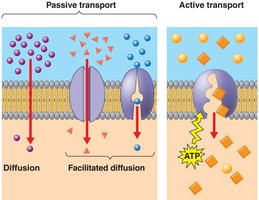
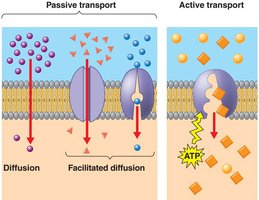
Molecules move across biological membranes via passive or active transport. Passive transport includes simple and facilitated diffusion, while active transport requires energy to move molecules against their gradients.
Passive Transport: Includes simple diffusion and facilitated diffusion (channels and carriers).
Active Transport: Includes primary (direct ATP hydrolysis) and secondary (uses ion gradients) mechanisms.
Facilitated Diffusion: Selective movement via channels (e.g., ion channels) or carriers (e.g., glucose transporter).
Primary Active Transport
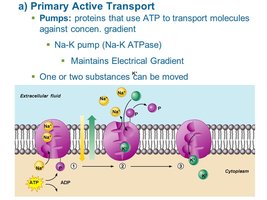
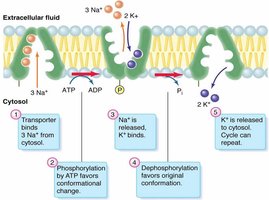
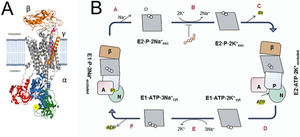
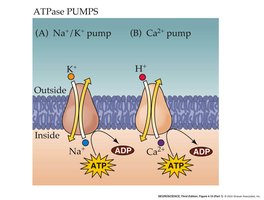
Primary active transporters use ATP hydrolysis to move ions against their concentration gradients. The Na+/K+ ATPase is a key example, pumping Na+ out and K+ into the cell, and is mildly electrogenic.
Na+/K+ ATPase: Maintains Na+ and K+ gradients, essential for cell function.
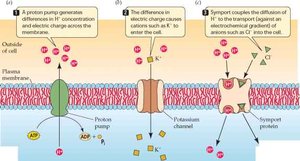
Other Pumps: Ca2+ ATPase, H+ ATPase, and H+/K+ ATPase.
Electrogenic Effect: Moves more positive charges out than in, contributing to membrane potential.
Other Energy Sources for Active Transport
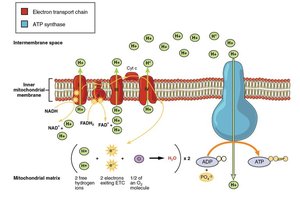
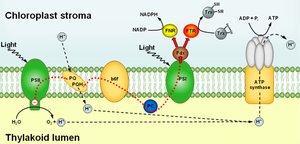
Some primary active transporters use energy from redox reactions or light, such as the mitochondrial electron transport chain and chloroplast ATP synthase.
Electron Transport Chain: Uses NADH and FADH2 reduction energy to move protons.
Light Energy: Drives proton movement in chloroplasts during photosynthesis.
Secondary Active Transport
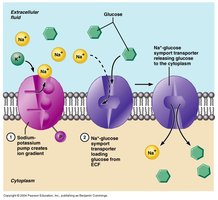
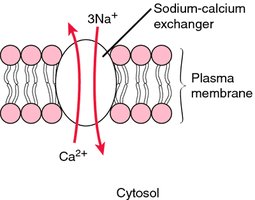
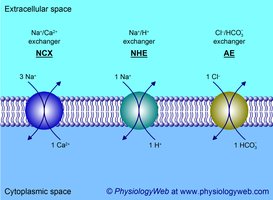
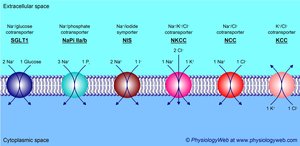
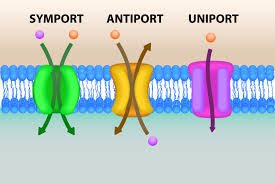
Secondary active transporters use the energy stored in ion gradients (established by primary active transporters) to move other molecules against their concentration gradients. These include co-transporters (symporters) and exchangers (antiporters).
Symporters: Move two substances in the same direction.
Antiporters: Move substances in opposite directions.
Example: Na+-glucose symporter uses Na+ gradient to import glucose.
Transporters in Organelles
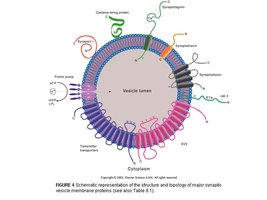
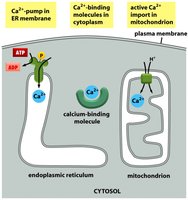
Transporters are not limited to the plasma membrane; they are also found in intracellular organelles such as synaptic vesicles, endoplasmic reticulum, mitochondria, and lysosomes, facilitating the movement of ions and neurotransmitters.
Organellar Transport: Maintains ion gradients within organelles.
Example: Ca2+ pumps in ER and mitochondria regulate calcium storage and signaling.
Ionic Gradients, Electroneutrality, and Membrane Potential
Ionic Concentration Gradients in Cells
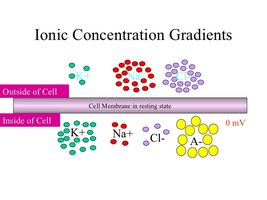
Cells maintain stable ionic gradients under resting conditions, which are not at equilibrium but at steady state, requiring continuous energy input. These gradients are crucial for cellular function and signaling.
Electroneutrality: Total positive and negative charges are balanced inside and outside the cell.
Isosmotic Solutions: Solute concentrations are equal inside and outside, preventing osmotic imbalance.
Electric Charge, Fields, and Potential
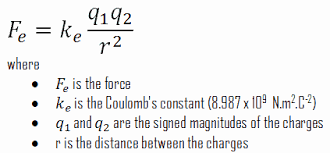
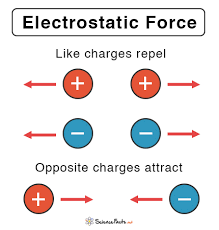
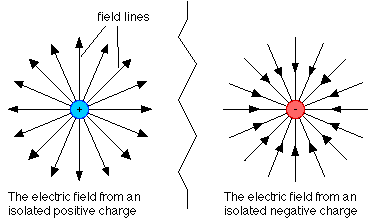
Ions are charged atoms or molecules, and their interactions are governed by electrostatic forces. The force between two charges is described by Coulomb's Law, and electric fields are regions where these forces act.
Coulomb's Law:
Electric Field: Region around a charge where force is exerted on other charges.
Electric Potential: Amount of electric potential energy per unit charge, measured in volts (V).
Membrane Potential and Electrochemical Potential
The membrane potential is the voltage difference across the cell membrane, resulting from the separation of charges. This potential stores energy that can be used to do work, such as driving ion movement and cellular signaling.
Membrane Potential: Difference in electric potential between inside and outside of the membrane.
Electrochemical Potential: Combines chemical and electrical potential, representing the total energy stored in ionic gradients.
Example: The Na+/K+ ATPase pump establishes both chemical and electrical gradients.
Additional info: The notes above expand on the original content by providing definitions, examples, and relevant equations, ensuring a comprehensive and academically rigorous overview suitable for General Biology students.
