 Indietro
Transport Through the Cell Membrane: Structure and Mechanisms
Guida di studio - Note intelligenti
 Appunti personalizzati basati sui tuoi materiali, ampliati con definizioni chiave, esempi e contesto.
Cell Membrane
Structure and Function
The cell membrane, also known as the plasma membrane, is a critical structure that surrounds the cell and regulates the movement of substances in and out. It is selectively permeable, meaning it allows certain particles to pass while blocking others, acting as a "bouncer" for cellular entry and exit.
Selective Permeability: Small molecules such as oxygen and nutrients can enter, while larger molecules are restricted. Waste products and carbon dioxide exit the cell.
Key Functions: Protection, communication, and regulation of transport.
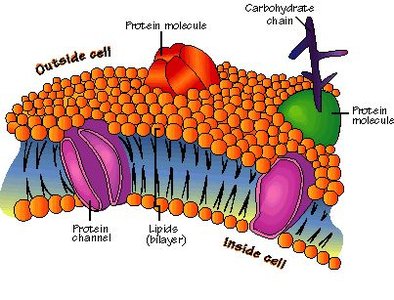
Cell Membrane Structure
The cell membrane is composed of several key components, each contributing to its function and flexibility.
Phospholipid Bilayer: Two layers of phospholipids with hydrophilic (water-loving) heads facing outward and hydrophobic (water-fearing) tails facing inward, forming a stable barrier.
Steroids (Cholesterol): Cholesterol molecules fit between phospholipid tails, providing structural support and fluidity, especially in animal cells.
Carbohydrates: Located on the membrane's exterior, these molecules are involved in cell communication and identification.
Proteins:
Peripheral Proteins: Attached to the membrane surface, both inside and outside.
Integral Proteins: Embedded within the bilayer, sometimes spanning the entire membrane.
Fluid Mosaic Model: Describes the dynamic nature of the membrane, with moving components and a mosaic of different molecules.
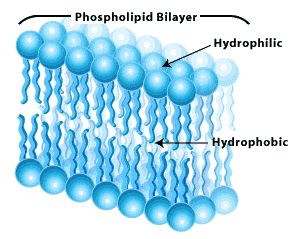
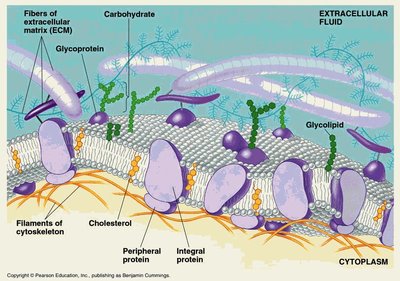
Types of Transport Across the Membrane
Overview
Transport across the cell membrane is essential for maintaining cellular homeostasis. It occurs via two main mechanisms: passive and active transport.
Passive Transport: Does not require energy; substances move from high to low concentration.
Active Transport: Requires energy (ATP); substances move from low to high concentration.
Concentration Gradient: The difference in concentration of molecules across a space drives transport.
Passive Transport
Passive transport involves the movement of substances down their concentration gradient without energy input.
Diffusion: Movement of molecules from high to low concentration until equilibrium is reached. Examples include oxygen and carbon dioxide.
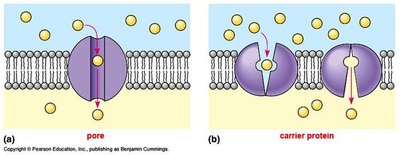
Facilitated Diffusion: Movement of larger or charged molecules across the membrane with the help of transport proteins. Examples include glucose and chloride ions.
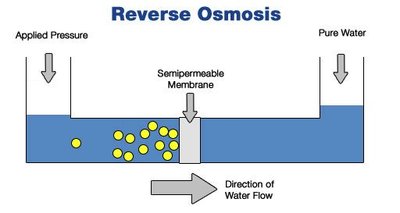
Osmosis: Passive transport of water molecules across a semipermeable membrane.
Osmosis
Osmosis is the movement of water from an area of high concentration to low concentration across a semipermeable membrane.
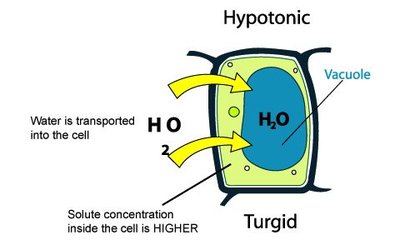
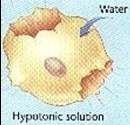
Hypotonic Solution: Water enters the cell, causing it to swell. Solute concentration is higher inside the cell.
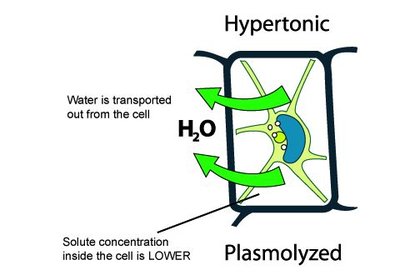
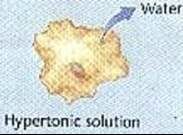
Hypertonic Solution: Water leaves the cell, causing it to shrink. Solute concentration is higher outside the cell.
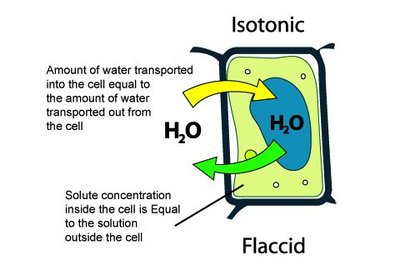
Isotonic Solution: No net movement of water; solute concentrations are equal inside and outside.
Cellular Responses to Water Imbalance
Cells respond differently to excess or limited water.
Animal Cells: Excess water may cause swelling and bursting (cytolysis); limited water leads to shriveling and cell death.
Plant Cells: Excess water increases turgor pressure, pushing against the cell wall; limited water causes plasmolysis, leading to wilting.
Active Transport
Mechanisms and Examples
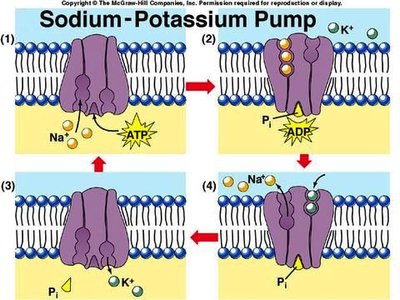
Active transport moves molecules against their concentration gradient, requiring energy in the form of ATP.
Cell Membrane Pump: Proteins actively transport molecules across the membrane.
Sodium-Potassium Pump: Moves 3 Na+ ions out and 2 K+ ions into the cell, maintaining electrochemical gradients.
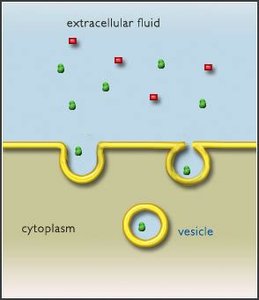
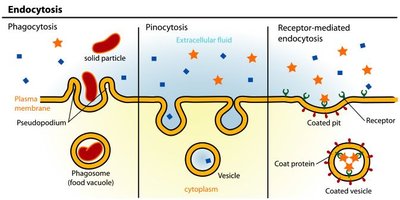
Endocytosis: Large particles or fluids are engulfed by the cell, forming vesicles.
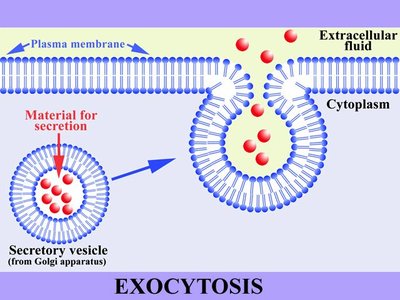
Exocytosis: Large particles are expelled from the cell via vesicles.
Endocytosis
Endocytosis is the process by which cells take in large particles or fluids.
Pinocytosis: "Cell drinking"; uptake of fluids.
Phagocytosis: "Cell eating"; uptake of large particles or entire cells (e.g., white blood cells ingesting bacteria).
Receptor-mediated Endocytosis: Uptake of specific molecules via receptor binding.
Exocytosis
Exocytosis is the process by which cells remove large particles, such as waste and proteins, by vesicle fusion with the membrane.
Mechanism: Vesicles containing material fuse with the plasma membrane, releasing contents outside the cell.
Examples: Secretion of hormones, removal of cellular waste.
Summary Table: Types of Membrane Transport
Type | Energy Required | Direction | Examples |
|---|---|---|---|
Simple Diffusion | No | High to Low | O2, CO2 |
Facilitated Diffusion | No | High to Low | Glucose, Cl- |
Osmosis | No | High to Low (water) | Water |
Active Transport | Yes (ATP) | Low to High | Na+/K+ pump |
Endocytosis | Yes (ATP) | Into cell | Phagocytosis, Pinocytosis |
Exocytosis | Yes (ATP) | Out of cell | Waste, Proteins |
Key Terms and Definitions
Phospholipid Bilayer: Double layer of phospholipids forming the cell membrane.
Selective Permeability: Ability of the membrane to allow some substances to pass while blocking others.
Diffusion: Movement of molecules from high to low concentration.
Osmosis: Movement of water across a semipermeable membrane.
Active Transport: Movement of molecules against their concentration gradient, requiring energy.
Endocytosis: Uptake of large particles or fluids by the cell.
Exocytosis: Expulsion of large particles from the cell.
Equilibrium: State where concentrations are equal and no net movement occurs.
Example: The sodium-potassium pump is essential for nerve impulse transmission and muscle contraction. Additional info: The fluid mosaic model highlights the dynamic and flexible nature of the cell membrane, crucial for cellular communication and adaptation.
