 Indietro
Unikonta and the Evolutionary Diversity of Fungi: Structure, Function, and Life Cycles
Guida di studio - Note intelligenti
 Appunti personalizzati basati sui tuoi materiali, ampliati con definizioni chiave, esempi e contesto.
Unikonta: Supergroup Overview
Definition and Major Clades
The supergroup Unikonta includes a diverse set of eukaryotes, notably animals, fungi, and certain protists. It is divided into two major clades: Amoebozoans and Opisthokonts. Amoebozoans include tubulinid amoebae and slime molds, while Opisthokonts encompass animals, fungi, and their close protistan relatives.
Amoebozoans: Characterized by thick, lobe-shaped or tube-shaped pseudopodia and cytoplasmic streaming.
Opisthokonts: Includes animals, fungi, and protists like nucleariids and choanoflagellates.
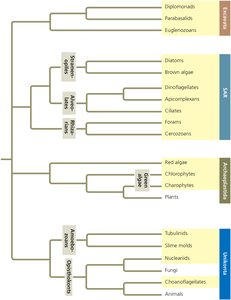
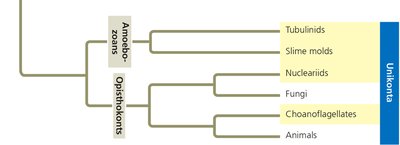
Amoebozoans
General Features and Ecology
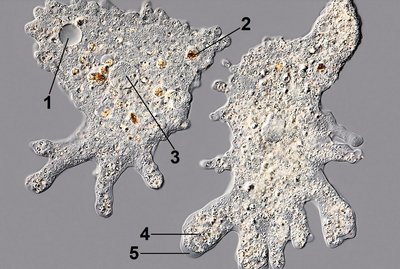
Amoebozoans are amoeba-like protists with thick pseudopodia, used for movement and feeding. Most are predaceous heterotrophs, and their cytoplasmic streaming aids in nutrient distribution. "True" amoebae belong to this group, but the term "amoeba" is not a valid monophyletic grouping.
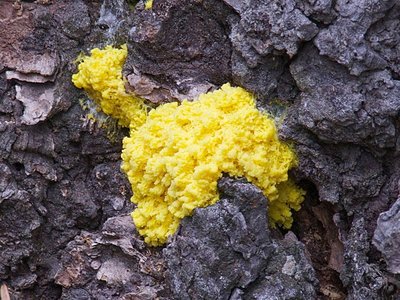
Slime molds: Once thought to be fungi, but molecular data shows they have different unicellular ancestors.
Ecology: Predators, decomposers, and some mutualists.
Cell Size and Surface Area-to-Volume Ratio
Why Cells Must Be Small
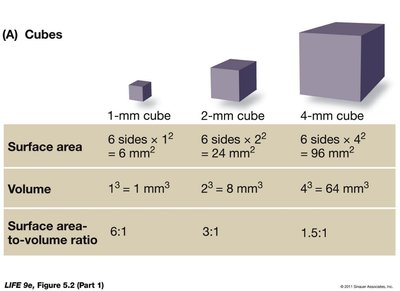
Cell size is limited by the surface area-to-volume ratio. As cells grow larger, their volume increases faster than their surface area, limiting the rate at which nutrients enter and wastes exit. This constraint ensures efficient cellular function.
Volume: Determines chemical activity and energy needs.
Surface area: Controls exchange of substances with the environment.
Fungi: Structure, Function, and Evolution
What is a Fungus?
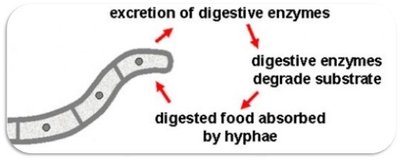
Fungi are heterotrophic eukaryotes that absorb nutrients from their environment. Unlike animals, which ingest food, fungi grow into their food, release enzymes, and absorb digested nutrients. They possess a wide diversity of enzymes, enabling them to feed on various substrates.
Ecological roles: Predators, parasites, decomposers, mutualists.
Body plans: Single-celled yeasts and multicellular filaments (hyphae and mycelium).
Fungal Body Plans
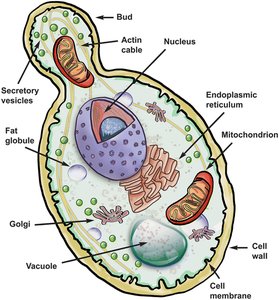
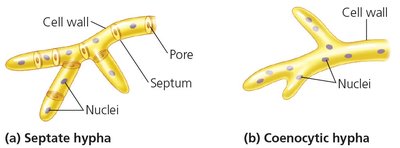
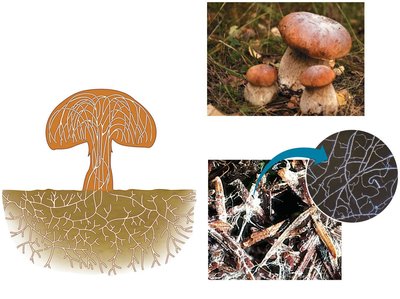
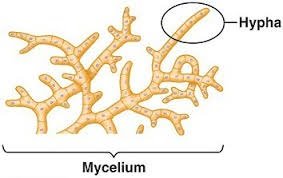
Fungi exhibit two main body plans: single-celled yeasts and multicellular filaments. Yeasts thrive in nutrient-rich environments and are important in fermentation. Multicellular fungi consist of hyphae (septate or coenocytic) that form a mycelium, the main body of the fungus.
Hyphae: Filamentous structures with cell walls made of chitin.
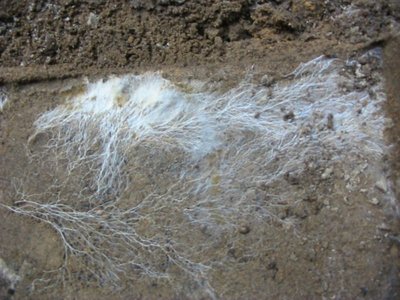
Mycelium: Mass of hyphae that grows into substrates.
Fungal Reproduction
Asexual and Sexual Reproduction
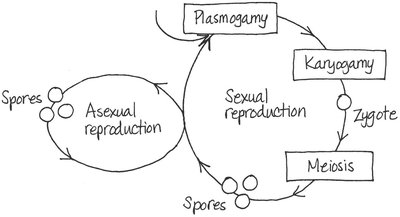
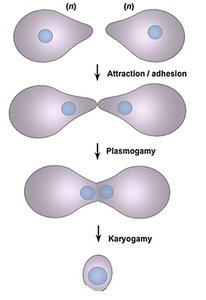
Fungi reproduce both asexually and sexually. Asexual reproduction involves the production of haploid spores by mitosis, while sexual reproduction involves plasmogamy (fusion of cytoplasms), karyogamy (fusion of nuclei), and meiosis to produce genetically diverse spores.
Asexual reproduction: Haploid spores produced by mitosis.
Sexual reproduction: Involves plasmogamy, karyogamy, and meiosis.
Mating types: No males or females, only different mating types.
Yeast Reproduction
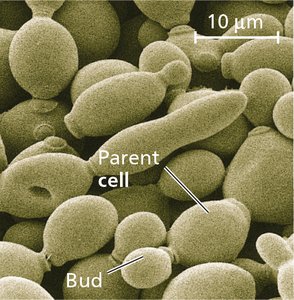
Single-celled yeasts reproduce asexually by budding, a process in which a new cell forms from the parent cell via mitosis. Yeasts are important in fermentation and biotechnology.
Budding: New cell forms from parent cell.
Applications: Bread, beer, wine production.
Major Fungal Phyla
Chytridiomycota (Chytrids)
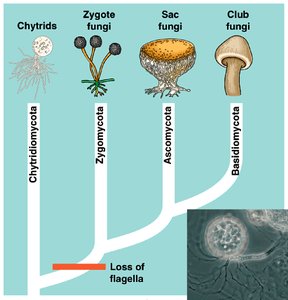
Chytrids are fungi with flagellated spores (zoospores) and coenocytic hyphae. They are decomposers, parasites, and mutualists. Chytrids possess ancient traits, indicating early divergence from other fungi. Some chytrids cause chytridiomycosis, a disease affecting amphibians.
Flagellated spores: Unique among fungi.
Ecology: Decomposers, mutualists, parasites.
Zygomycota (Zygomycetes)
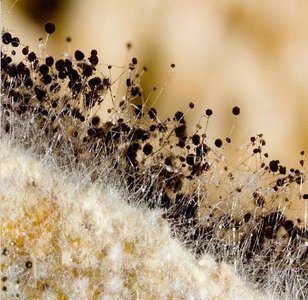
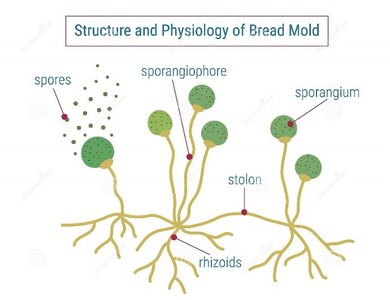
Zygomycetes are fast-growing molds with coenocytic hyphae. They reproduce asexually via sporangia and sexually via zygosporangia, which undergo karyogamy and meiosis to produce genetically diverse spores. Rhizopus stolonifer (black bread mold) is a representative species.
Zygosporangium: Structure for sexual reproduction.
Sporangiophore: Stalk bearing sporangium.
Glomeromycota (Glomeromycetes)
Glomeromycetes form arbuscular mycorrhizae, mutualistic associations with plant roots. Their coenocytic hyphae penetrate plant root cells, facilitating nutrient exchange. Nearly 80% of plant species have mutualisms with glomeromycetes.
Arbuscular mycorrhizae: Hyphae penetrate root cells.
Mutualism: Essential for plant nutrient acquisition.
Ascomycota (Ascomycetes)
Ascomycetes, or sac fungi, produce ascospores in sac-like asci. They have septate hyphae and form extensive haploid mycelium. Many ascomycetes form symbiotic relationships with cyanobacteria or green algae, resulting in lichens. Their life cycle involves the formation of a dikaryotic ascocarp, meiosis, and mitosis to produce eight ascospores per ascus.
Ascus: Sac-like structure containing ascospores.
Lichens: Symbiosis with algae or cyanobacteria.
Basidiomycota (Basidiomycetes)
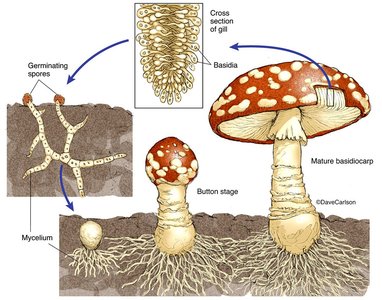
Basidiomycetes, or club fungi, produce basidiospores in club-shaped basidia. Their life cycle involves the formation of a dikaryotic basidiocarp (mushroom), karyogamy, and meiosis to produce four basidiospores per basidium. Many are mutualists (mycorrhizae), while others are plant parasites (rusts and smuts).
Basidium: Club-shaped cell where karyogamy and meiosis occur.
Basidiocarp: Fruiting body (mushroom).
Evolutionary Story of Fungi
Phylogenetic Relationships and Life Cycle Diversity
Fungal groups were originally classified by life cycle differences, but DNA analysis has clarified their evolutionary relationships. Early lineages (chytrids, zygomycetes, glomeromycetes) have coenocytic hyphae, while more recently evolved lineages (ascomycetes, basidiomycetes) have septate hyphae and a dikaryotic cell condition after plasmogamy but before karyogamy.
Coenocytic hyphae: Few or no cross-walls.
Septate hyphae: Porous cross-walls at regular intervals.
Dikaryotic stage: Two nuclei per cell, unique to advanced fungi.
Summary Table: Major Fungal Groups
Phylum | Key Feature | Hyphae Type | Ecology | Reproduction |
|---|---|---|---|---|
Chytridiomycota | Flagellated spores | Coenocytic | Decomposers, parasites, mutualists | Asexual and sexual |
Zygomycota | Zygosporangium | Coenocytic | Fast-growing molds | Asexual (sporangia), sexual (zygosporangium) |
Glomeromycota | Arbuscular mycorrhizae | Coenocytic | Mutualists with plants | Asexual |
Ascomycota | Ascus (sac fungi) | Septate | Diverse, includes lichens | Asexual (conidia), sexual (ascocarp) |
Basidiomycota | Basidium (club fungi) | Septate | Mushrooms, mutualists, parasites | Asexual (rare), sexual (basidiocarp) |
Key Terms and Concepts
Plasmogamy: Fusion of cytoplasms from two mycelia.
Karyogamy: Fusion of nuclei from two mycelia.
Mycelium: Mass of hyphae forming the main body of multicellular fungi.
Hyphae: Filamentous cells, either septate or coenocytic.
Ascus: Sac-like structure in ascomycetes containing ascospores.
Basidium: Club-shaped cell in basidiomycetes where meiosis occurs.
Arbuscular mycorrhizae: Fungal hyphae that penetrate plant root cells.
Equations and Formulas
Surface Area of a Cube:
Volume of a Cube:
Surface Area-to-Volume Ratio:
Additional info:
Some context and details were inferred to ensure completeness and clarity, especially regarding fungal life cycles, ecological roles, and evolutionary relationships.
