 Indietro
Vascular Plant Evolution, Anatomy, and Life Cycles: Study Notes for General Biology
Guida di studio - Note intelligenti
 Appunti personalizzati basati sui tuoi materiali, ampliati con definizioni chiave, esempi e contesto.
Plant Life Cycles
Bryophyte Life Cycle
Bryophytes, including mosses, liverworts, and hornworts, are non-vascular plants that exhibit a life cycle dominated by the gametophyte stage. The sporophyte is dependent on the gametophyte for nutrition.
Gametophyte Dominance: The green, photosynthetic gametophyte produces gametes via mitosis.
Fertilization: Sperm swims to the egg in water, forming a diploid zygote.
Sporophyte: The sporophyte grows from the gametophyte and produces spores via meiosis.
Spore Dispersal: Spores are released and germinate to form new gametophytes.
Example: Mosses (e.g., Polytrichum)
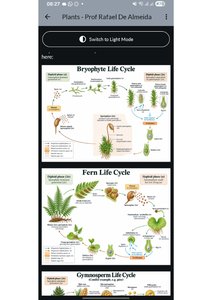
Fern Life Cycle
Ferns are seedless vascular plants with a life cycle dominated by the sporophyte stage. The gametophyte is small and independent.
Sporophyte Dominance: The large, leafy fern is the sporophyte, producing spores in sporangia.
Gametophyte: Spores germinate into a small, heart-shaped gametophyte.
Fertilization: Sperm swims to egg, forming a zygote that grows into a new sporophyte.
Example: Pteridium (bracken fern)
Gymnosperm Life Cycle
Gymnosperms are seed plants with exposed seeds (not enclosed in fruit). Their life cycle is dominated by the sporophyte, with reduced gametophytes.
Sporophyte Dominance: The tree is the sporophyte, producing cones.
Heterospory: Male cones produce microspores (pollen), female cones produce megaspores (ovules).
Fertilization: Pollen fertilizes ovule, forming a seed.
Example: Pine trees (Pinus)
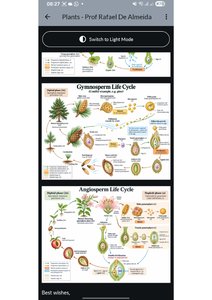
Angiosperm Life Cycle
Angiosperms are flowering plants with seeds enclosed in fruit. Their life cycle is dominated by the sporophyte, with highly reduced gametophytes.
Flower Structure: Flowers contain male (stamen) and female (carpel) organs.
Double Fertilization: One sperm fertilizes the egg, another forms endosperm for seed nutrition.
Seed and Fruit Formation: Seeds develop inside fruit, aiding dispersal.
Example: Apple tree (Malus domestica)
Vascular Plant Anatomy and Evolution
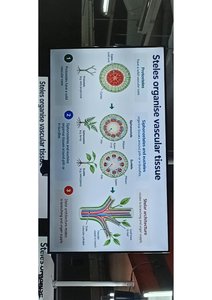
Stele Organization and Vascular Tissue
The stele is the central vascular cylinder in roots and stems, containing xylem and phloem. Vascular tissue organization varies among plant groups.
Protostele: Solid core of xylem surrounded by phloem (primitive).
Siphonostele: Cylinder of vascular tissue with pith in the center (ferns).
Eustele: Discrete vascular bundles (angiosperms and gymnosperms).
Hydraulic Systems and Growth Limits
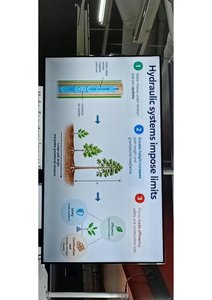
Hydraulic systems in plants transport water and minerals, but impose physical limits on plant height and growth.
Xylem Function: Moves water and minerals upward from roots.
Phloem Function: Distributes sugars and signaling molecules.
Growth Limits: Water transport efficiency and mechanical support limit maximum plant size.
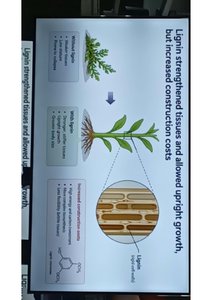
Lignin and Mechanical Support
Lignin is a complex polymer that strengthens cell walls, enabling upright growth and tall, branched sporophytes.
Lignified Tissues: Provide rigidity and resistance to decay.
Construction Costs: Lignin synthesis is energetically expensive.
Example: Woody stems in trees
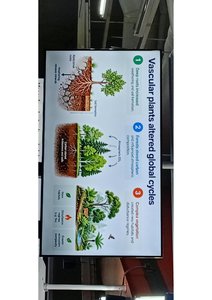
Vascular Plants and Global Cycles
Vascular plants have significantly altered global biogeochemical cycles, including carbon and water cycles.
Root Systems: Enhance soil formation and nutrient cycling.
Photosynthesis: Large-scale carbon fixation.
Impact: Forests regulate climate and hydrology.
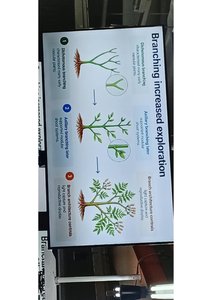
Branching and Exploration
Branching in vascular plants increases exploration of the environment, allowing for greater resource acquisition.
Branching Patterns: Simple dichotomous branching evolved into complex branching.
Resource Acquisition: Increased surface area for photosynthesis and water uptake.
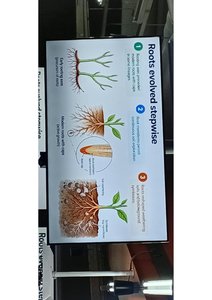
Root Evolution
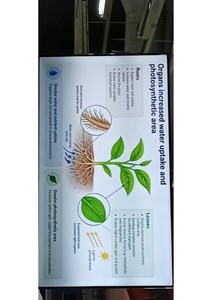
Roots evolved stepwise, providing anchorage and efficient water and nutrient uptake.
Early Roots: Simple structures for anchorage.
Modern Roots: Complex, with root hairs and specialized tissues.
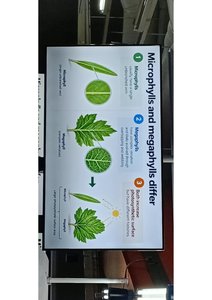
Leaf Evolution: Microphylls vs. Megaphylls
Leaves evolved as microphylls (small, single-veined) and megaphylls (large, multi-veined), differing in structure and function.
Microphylls: Found in lycophytes, simple structure.
Megaphylls: Found in ferns and seed plants, complex venation.
Photosynthetic Efficiency: Megaphylls increase photosynthetic area.
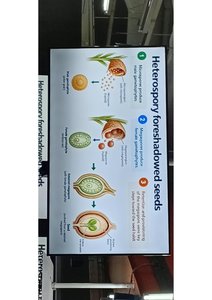
Heterospory and Seed Evolution
Heterospory is the production of two types of spores (microspores and megaspores), which foreshadowed the evolution of seeds in plants.
Microspores: Develop into male gametophytes (pollen).
Megaspores: Develop into female gametophytes (ovules).
Seed Evolution: Seeds provide protection and nutrition for the embryo.
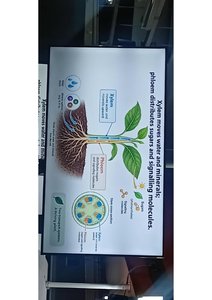
Xylem and Phloem Functions
Xylem transports water and minerals, while phloem distributes sugars and signaling molecules throughout the plant.
Xylem: Composed of tracheids and vessel elements.
Phloem: Composed of sieve tube elements and companion cells.
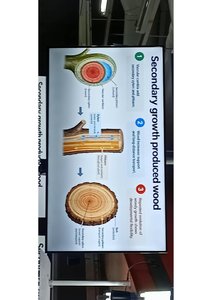
Secondary Growth and Wood Formation
Secondary growth increases plant girth and produces wood, allowing for tall, long-lived plants.
Vascular Cambium: Produces secondary xylem (wood) and secondary phloem.
Growth Rings: Indicate age and environmental conditions.
Comparative Framework and Key Innovations
Key Innovations in Vascular Plants
Vascular plants evolved several key innovations that enabled their success on land.
Roots: Efficient water and nutrient uptake.
Leaves: Increased photosynthetic area.
Vascular Tissue: Transport and support.
Seeds: Protection and dispersal.
Branching: Enhanced exploration and competition.
Summary and Take-Home Messages
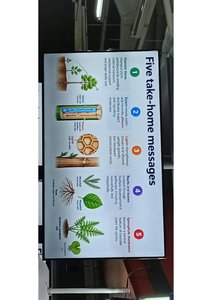
Five Take-Home Messages
Key points summarizing vascular plant evolution and anatomy:
Roots and leaves evolved to increase water uptake and photosynthetic area.
Vascular tissue enabled efficient transport and mechanical support.
Lignin provided structural strength for upright growth.
Microphylls and megaphylls represent distinct leaf evolutionary pathways.
Branching and heterospory contributed to plant diversity and reproductive success.
Additional info:
These notes cover topics relevant to General Biology chapters: Plant Anatomy, Vascular Plant Transport, Plant Reproduction, Evolution, and Overview of Plants.
Key terms: sporophyte, gametophyte, heterospory, lignin, xylem, phloem, microphyll, megaphyll.
Formulas: Water potential in plants is often described by , where is total water potential, is solute potential, and is pressure potential.
