 Indietro
Vascular Plant Evolution and Structure: Key Concepts for General Biology
Guida di studio - Note intelligenti
 Appunti personalizzati basati sui tuoi materiali, ampliati con definizioni chiave, esempi e contesto.
Five Take-Home Messages About Vascular Plants
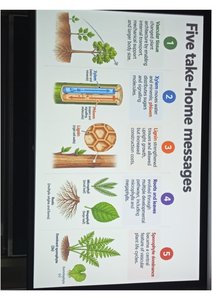
1. Vascular tissue enabled upright growth
Vascular plants evolved specialized tissues—xylem and phloem—that allowed them to grow upright and transport water, minerals, and sugars efficiently. This adaptation was crucial for colonizing terrestrial environments.
Xylem: Conducts water and minerals from roots to shoots.
Phloem: Distributes sugars and signaling molecules throughout the plant.
Example: Ferns and seed plants possess these tissues, enabling tall growth.
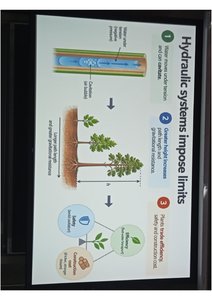
2. Hydraulic systems impose limits
Water transport in plants is governed by hydraulic systems, which set physical limits on plant height and branching. The efficiency of water movement depends on the structure of xylem vessels and environmental conditions.
Hydraulic Conductivity: Determines how quickly water can move through the plant.
Limits: Tall plants face challenges in maintaining water flow to leaves.
Example: Trees must balance water supply with leaf area.
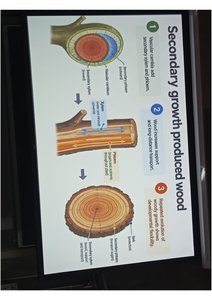
3. Secondary growth produced wood
Secondary growth, driven by the vascular cambium, produces wood and allows plants to increase in girth. This adaptation provides mechanical support and enables long-lived, tall plants.
Vascular Cambium: A lateral meristem that generates secondary xylem (wood) and secondary phloem.
Annual Rings: Indicate yearly growth cycles.
Example: Woody plants like trees and shrubs.
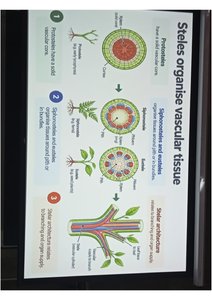
4. Stele organization in vascular tissue
The stele is the central part of the root or stem containing vascular tissue. Different stele types organize xylem and phloem in various ways, affecting plant structure and function.
Protostele: Simple, solid core of xylem surrounded by phloem.
Siphonostele: Cylinder of vascular tissue with pith in the center.
Eustele: Discrete vascular bundles, typical of seed plants.
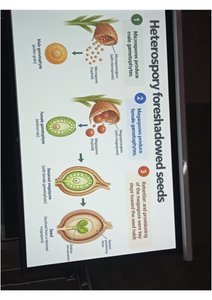
5. Heterospory foreshadowed seeds
Heterospory is the production of two distinct types of spores: microspores (male) and megaspores (female). This evolutionary step led to the development of seeds, a major innovation in plant reproduction.
Microspores: Develop into male gametophytes.
Megaspores: Develop into female gametophytes.
Example: Seed plants (gymnosperms and angiosperms) evolved from heterosporous ancestors.
Vascular Plants and Global Cycles
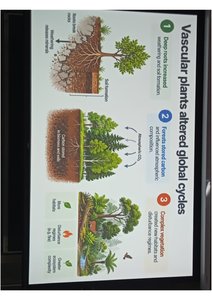
1. Deep roots improved weathering and soil formation
Vascular plants with deep roots enhanced soil development and nutrient cycling, impacting terrestrial ecosystems.
Weathering: Roots break down rocks, releasing minerals.
Soil Formation: Organic matter from plants contributes to soil structure.
2. Forests and surface cooling
Forests created by vascular plants contributed to global cooling by increasing transpiration and reflecting sunlight.
Transpiration: Water loss from leaves cools the environment.
Canopy Effects: Forests influence local and global climate.
3. Carbon sequestration
Vascular plants sequester carbon through photosynthesis, reducing atmospheric CO2 and impacting climate.
Photosynthesis: Converts CO2 into organic molecules.
Long-Term Storage: Wood and roots store carbon for centuries.
Microphylls and Megaphylls
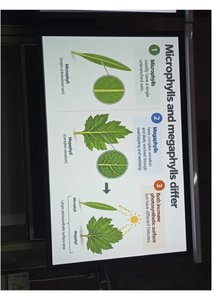
1. Microphylls: Simple leaves
Microphylls are small, simple leaves with a single vein, found in some early vascular plants.
Structure: Single, unbranched vein.
Example: Lycophytes.
2. Megaphylls: Complex leaves
Megaphylls are larger leaves with branched veins, allowing greater photosynthetic area and efficiency.
Structure: Multiple, branched veins.
Example: Ferns and seed plants.
3. Evolutionary advantage
Megaphylls provide increased surface area for photosynthesis, supporting larger, more complex plants.
Roots Evolved Stepwise
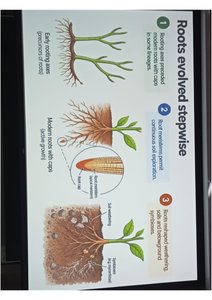
1. Early roots: Simple anchoring
Primitive roots provided basic anchoring and water absorption.
Structure: Simple, unbranched roots.
Function: Anchoring and water uptake.
2. Root meristem: Specialized growth
Root meristems allowed continuous root elongation and exploration of soil.
Meristem: Region of active cell division.
Example: Modern vascular plants.
3. Roots improved nutrient uptake
Advanced roots increased nutrient absorption and soil penetration, supporting larger plants.
Branching Increased Exploration
1. Dichotomous branching
Early vascular plants exhibited dichotomous branching, where stems split into two equal parts.
Advantage: Increased surface area for photosynthesis.
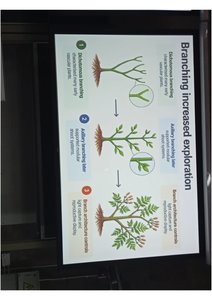
2. Axillary branching
Axillary branching, where branches arise from leaf axils, allowed more complex plant forms.
Example: Seed plants.
3. Evolution of complex branching
Complex branching patterns enabled plants to occupy diverse habitats and maximize resource acquisition.
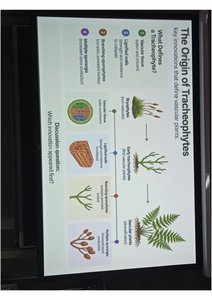
The Origin of Tracheophytes
1. Defining features
Tracheophytes, or vascular plants, are defined by the presence of vascular tissue, roots, leaves, and branching.
Vascular Tissue: Xylem and phloem.
Roots: Specialized for water and nutrient uptake.
Leaves: Microphylls or megaphylls.
Branching: Dichotomous or axillary.
Organs Increased Water Uptake and Photosynthetic Area
1. Roots: Water and mineral uptake
Roots evolved to efficiently absorb water and minerals from the soil, supporting plant growth.
Root Hairs: Increase surface area for absorption.
Example: All vascular plants.
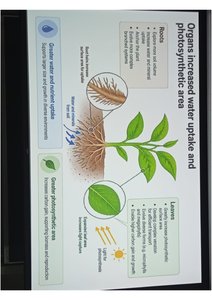
2. Leaves: Photosynthetic area
Leaves provide a large surface area for capturing sunlight and performing photosynthesis.
Chloroplasts: Organelles where photosynthesis occurs.
Example: Ferns, gymnosperms, angiosperms.
Mechanical Support and Lignin
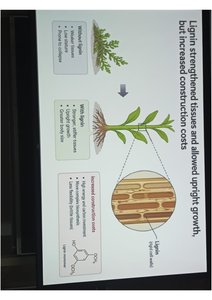
1. Mechanical support enabled tall, branched sporophytes
Vascular plants developed mechanical support structures, such as lignified cell walls, allowing upright growth and branching.
Lignin: A complex polymer that strengthens cell walls.
Advantage: Supports tall growth and resistance to wind.
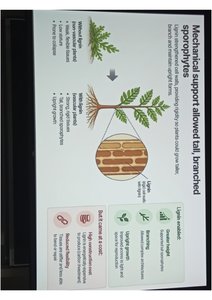
2. Lignin increased construction costs
Lignin provides strength but requires significant energy and resources to produce.
Trade-off: Increased strength vs. higher metabolic cost.
Roots and Leaves: Multiple Developmental Pathways
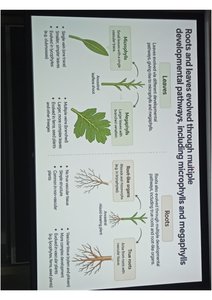
1. Leaves: Microphylls and megaphylls
Leaves evolved through different developmental pathways, resulting in microphylls (simple) and megaphylls (complex).
Microphylls: Single vein, simple structure.
Megaphylls: Branched veins, complex structure.
2. Roots: Multiple origins
Roots evolved independently in different plant lineages, with diverse structures and functions.
Example: Lycophyte roots differ from fern and seed plant roots.
Xylem and Phloem: Transport Systems
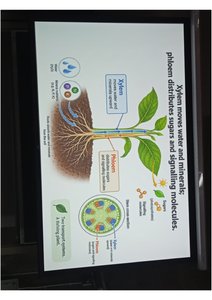
1. Xylem: Water and mineral transport
Xylem moves water and minerals from roots to shoots, supporting plant growth and metabolism.
Tracheids and Vessel Elements: Specialized cells for water transport.
2. Phloem: Sugar and signaling molecule transport
Phloem distributes sugars produced by photosynthesis and signaling molecules throughout the plant.
Sieve Elements: Main conducting cells in phloem.
Vascular Tissue Changed Plant Architecture
1. Early vascular plants
Early vascular plants had simple architecture, but the evolution of vascular tissue enabled more complex forms.
Stele Types: Protostele, siphonostele, eustele.
Secondary Growth: Produced wood and allowed tall growth.
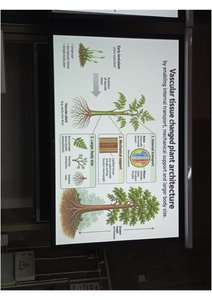
2. Modern trees
Modern trees exhibit complex branching, secondary growth, and large leaves, all supported by advanced vascular tissue.
Example: Conifers, angiosperms.
Summary Table: Key Differences in Vascular Plant Structures
Feature | Early Vascular Plants | Modern Vascular Plants |
|---|---|---|
Vascular Tissue | Simple (protostele) | Complex (eustele, secondary growth) |
Leaves | Microphylls | Megaphylls |
Roots | Simple, unbranched | Complex, branched |
Branching | Dichotomous | Axillary, complex |
Reproduction | Homosporous | Heterosporous, seeds |
Additional info: These notes summarize the evolution and structure of vascular plants, focusing on adaptations that enabled terrestrial colonization, efficient transport, and complex plant forms. The content is directly relevant to General Biology topics such as plant anatomy, vascular plant transport, plant reproduction, and plant evolution.
