 Indietro
Vascular Plant Structure, Growth, Transport, and Nutrition
Guida di studio - Note intelligenti
 Appunti personalizzati basati sui tuoi materiali, ampliati con definizioni chiave, esempi e contesto.
Vascular Plant Development
Seed Germination
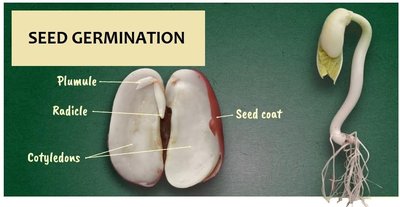
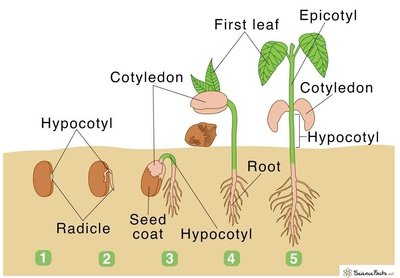
Seed germination is the process by which a seed develops into a new plant. Eudicot seeds contain a dormant diploid embryo, triploid endosperm, and a diploid seed coat. Under suitable conditions, the seed absorbs water, swells, and the radicle emerges first to anchor the seed and absorb water. Cotyledons provide nourishment until the leaves develop chlorophyll and begin photosynthesis.
Embryo: Contains plumule (baby leaves) and radicle (baby root).
Endosperm: Provides nutrients; in eudicots, cotyledons serve this function.
Seed coat: Protective outer layer derived from maternal tissue.
Sequence: Radicle emerges first, followed by cotyledons and plumule.
Example: Germination of bean seeds.
Plant Growth and Meristems
Apical (Primary) Meristems
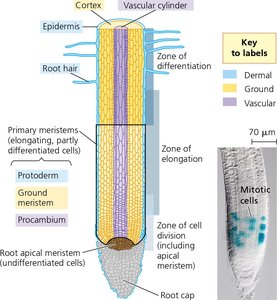
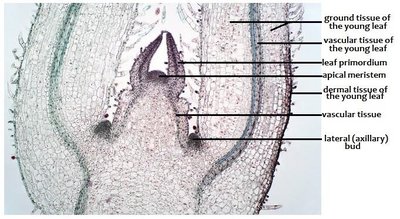
Apical meristems are regions of undifferentiated cells at the tips of shoots and roots, responsible for primary growth. They produce three primary tissues: protoderm, procambium, and ground meristem. Growth direction is controlled by hormones, and most plants exhibit indeterminate growth.
Protoderm: Forms protective tissues (epidermis, periderm).
Procambium: Forms vascular tissues (xylem, phloem).
Ground meristem: Forms ground tissues (parenchyma, collenchyma, sclerenchyma).
Indeterminate growth: Continuous growth as long as resources are available.
Determinate growth: Growth stops at a certain height.
Mature Plant Tissues
Types of Plant Cells and Tissues
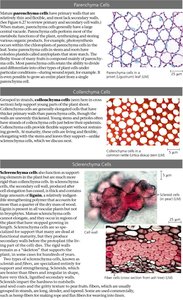
As meristematic cells mature, they differentiate into specialized tissues with distinct functions. The three main tissue types are dermal, vascular, and ground tissues.
Dermal tissue: Protoderm-derived; includes epidermis (herbaceous plants) and periderm (woody plants).
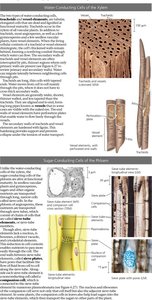
Vascular tissue: Procambium-derived; includes xylem (water/mineral transport) and phloem (sugar/organic transport).
Ground tissue: Ground meristem-derived; includes parenchyma (metabolism, storage), collenchyma (support), and sclerenchyma (support).
Root and Shoot Systems
Structure and Function
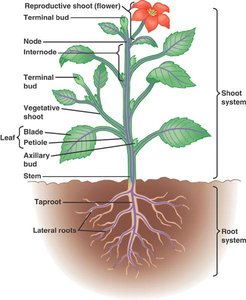
Plants are organized into root and shoot systems. The shoot system includes stems, leaves, and flowers, while the root system includes primary and secondary roots.
Roots: Anchor plant, absorb water and minerals.
Stems: Support aerial organs, house vascular tissue for transport.
Leaves: Main site of photosynthesis; mesophyll cells capture light, stomata regulate gas exchange.
Root Structure
Anatomy of Roots
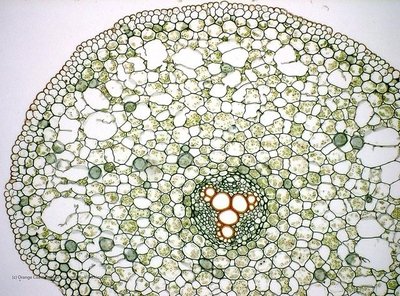
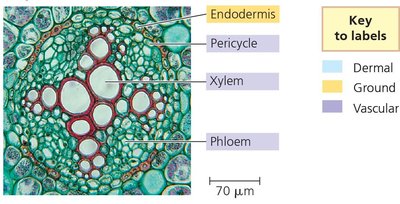
Roots are covered by epidermis, contain a central vascular cylinder, and have cortex cells for storage. The endodermis regulates water movement into the vascular cylinder.
Epidermis: Derived from protoderm; root hairs increase absorption.
Vascular cylinder: Contains xylem and phloem.
Cortex: Ground tissue for storage.
Endodermis: Waxy layer restricting water movement.
Stem Structure
Anatomy and Growth
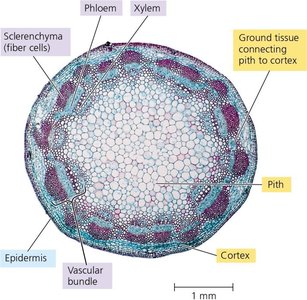
Stems support aerial organs and facilitate long-distance transport. Nodes are sites of leaf formation, and internodes separate leaves. Axillary buds form branches. Vascular bundles in eudicot stems are arranged in a ring.
Nodes: Sites of leaf and bud formation.
Internodes: Spaces between nodes.
Axillary buds: Form side branches.
Apical dominance: Apical meristem inhibits axillary bud growth.
Vascular bundles: Ring arrangement in eudicots; cortex outside, pith inside.
Specialized stems: Rhizomes, stolons, tubers (asexual reproduction, storage).
Leaf Structure
Anatomy and Arrangement
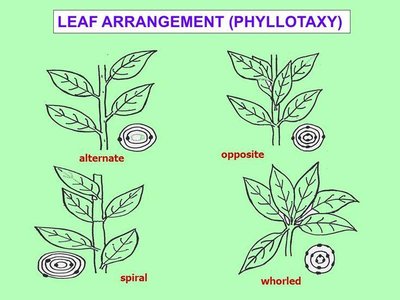
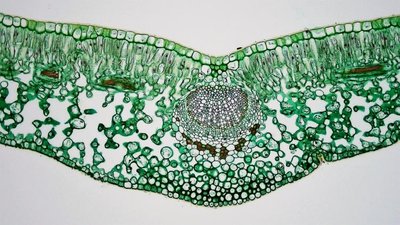
Leaves are adapted for maximum light capture and gas exchange. They are attached by petioles, have net-like veins in eudicots, and contain mesophyll cells for photosynthesis. Leaf arrangement (phyllotaxy) can be alternate, opposite, spiral, or whorled.
Petioles: Connect leaves to stem, bring vascular bundles.
Veins: Net-like pattern in eudicots.
Mesophyll: Upper compact layer, lower loose layer with air spaces.
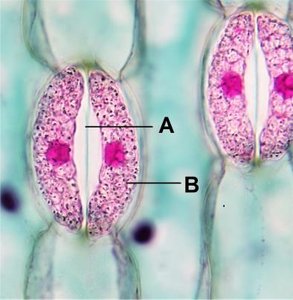
Stomata: Openings for gas exchange, regulated by guard cells.
Vascular Transport
Xylem and Phloem
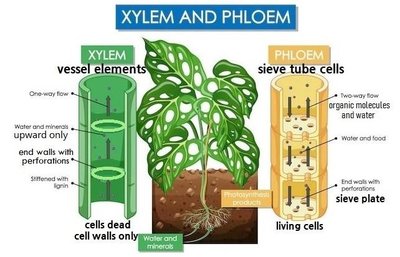
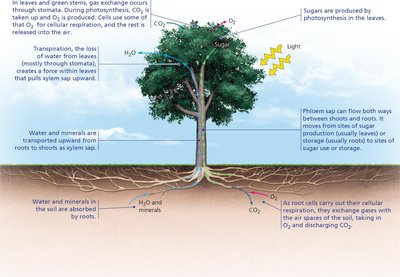
Vascular tissues transport water, minerals, and sugars throughout the plant. Xylem consists of dead vessel elements for water/mineral transport, while phloem consists of living sieve tube cells for sugar/organic transport. Companion cells assist phloem function.
Xylem: Dead cells, one-way upward transport.
Phloem: Living cells, two-way transport.
Companion cells: Aid in active transport in phloem.
Water and Mineral Transport: Cohesion-Tension Theory
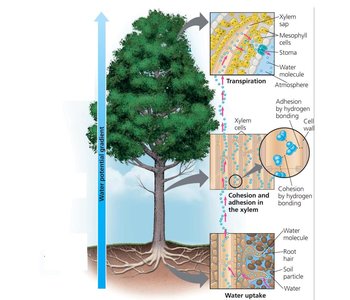
Water and minerals are absorbed by roots and transported upward through xylem by negative pressure. Transpiration from leaves pulls water upward, and the endodermis regulates entry into the vascular cylinder.
Apoplast: Pathway outside cell membranes.
Transpiration: Water loss from leaves creates pull.
Negative pressure: Drives upward movement in xylem.
Sugar Transport: Translocation
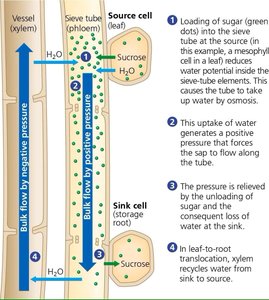
Sugars produced in leaves (sources) are transported to areas of need (sinks) via phloem. Active transport loads sugars into sieve tubes, and osmotic pressure drives bulk flow. Phloem can transport in both directions.
Symplast: Continuous cytosol column for transport.
Source: High sugar concentration (e.g., leaves).
Sink: Low sugar concentration (e.g., roots, fruits).
Bulk flow: Driven by positive pressure in phloem.
Plant Nutrition
Soil and Nutrient Uptake
Plants absorb water and nutrients from soil, which consists of inorganic minerals and organic humus. Macronutrients and micronutrients are essential for growth and metabolism. Deficiencies can cause chlorosis and reduced photosynthesis.
Macronutrients: C, O, H, N, K, P, Ca, Mg, S.
Micronutrients: Cl, Fe, Mn, B, Zn, Cu, Ni.
Functions: Nitrogen for proteins, magnesium for chlorophyll, potassium for stomatal function, phosphorus for ATP, calcium for cell walls, sulfur for amino acids.
The Nitrogen Cycle
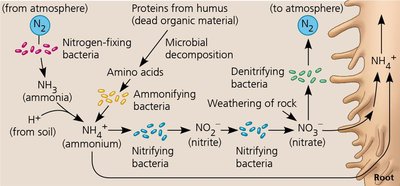
The nitrogen cycle involves soil organisms decomposing organic matter, nitrogen-fixing bacteria converting atmospheric N2 to ammonia, nitrifying bacteria converting ammonia to nitrite/nitrate, and denitrifying bacteria returning N2 to the atmosphere. Legumes have symbiotic relationships with Rhizobium bacteria for nitrogen fixation.
Ammonifying bacteria: Decompose humus to ammonia.
Nitrogen-fixing bacteria: Convert N2 to ammonia in root nodules.
Nitrifying bacteria: Convert ammonia to nitrite/nitrate.
Denitrifying bacteria: Convert nitrate to N2 gas.
Carnivorous Plants
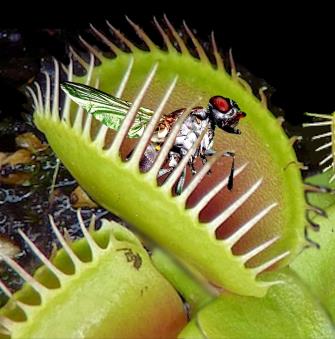
Carnivorous plants, such as Venus flytrap, pitcher plant, butterwort, and sundew, have evolved to capture animals and extract nitrogen from their tissues due to poor soil nitrogen availability. These adaptations allow them to thrive in nutrient-poor environments.
Examples: Venus flytrap, pitcher plant, sundew, butterwort.
Adaptation: Capture and digest insects for nitrogen.
Mycorrhizae
Mycorrhizae are mutualistic associations between plant roots and fungal hyphae. Fungi absorb water and minerals, sharing them with the plant, while the plant provides glucose to the fungi. This relationship enhances nutrient uptake and will be discussed further in subsequent lectures.
Mutualism: Fungi and plants benefit from nutrient exchange.
Function: Increased water and mineral absorption.
