 Indietro
Viruses: Structure, Classification, and Life Cycles
Guida di studio - Note intelligenti
 Appunti personalizzati basati sui tuoi materiali, ampliati con definizioni chiave, esempi e contesto.
Viruses
Introduction to Viruses
Viruses are microscopic infectious agents that require a host cell to replicate. They are considered obligate intracellular parasites and are found in every kind of organism, from bacteria to plants and animals. Viruses are not classified as living organisms because they lack cellular structure and independent metabolism.
Obligate Parasites: Viruses must infect a host cell to reproduce; they cannot carry out metabolic processes on their own.
Alive or Not? Viruses are not considered alive because they do not possess cells, cannot reproduce independently, and lack metabolic machinery.
Basic Structure of Viruses
All viruses share a basic structure consisting of a nucleic acid core surrounded by a protein coat called a capsid. Some viruses also have an outer envelope derived from the host cell membrane.
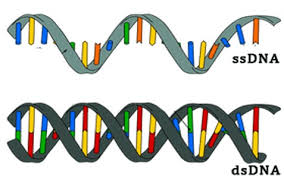
Nucleic Acid Core: Contains either DNA or RNA, which can be single-stranded (ss) or double-stranded (ds), and may be linear or circular.
Capsid: Protein shell that protects the viral genome and aids in host cell attachment.
Envelope: Some animal viruses have a lipid envelope with embedded viral proteins, acquired from the host cell membrane.

Viral Shapes and Morphology
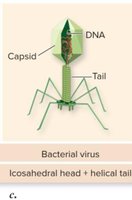
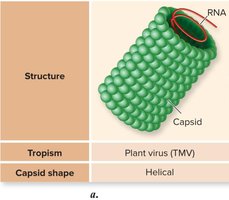
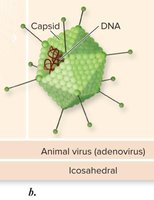
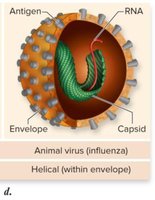
Viruses exhibit a variety of shapes, primarily determined by the arrangement of their capsid proteins. The main shapes include:
Helical: Rod-like or thread-like structure (e.g., Tobacco Mosaic Virus).
Icosahedral: Nearly spherical, with 20 triangular faces (e.g., Adenovirus).
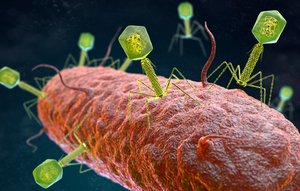
Complex/Binal: Combination of icosahedral head and helical tail, typical of bacteriophages.
Enveloped: Surrounded by a lipid membrane (e.g., Influenza virus).
Viral Genomes
Viral genomes are highly diverse and can be composed of DNA or RNA, which may be single- or double-stranded, and linear or circular.
DNA Viruses: Most have double-stranded DNA and replicate in the host cell nucleus (e.g., Herpes simplex, Smallpox).
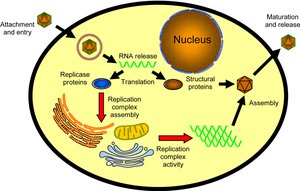
RNA Viruses: Most have single-stranded RNA and replicate in the cytoplasm. High mutation rates due to error-prone replication (e.g., Influenza, Measles).
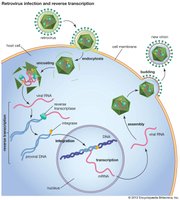
Retroviruses: Single-stranded RNA viruses that use reverse transcriptase to synthesize DNA from their RNA genome, which integrates into the host genome (e.g., HIV).
Viral Hosts, Host Range, and Tissue Tropism
Viruses infect all forms of life, but each virus has a specific host range and may only infect certain cell types (tissue tropism).
Host Range: The spectrum of host species a virus can infect.
Tissue Tropism: The specificity of a virus for particular tissues within a host (e.g., Rabies virus infects neurons).
Viral Replication and Life Cycles
Viruses reproduce by hijacking the host cell's machinery to synthesize viral components, which are then assembled into new virions. The two main bacteriophage life cycles are:
Lytic Cycle: Virus replicates rapidly, lyses the host cell, and releases new virions.
Lysogenic Cycle: Viral genome integrates into the host DNA (prophage), replicates with the host, and can later enter the lytic cycle.
Retroviruses
Retroviruses are a unique group of RNA viruses that reverse-transcribe their RNA genome into DNA, which integrates into the host genome. This process is catalyzed by the enzyme reverse transcriptase.
Example: Human Immunodeficiency Virus (HIV).
Integration: Once integrated, the viral DNA is replicated along with the host genome and can remain latent.
Virus Classification
Viruses are classified based on several criteria:
Taxonomy: Order, family, subfamily, genus (ICTV system).
Baltimore Classification: Based on genome type and replication strategy.
Disease or Host: The disease caused or the host infected.
Bacteriophages
Bacteriophages are viruses that infect bacteria. They are diverse and often studied as model systems for viral replication.
Lytic Cycle: Leads to destruction of the bacterial cell.
Lysogenic Cycle: Viral DNA integrates into the bacterial genome and can confer new properties (phage conversion).
Viral Infections: Persistent vs. Acute
Viral infections are categorized by the duration and frequency of virus production and symptom appearance.
Persistent Infections: Virus remains in the host for long periods, may be latent or chronic.
Acute Infections: Rapid virus replication and sudden onset of symptoms (e.g., Influenza).
Influenza and Coronaviruses
Influenza: Enveloped RNA virus with high mutation rates, responsible for pandemics (e.g., Spanish flu, H1N1).
Coronaviruses: Enveloped, positive-sense single-stranded RNA viruses. Includes SARS-CoV, MERS-CoV, and SARS-CoV-2 (COVID-19).
Viruses and Cancer
Some viruses can cause cancer by altering the growth properties of host cells, such as blocking cell death or promoting cell division.
Example: Human Papilloma Virus (HPV) causes cervical cancer; vaccines are available for prevention.
Prions and Viroids
Prions: Infectious proteins that cause neurodegenerative diseases (e.g., Mad cow disease, CJD).
Viroids: Small, circular RNA molecules that infect plants and disrupt growth.
Summary Table: Virus Types and Features
Type | Genome | Host | Example | Notes |
|---|---|---|---|---|
DNA Virus | dsDNA or ssDNA | Animals, plants, bacteria | Herpes, Smallpox | Replicate in nucleus |
RNA Virus | ssRNA or dsRNA | Animals, plants | Influenza, Measles | High mutation rate |
Retrovirus | ssRNA (reverse-transcribed) | Animals | HIV | Integrates into host genome |
Bacteriophage | DNA or RNA | Bacteria | T4 phage | Lytic and lysogenic cycles |
Prion | Protein only | Animals | CJD, BSE | Misfolded protein |
Viroid | RNA only | Plants | Potato spindle tuber viroid | No protein coat |
Key Terms
Capsid: Protein shell surrounding viral genome.
Envelope: Lipid membrane derived from host cell.
Host Range: Spectrum of hosts a virus can infect.
Tissue Tropism: Specificity for certain tissues.
Lytic Cycle: Viral replication resulting in host cell lysis.
Lysogenic Cycle: Viral genome integrates into host DNA.
Reverse Transcriptase: Enzyme used by retroviruses to synthesize DNA from RNA.
Prion: Infectious protein causing neurodegenerative disease.
Viroid: Infectious RNA molecule affecting plants.
*Additional info: This guide expands on the provided lecture notes with definitions, examples, and a summary table for clarity and exam preparation.*
