 Indietro
Viruses, Viroids, and Prions: Structure, Classification, and Human Disease
Guida di studio - Note intelligenti
 Appunti personalizzati basati sui tuoi materiali, ampliati con definizioni chiave, esempi e contesto.
Viruses: Structure and Properties
Basic Characteristics of Viruses
Viruses are non-living, obligatory intracellular parasites that require a host cell for replication. They are unique biological entities with distinct structural and genetic features.
Genetic Material: Viruses contain either DNA or RNA, but never both.
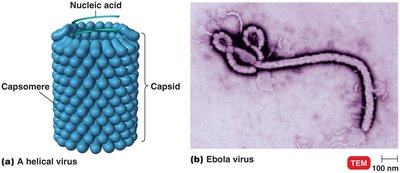
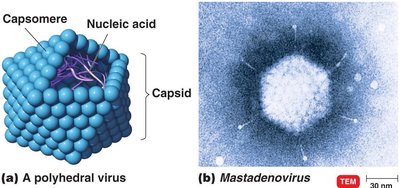
Protein Coat: The nucleic acid is protected by a protein coat called a capsid, which is composed of subunits called capsomeres.
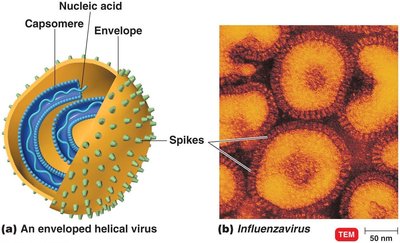
Envelope: Some viruses possess an envelope derived from the host cell membrane, which may contain spikes for host attachment.
Host Range: Most viruses have a specific host range determined by attachment sites and cellular factors.
Virus Morphologies
Viruses exhibit four main morphologies: helical, polyhedral, enveloped, and complex.
Helical: Rod-shaped, with nucleic acid inside a cylindrical capsid.
Polyhedral: Many-sided, often icosahedral.
Enveloped: Surrounded by a lipid envelope.
Complex: More elaborate structures, such as bacteriophages.
Classification and Taxonomy of Viruses
Virus Classification
Viruses are classified based on their coat, envelope, and nucleic acid type. There are nine major families, each with distinct characteristics.
Single-Stranded DNA, Nonenveloped
Double-Stranded DNA, Nonenveloped
Double-Stranded DNA, Enveloped
Single-Stranded RNA, + Strand, Nonenveloped
Single-Stranded RNA, + Strand, Enveloped
Single-Stranded RNA, - Strand, One Strand
Single-Stranded RNA, - Strand, Multiple Strands
Double-Stranded RNA, Nonenveloped
Retroviruses (Produce DNA)
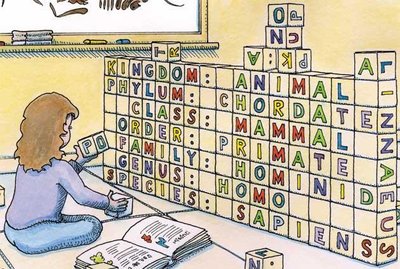
Taxonomic Groupings
Family names: End in -viridae.
Genus names: End in -virus.
Viral species: Share genetic information and ecological niche.
Subspecies: Designated by numbers.
Example Table: Virus Taxonomy
Family | Genus | Species | Subspecies |
|---|---|---|---|
Herpesviridae | Herpesvirus | Human herpes virus | HHV-1, HHV-2, HHV-3 |
Retroviridae | Lentivirus | Human immunodeficiency virus | HIV-1, HIV-2 |
Viral Multiplication and Cultivation
Multiplication of Bacteriophages
Bacteriophages multiply via two main cycles: lytic and lysogenic.
Lytic Cycle: Causes lysis and death of the host cell.
Lysogenic Cycle: Prophage DNA is incorporated into host DNA, allowing the virus to persist.
Lytic Cycle Steps
Attachment: Phage attaches to host cell.
Penetration: Phage injects DNA into cell.
Biosynthesis: Production of phage DNA and proteins.
Maturation: Assembly of new phage particles.
Release: Cell wall breaks, releasing new phages.
Multiplication of Animal Viruses
Animal viruses multiply through a series of steps:
Attachment: Virus attaches to cell membrane.
Penetration: Entry by endocytosis or fusion.
Uncoating: Viral or host enzymes remove capsid.
Biosynthesis: Production of nucleic acid and proteins.
Maturation: Assembly of viral components.
Release: By budding (enveloped viruses) or rupture.
Cultivation of Viruses
Viruses must be grown in living cells. Methods include:
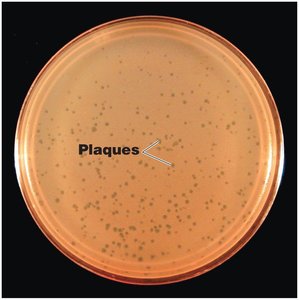
Plaque Method: Used for bacteriophages on solid agar.
Fertile Chicken Eggs: Used for animal viruses.
Cell Culture: Continuous cell lines maintained indefinitely.
Viral Diseases and Human Health
Oncogenic Viruses and Cancer
Some viruses can cause cancer by integrating into host DNA and affecting cell growth.
Tumor Suppressor Genes and proto-Oncogenes are key concepts.
Oncogenic DNA Viruses: Adenoviridae, Herpesviridae, Poxviridae, Papovaviridae, Hepadnaviridae.
Oncogenic RNA Viruses: Retroviridae (HTLV-1, HTLV-2).
Latent and Persistent Infections
Latent Infection: Virus remains asymptomatic for long periods (e.g., cold sores, shingles).
Persistent Infection: Disease occurs over a long period and is often fatal (e.g., subacute sclerosing panencephalitis).
Prions and Viroids
Prions
Prions are infectious proteins that cause spongiform encephalopathies.
PrPC: Normal cellular prion protein.
PrPSc: Infectious form, accumulates in brain cells.
Diseases: Sheep scrapie, Creutzfeldt-Jakob disease, mad cow disease.
Transmission: Ingestion, transplant, surgical instruments.
Viroids
Viroids are small, circular RNA molecules that infect plants.
Disease Example: Potato spindle tuber disease.
Summary Table: Virus Families and Associated Diseases
Virus Family | Type | Example Disease |
|---|---|---|
Parvoviridae | Single-stranded DNA, non-enveloped | Erythema infectiosum (fifth disease) |
Papovaviridae | Double-stranded DNA, non-enveloped | Human papillomavirus (warts, cervical cancer) |
Poxviridae | Double-stranded DNA, enveloped | Smallpox, molluscum contagiosum |
Herpesviridae | Double-stranded DNA, enveloped | Chickenpox, shingles, herpes simplex, Epstein-Barr |
Picornaviridae | Single-stranded RNA, + strand, non-enveloped | Poliovirus |
Togaviridae | Single-stranded RNA, + strand, enveloped | Rubivirus (rubella) |
Flaviviridae | Single-stranded RNA, + strand, enveloped | Yellow fever, dengue fever |
Filoviridae | Single-stranded RNA, - strand, enveloped | Ebola |
Rhabdoviridae | Single-stranded RNA, - strand, enveloped | Rabies |
Orthomyxoviridae | Single-stranded RNA, - strand, multiple strands, enveloped | Influenza |
Retroviridae | Single-stranded RNA, 2 strands, produce DNA | HIV/AIDS |
Key Terms and Concepts
Capsid: Protein coat surrounding viral nucleic acid.
Envelope: Lipid membrane surrounding some viruses.
Spikes: Glycoprotein projections for host attachment.
Host Range: Spectrum of host cells a virus can infect.
Prophage: Viral DNA integrated into bacterial genome.
Oncogenesis: Process of tumor formation by viruses.
Prion: Infectious protein causing neurodegenerative disease.
Viroid: Infectious RNA molecule affecting plants.
Formulas and Equations
Viral Multiplication Equation:
Reverse Transcriptase Reaction (Retroviruses):
Examples and Applications
Example: HIV uses reverse transcriptase to convert its RNA genome into DNA, which integrates into the host genome.
Application: Plaque assays are used to quantify bacteriophage numbers in laboratory settings.
