 Indietro
Water and Life: Properties, Solutions, and pH in Biology
Guida di studio - Note intelligenti
 Appunti personalizzati basati sui tuoi materiali, ampliati con definizioni chiave, esempi e contesto.
Water and Life
Polar Covalent Bonds and Hydrogen Bonding in Water
Water's unique properties arise from its molecular structure and the chemical bonds it forms. The polar covalent bonds within a water molecule and the hydrogen bonds between water molecules are fundamental to its behavior in biological systems.
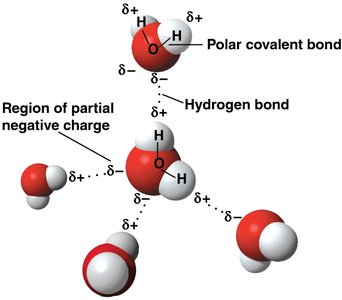
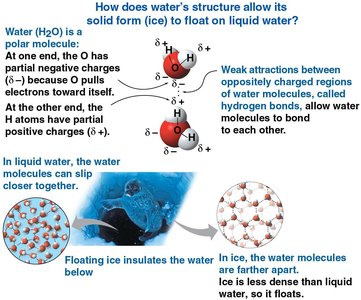
Polar Covalent Bonds: In a water molecule (H2O), electrons are shared unequally between oxygen and hydrogen, making oxygen partially negative (δ-) and hydrogen partially positive (δ+).
Hydrogen Bonds: The polarity of water allows each molecule to form hydrogen bonds with up to four other water molecules, creating a dynamic network.
Biological Importance: These bonds are responsible for water's high cohesion, surface tension, and other emergent properties essential for life.
Emergent Properties of Water
Water exhibits four key emergent properties that make Earth suitable for life: cohesive behavior, ability to moderate temperature, expansion upon freezing, and versatility as a solvent.
Cohesive Behavior
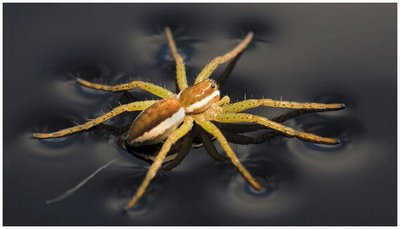
Cohesion: Hydrogen bonds hold water molecules together, resulting in high surface tension. This allows small organisms to move across water surfaces.
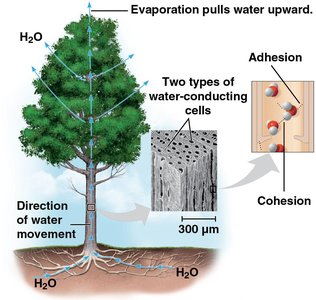
Adhesion: Water molecules also stick to other substances, such as plant cell walls, aiding in the upward transport of water against gravity in plants.
Example: Water transport in plants relies on both cohesion and adhesion to move water from roots to leaves.
Moderation of Temperature
High Specific Heat: Water can absorb or release large amounts of heat with only slight changes in its own temperature, due to hydrogen bonding.
Heat Absorption and Release: Heat is absorbed when hydrogen bonds break and released when they form, stabilizing temperatures in organisms and environments.
Evaporative Cooling: As water evaporates, it removes heat from surfaces, helping organisms regulate temperature.
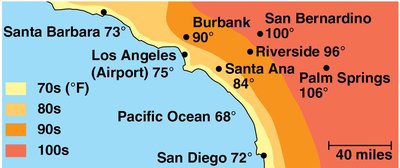
Example: Coastal climates are moderated by the ocean's high specific heat, resulting in milder temperatures compared to inland areas.
Expansion Upon Freezing
Ice Formation: At 0°C, water molecules form a crystalline structure maintained by hydrogen bonds, making ice less dense than liquid water.
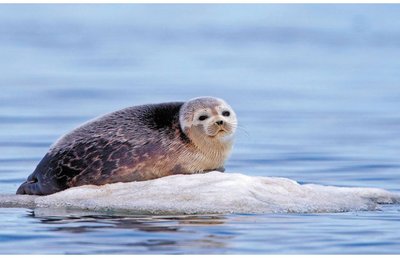
Biological Importance: Ice floats, insulating bodies of water and protecting aquatic life during cold periods.
Example: Aquatic organisms survive under the ice layer in winter because ice floats and insulates the water below.
Versatility as a Solvent
Solution: A homogeneous mixture of two or more substances. The solvent dissolves the solute.
Aqueous Solution: Water is the solvent.
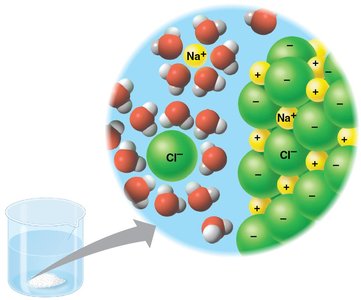
Water as a Solvent: Water dissolves ionic compounds (e.g., NaCl) and polar molecules by surrounding them with hydration shells.
Example: Salt dissolving in water, with water molecules surrounding Na+ and Cl- ions.
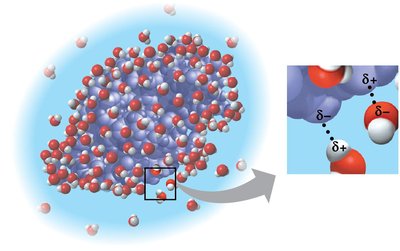
Large polar molecules, such as proteins, can also dissolve in water if they have ionic and polar regions.
Hydrophilic and Hydrophobic Substances
Substances interact with water differently based on their molecular structure.
Hydrophilic: Substances with an affinity for water, typically containing polar or charged groups (e.g., salts, sugars).
Hydrophobic: Substances that do not interact well with water, usually nonpolar (e.g., oils, fats). These are major components of cell membranes.
Example: Oil does not mix with water due to its nonpolar bonds.
Acidic and Basic Conditions in Biology
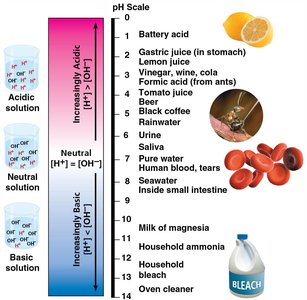
The concentration of hydrogen ions (H+) and hydroxide ions (OH-) determines the acidity or basicity of a solution, which is critical for biological processes.
Dissociation of Water: Water molecules can dissociate into H+ and OH- ions.
pH Scale: Measures the concentration of H+ ions. Defined as .
Neutral Solution: [H+] = [OH-] = M, pH = 7.
Acidic Solution: pH < 7, higher [H+].
Basic Solution: pH > 7, higher [OH-].
pOH: or .
Buffers and pH Regulation
Buffers are crucial for maintaining stable pH in biological systems, preventing harmful changes in H+ and OH- concentrations.
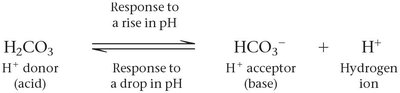
Buffer: A substance that minimizes changes in pH by reversibly binding H+ ions.
Composition: Typically consists of a weak acid and its conjugate base.
Example: The bicarbonate buffer system in blood:
Biological Importance: Most living cells maintain an internal pH close to 7; even slight deviations can be harmful.
Calculating pH, pOH, [H+], and [OH-]
Understanding the relationships between pH, pOH, and ion concentrations is essential for interpreting biological solutions.
Key Equations:
(at 25°C)
Example Calculation: If [H+] = M, then pH = 5, pOH = 9, [OH-] = M.
