 Indietro
Water: Essential Properties, Bonding, and Biological Significance
Guida di studio - Note intelligenti
 Appunti personalizzati basati sui tuoi materiali, ampliati con definizioni chiave, esempi e contesto.
Water and Chemical Bonding
Covalent Bonds and Electronegativity
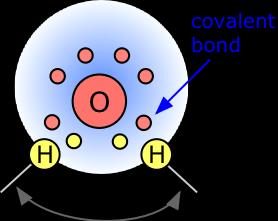
Covalent bonds are fundamental to molecular structure, involving the sharing of electrons between atoms. The degree to which electrons are shared depends on the electronegativity of the atoms involved.
Covalent Bond: A chemical bond formed when two atoms share one or more pairs of electrons.
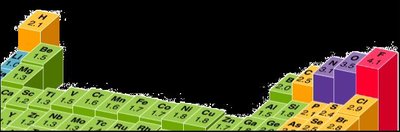
Electronegativity: The tendency of an atom to attract electrons towards itself in a chemical bond. Higher electronegativity means stronger attraction for electrons.
Nonpolar Covalent Bond: Electrons are shared equally (e.g., H-H, C-H).
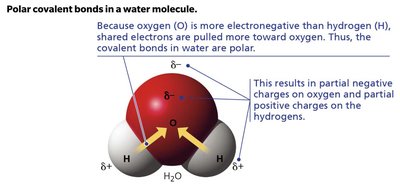
Polar Covalent Bond: Electrons are shared unequally due to differences in electronegativity (e.g., O-H, C-N).
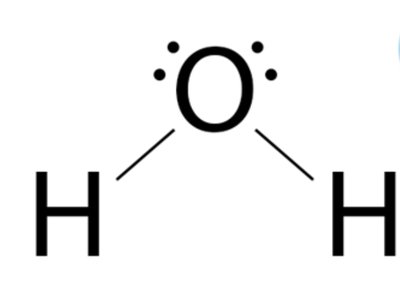
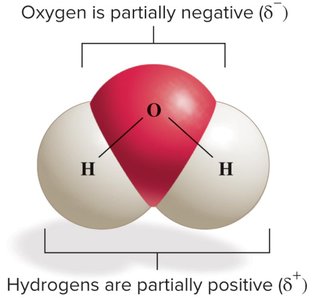
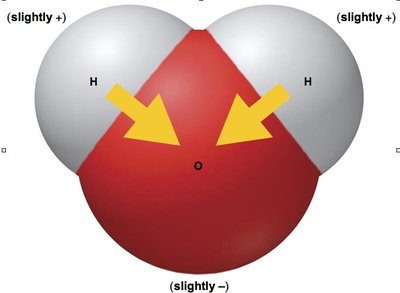
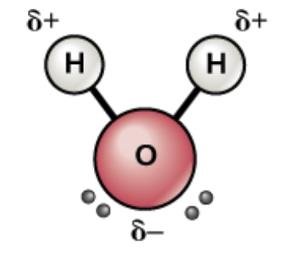
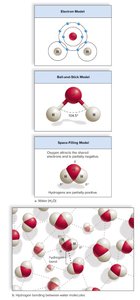
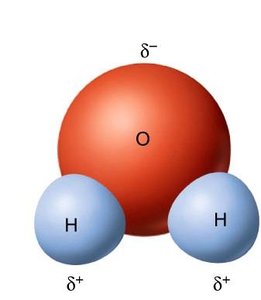
Example: Oxygen (O) is more electronegative than hydrogen (H), so in water (H2O), electrons are pulled closer to O.
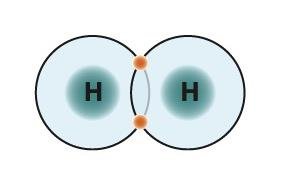

Polarity of Water Molecule
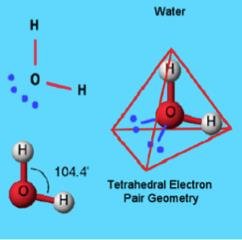
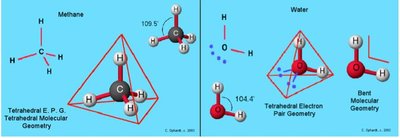
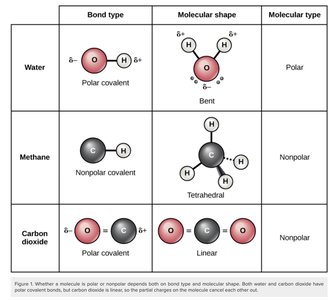
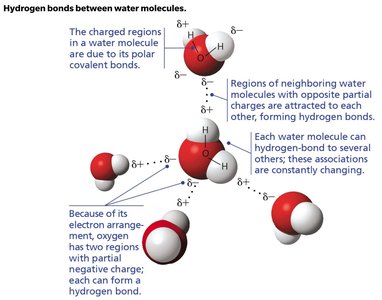
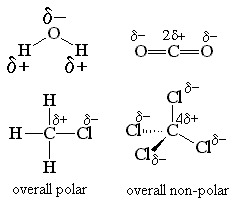
The water molecule (H2O) is polar due to its asymmetrical shape and the difference in electronegativity between oxygen and hydrogen.
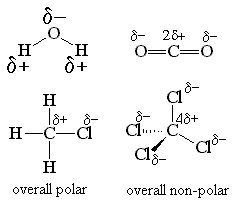
Polar Molecule: Has regions of partial positive and partial negative charge.
Asymmetry: The bent shape of water leads to uneven charge distribution.
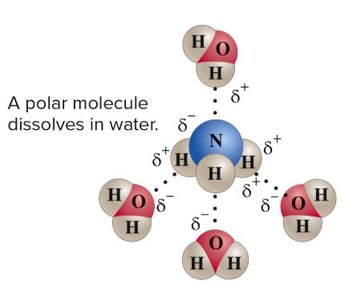
Hydrophilic: Polar molecules are attracted to water and dissolve easily.
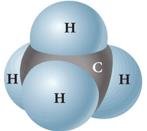
Example: Water is polar and hydrophilic, while methane (CH4) is nonpolar and hydrophobic.
Hydrogen Bonding
Nature and Importance of Hydrogen Bonds
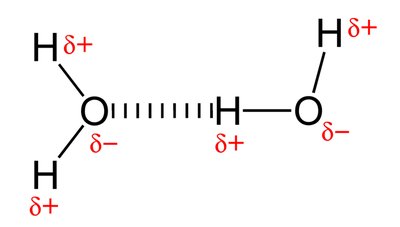
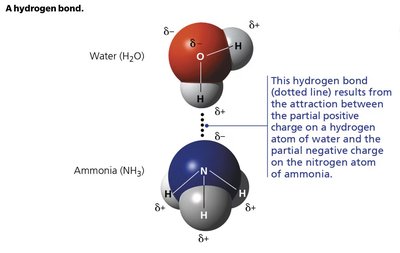
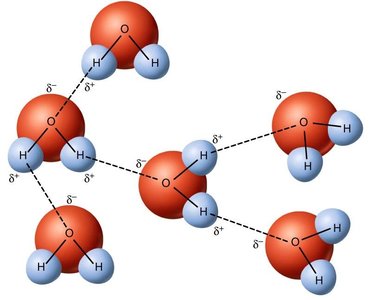
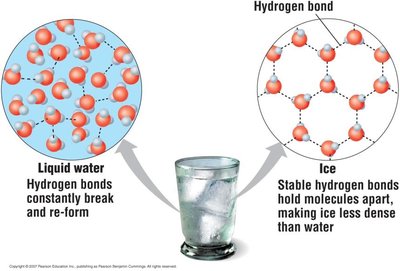
Hydrogen bonds are weak interactions formed between a partially positive hydrogen atom and a partially negative atom (such as oxygen or nitrogen). Although individually weak, their cumulative effect is significant in biological systems.
Hydrogen Bond: An attraction between a hydrogen atom (δ+) and an electronegative atom (δ−), often O or N.
Strength: Each hydrogen bond is about 5% as strong as a covalent bond.
Biological Importance: Responsible for the unique properties of water, DNA structure, and protein folding.
Example: Hydrogen bonds hold the two strands of DNA together.
Emergent Properties of Water
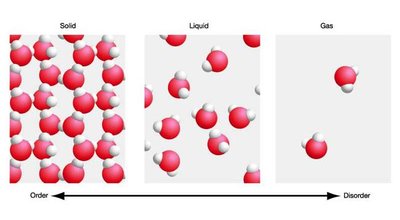
Hydrogen bonding gives rise to several emergent properties essential for life:
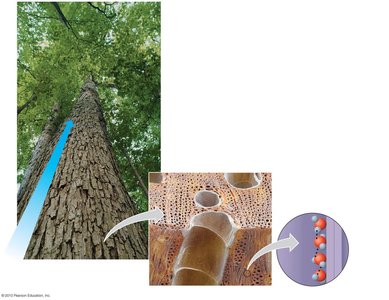
Cohesion: Water molecules stick to each other.
Adhesion: Water molecules stick to other polar substances.
Surface Tension: The surface of water resists breaking due to hydrogen bonds.
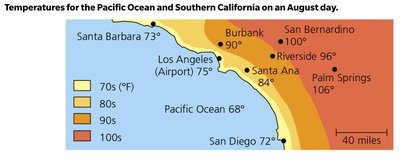
High Specific Heat: Water resists temperature changes.
High Heat of Vaporization: Water absorbs a lot of heat before evaporating.
Ice Floats: Hydrogen bonds stabilize in ice, making it less dense than liquid water.
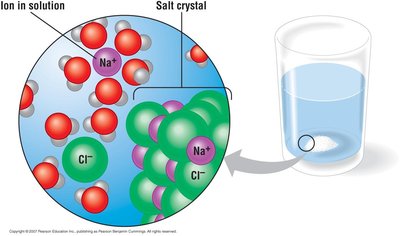
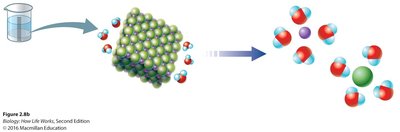
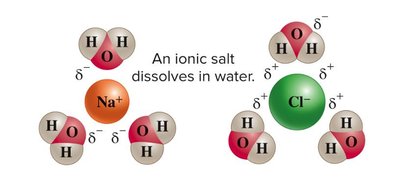
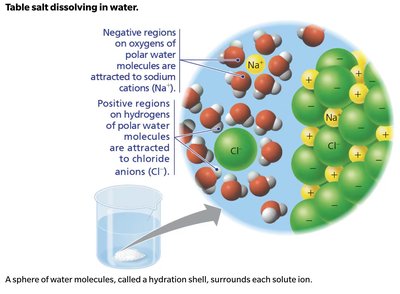
Solvent Properties: Water dissolves polar and ionic substances.
Acids, Bases, and pH
Water Ionization and pH Scale
Water can ionize into hydrogen ions (H+) and hydroxide ions (OH−). The concentration of H+ determines the pH of a solution, which is crucial for biological processes.
pH: A measure of hydrogen ion concentration, calculated as .
Neutral pH: Water has a pH of 7 when [H+] = [OH−].
Logarithmic Scale: Each unit change in pH represents a tenfold change in [H+].
Acids: Donate H+ ions, lowering pH.
Bases: Accept H+ ions, raising pH.
Buffers and Biological Significance
Buffers are chemicals that resist changes in pH, maintaining stable conditions in biological systems.
Buffer: A substance that minimizes changes in pH by accepting or donating H+ ions.
Example: Blood contains buffers to maintain pH around 7.4.
Summary Table: Bond Types, Molecular Shape, and Polarity
The polarity of a molecule depends on both the type of bonds and the molecular shape.
Bond type | Molecular shape | Molecular type | |
|---|---|---|---|
Water | Polar covalent | Bent | Polar |
Methane | Nonpolar covalent | Tetrahedral | Nonpolar |
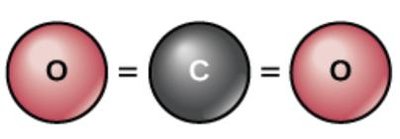
Carbon dioxide | Polar covalent | Linear | Nonpolar |
Key Concepts and Applications
Water's polarity and hydrogen bonding are essential for life.
Emergent properties of water: Cohesion, adhesion, surface tension, temperature moderation, ice floating, and solvent abilities.
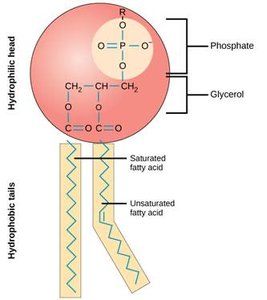
Hydrophobic and hydrophilic interactions: Critical for cell membrane structure and function.
pH and buffers: Maintain stable conditions for biochemical reactions.
Summary
Water is made up of polar covalent bonds and forms hydrogen bonds.
Hydrogen bonds are crucial for protein and DNA structure.
Water drives membrane structure through hydrophobic and hydrophilic interactions.
pH describes [H+] in water, affecting many biological processes.
